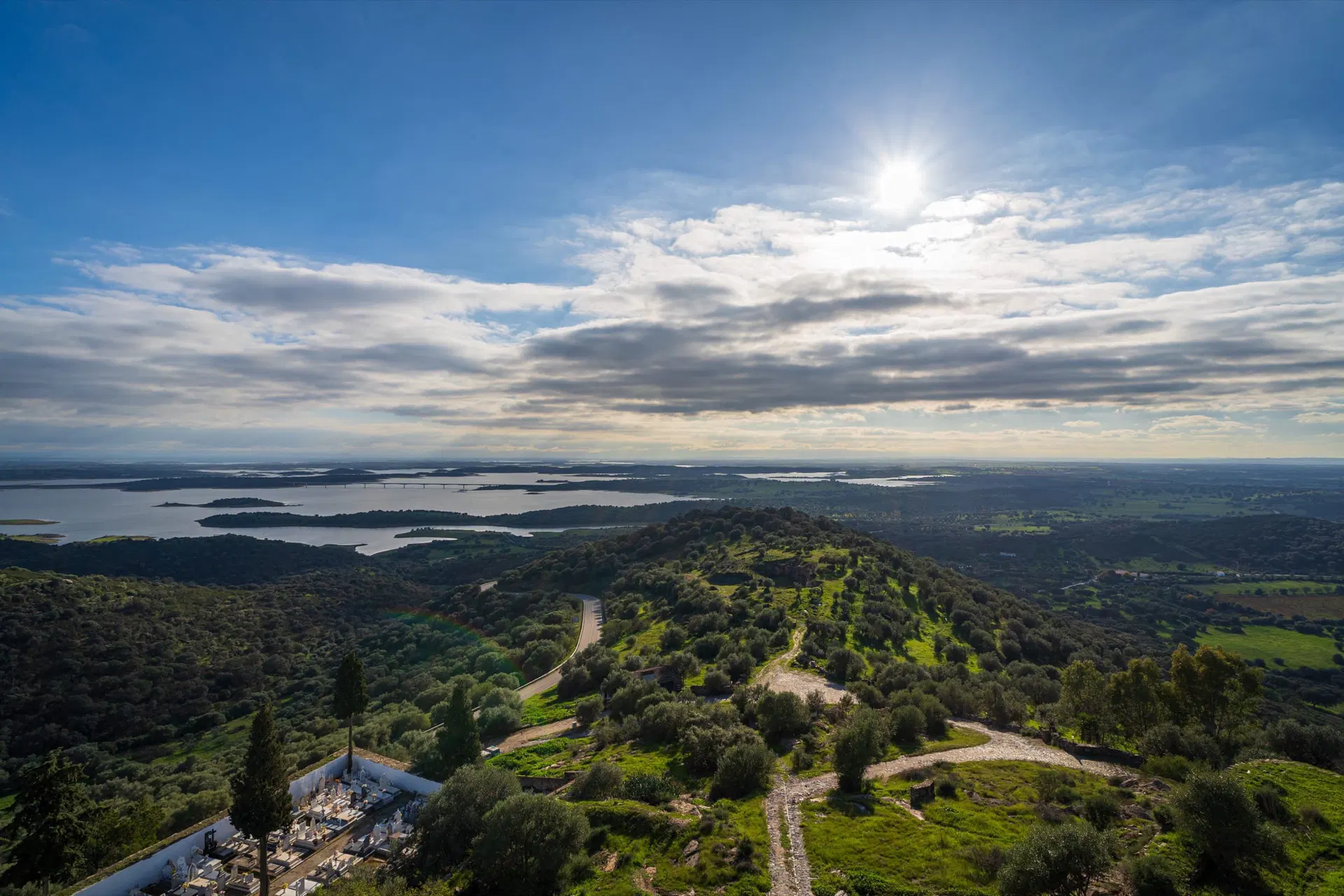
The Alqueva dam closed its gates on 8 February 2002. Where there had been dry plain, 250 km² of water appeared, with arms reaching into the valleys and more than a thousand kilometres of shoreline — the largest artificial lake in western Europe.
Twenty-odd years on, that's what defines the region: a landscape that didn't exist, next to villages that have been here for eight hundred years.
This guide is written from Mourão, on the eastern shore, and always tells you how long the drive is.
Lake beaches
Alqueva has several lake beaches, and they differ a lot. Worth knowing which is which.
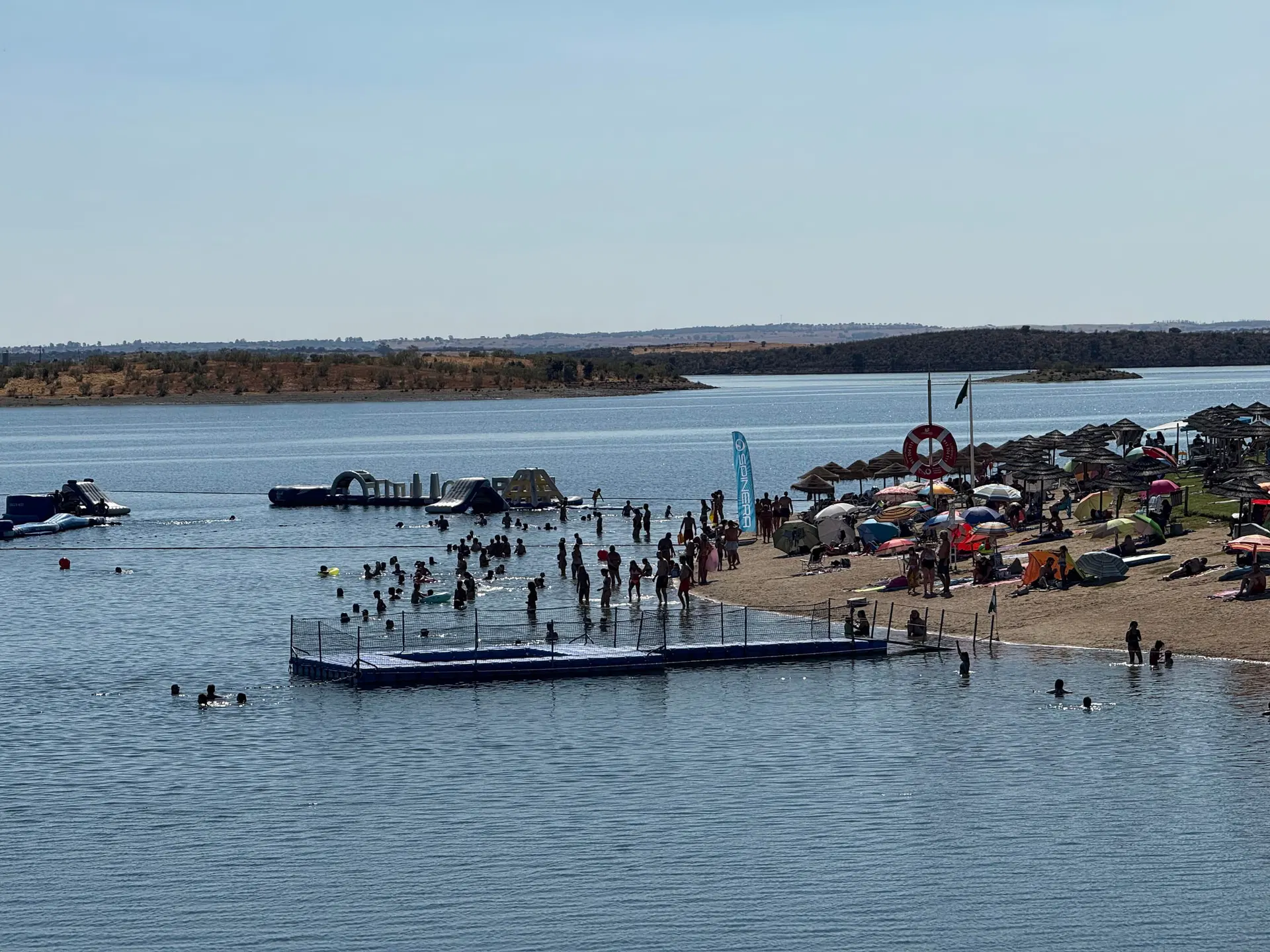
Mourão lake beach is the best-equipped on the lake: 320 metres of sand, 100 of them lifeguarded, on an island reached by a wooden boardwalk. It has a Blue Flag, a lawn with free parasols, an enclosed floating pool for children and a platform with a diving tower and a slide. It's the most complete on the lake.
Amieira is bigger — 600 metres of sand, also with a Blue Flag. The rest, near Monsaraz and at Alqueva, are smaller and wilder.
The bathing season typically runs from mid-June to mid-September. Outside those dates the beach is still accessible, but with no lifeguards and no facilities open.
Monsaraz
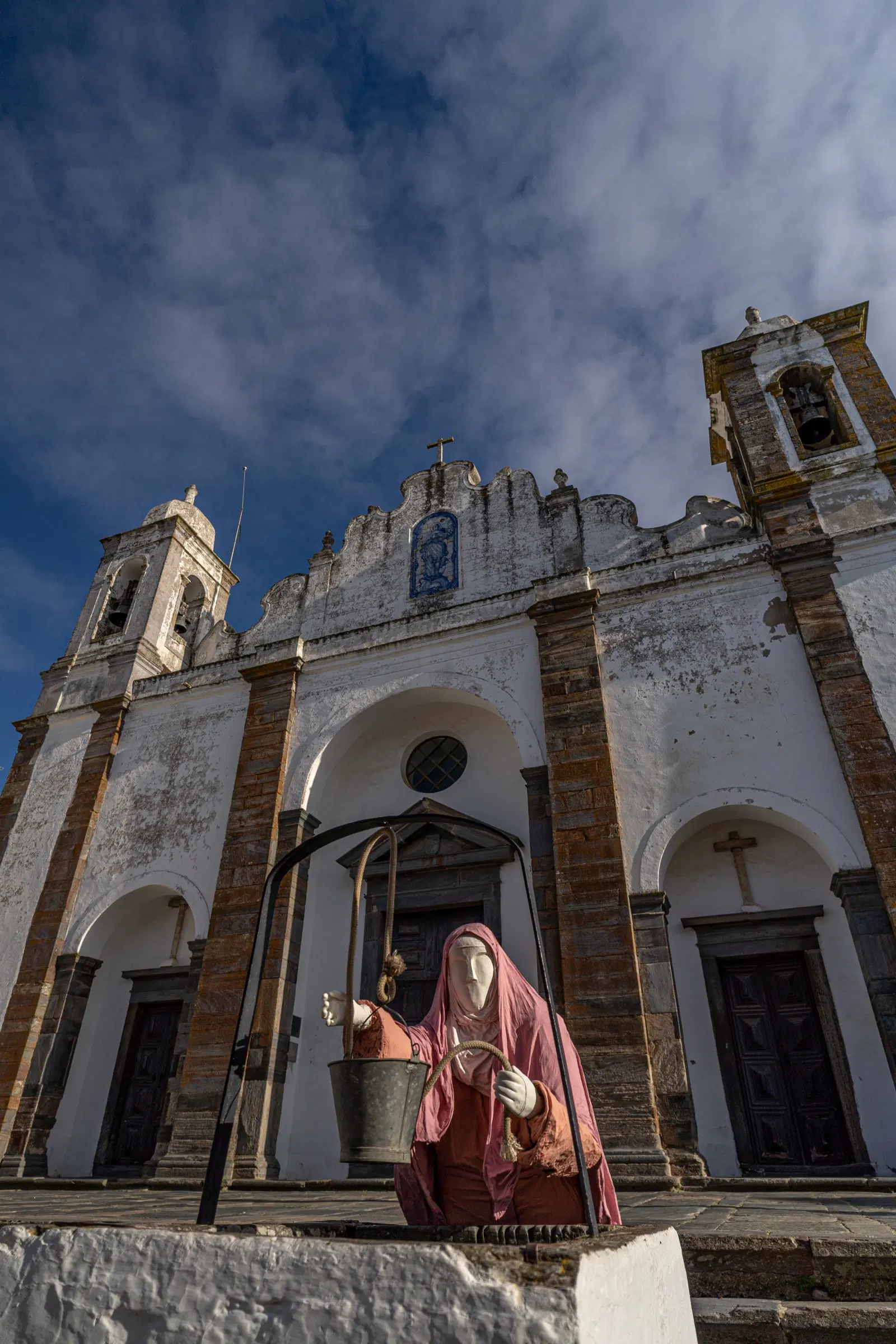
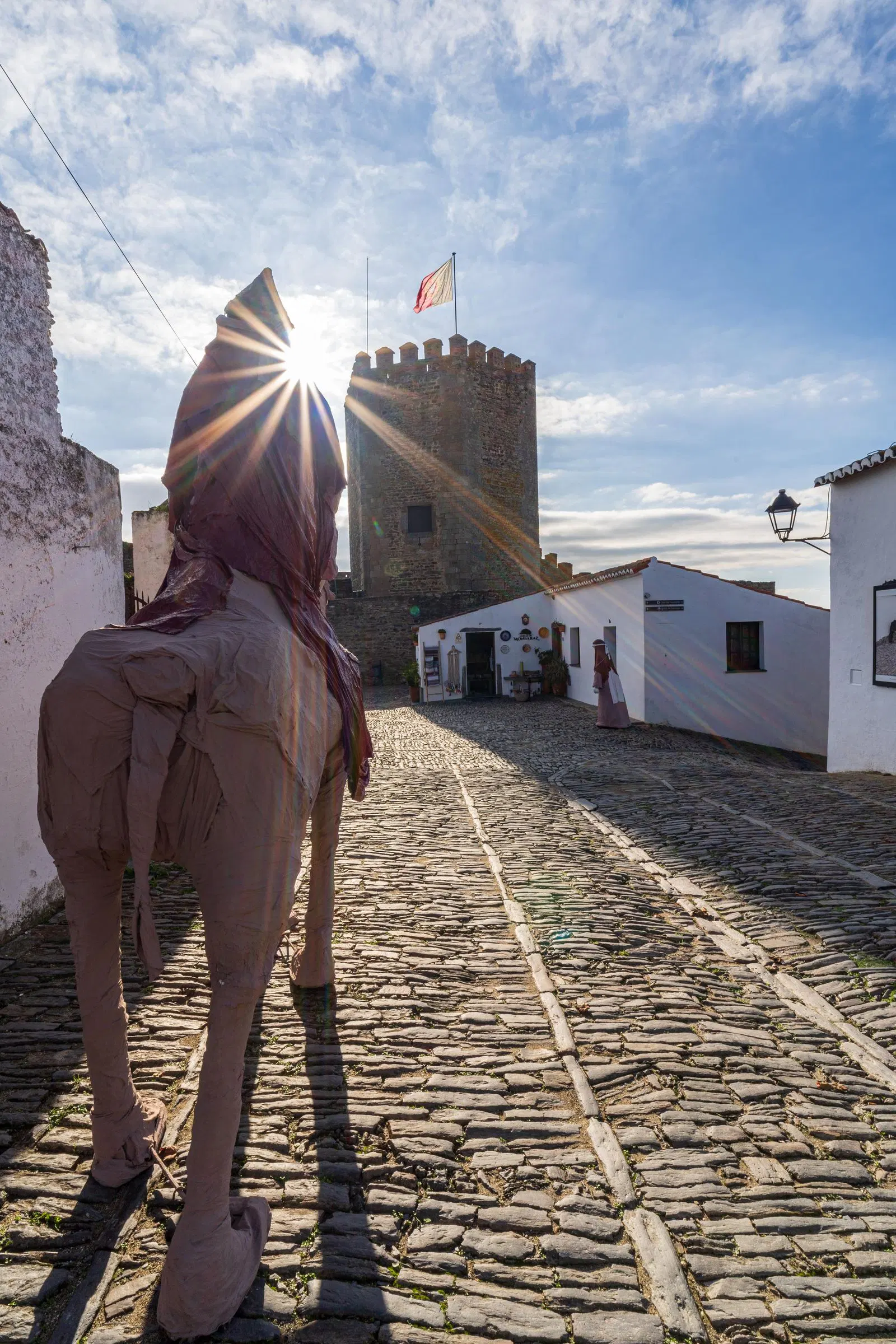
The walled medieval village on the hilltop is the region's postcard, and it earns it. Cobbled streets, whitewashed houses, and from the castle at the top you see the whole lake.
It's a morning's visit. Twenty minutes from Mourão, across the bridge.
Two practical notes: coach parties arrive around eleven and leave around five, so early morning and late afternoon are far better; and you leave the car at the entrance, because you can't drive inside the walls.
The sky at night
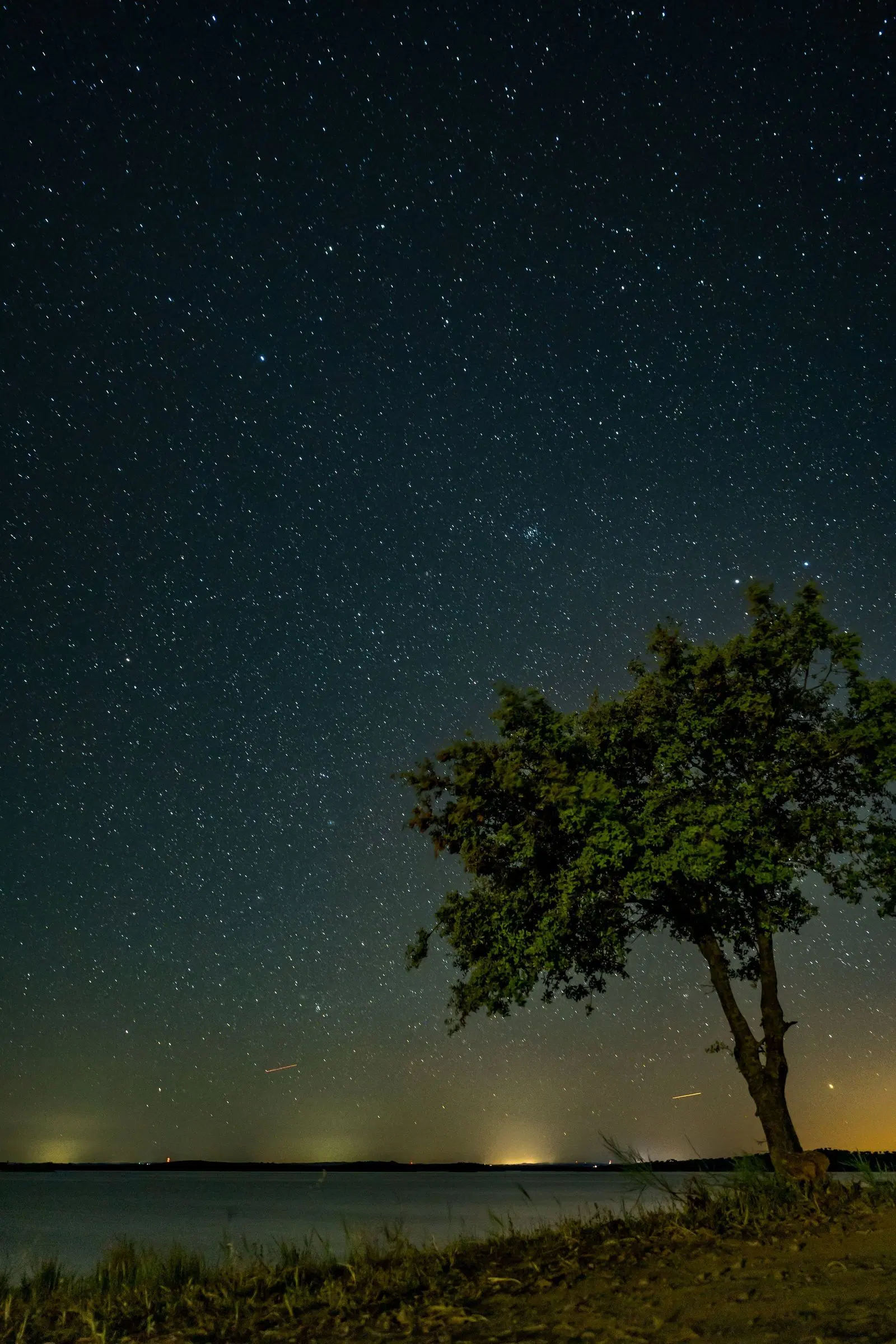
This is the region's most underrated attraction. In 2011 Alqueva became the first destination in the world certified as a Starlight Tourism Destination, and the official observatory is at Cumeada, near Reguengos — about thirty minutes from Mourão.
There are guided sessions with telescopes, which need booking ahead. But even without a session: step outside, walk away from the village lights and look up. On a moonless night you can see the Milky Way with the naked eye, which for most visitors is a first.
On the water
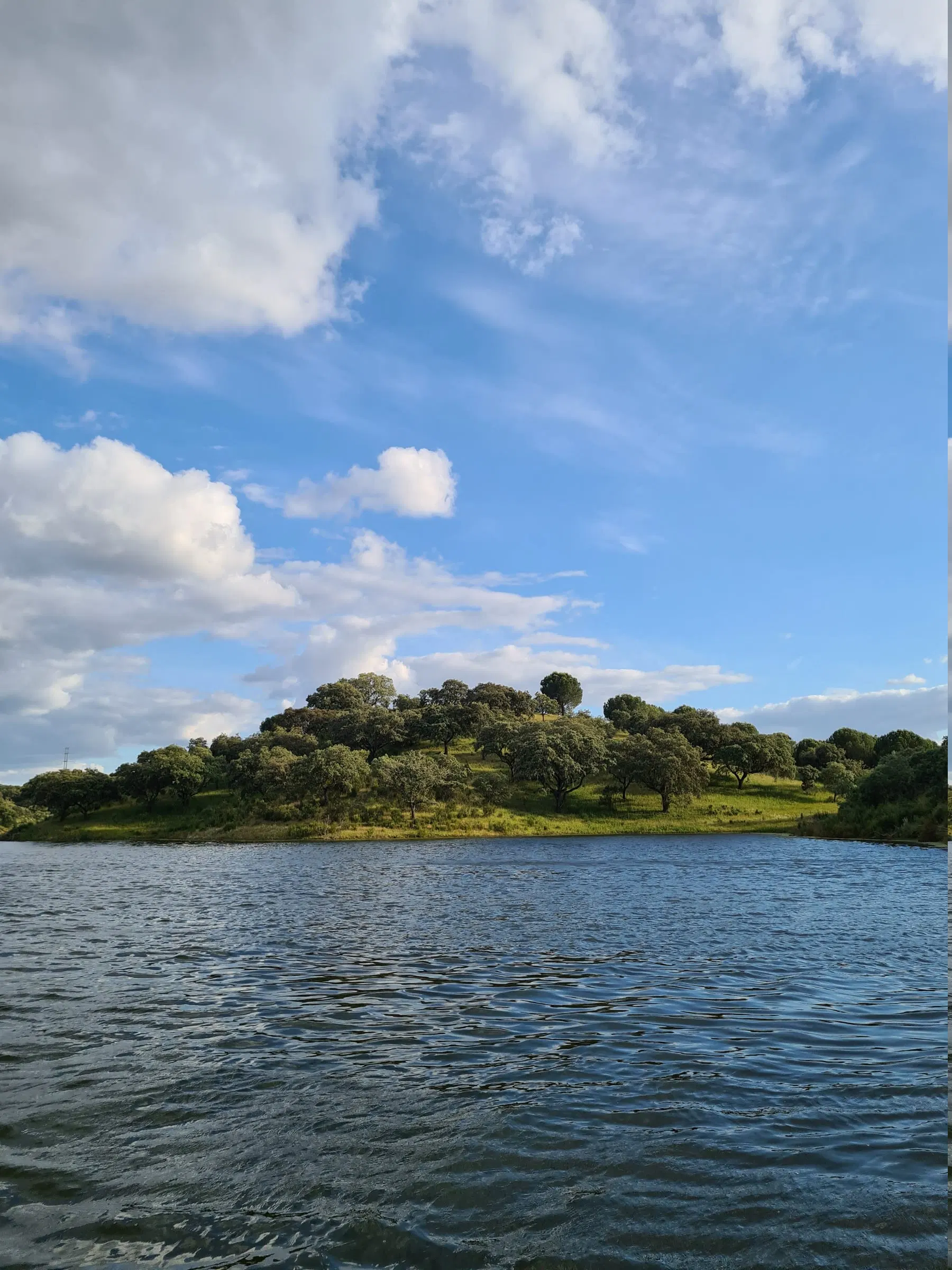
Boat trips. Mostly from Amieira Marina and Monsaraz, lasting one to three hours. Sunset trips are the best.
Houseboats. Rented by the day, with no boat licence needed — there's a short briefing before you leave. A different way to see the lake. How it works →
Paddleboarding, canoeing, wakeboarding. Available at several points, including by Mourão beach in summer. The water is calm, which helps beginners.
The villages, and what went under the water
Beyond Monsaraz and Mourão, worth your time:
- Aldeia da Luz — the village the reservoir submerged, rebuilt two kilometres uphill. The Museu da Luz tells the story. It’s in the Mourão municipality, about 20 minutes away.
- Reguengos de Monsaraz — the largest town nearby, where the wineries and the shops are. 25 minutes.
- Évora — not Alqueva, but the Alentejo’s reference city, an hour away.
Wine
Reguengos de Monsaraz is one of the Alentejo's wine sub-regions, and several wineries take visitors for tastings. Phone ahead rather than turning up, especially outside summer.
Eating
You eat well and cheaply, especially in the smaller villages. Migas, lamb stew, black pork, açorda, and strong regional cheeses.
Two things to know: many restaurants close one day a week, and out of season some only serve lunch. Where to eat on Alqueva →
When to come
July and August — serious heat, often above 35°C. The water is warm, the beach is open and a pool stops being optional.
May, June and September — probably the best window. In May the plain is still green; in September the water is still warm and the queues in Monsaraz have gone.
Autumn and winter — cold, short days, plenty closed. In exchange, it's the best season for stargazing: long nights and clean air.
A three-day plan
If it's your first time and you have a long weekend, there's a day-by-day itinerary here, based in Mourão.
Common questions
What exactly is Alqueva?
Western Europe's largest man-made lake: 250 km² of water and over a thousand kilometres of shoreline, formed after the dam closed its gates on 8 February 2002. It's a landscape that didn't exist, next to villages that have been there eight hundred years.
Which is the best beach on Lake Alqueva?
It depends what you want. Mourão's is the best equipped: 320 metres of sand on an island, 100 of them lifeguarded, a Blue Flag, free parasols, an enclosed floating pool for children and a platform with a diving tower. Amieira's is bigger at 600 metres and also has a Blue Flag. Those at Monsaraz and Alqueva are smaller and rougher.
When is the bathing season at Alqueva?
Typically mid-June to mid-September. Outside those dates the beaches stay open, but with no lifeguards and no facilities.
Is stargazing at Alqueva worth it?
It's the most underrated thing in the region. In 2011 Alqueva became the first destination in the world to receive Starlight certification for star tourism, and the official observatory is at Cumeada, near Reguengos, about thirty minutes from Mourão.