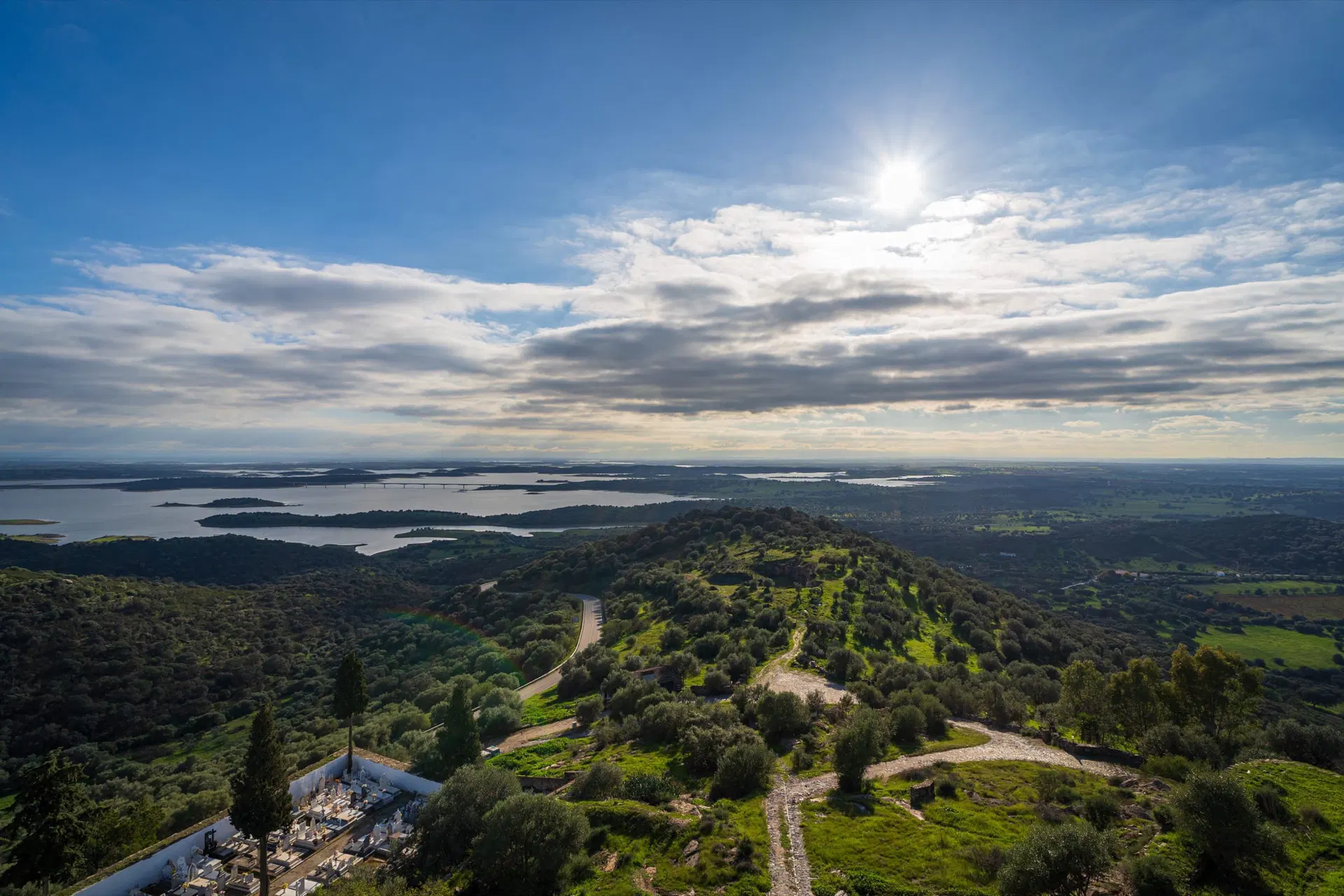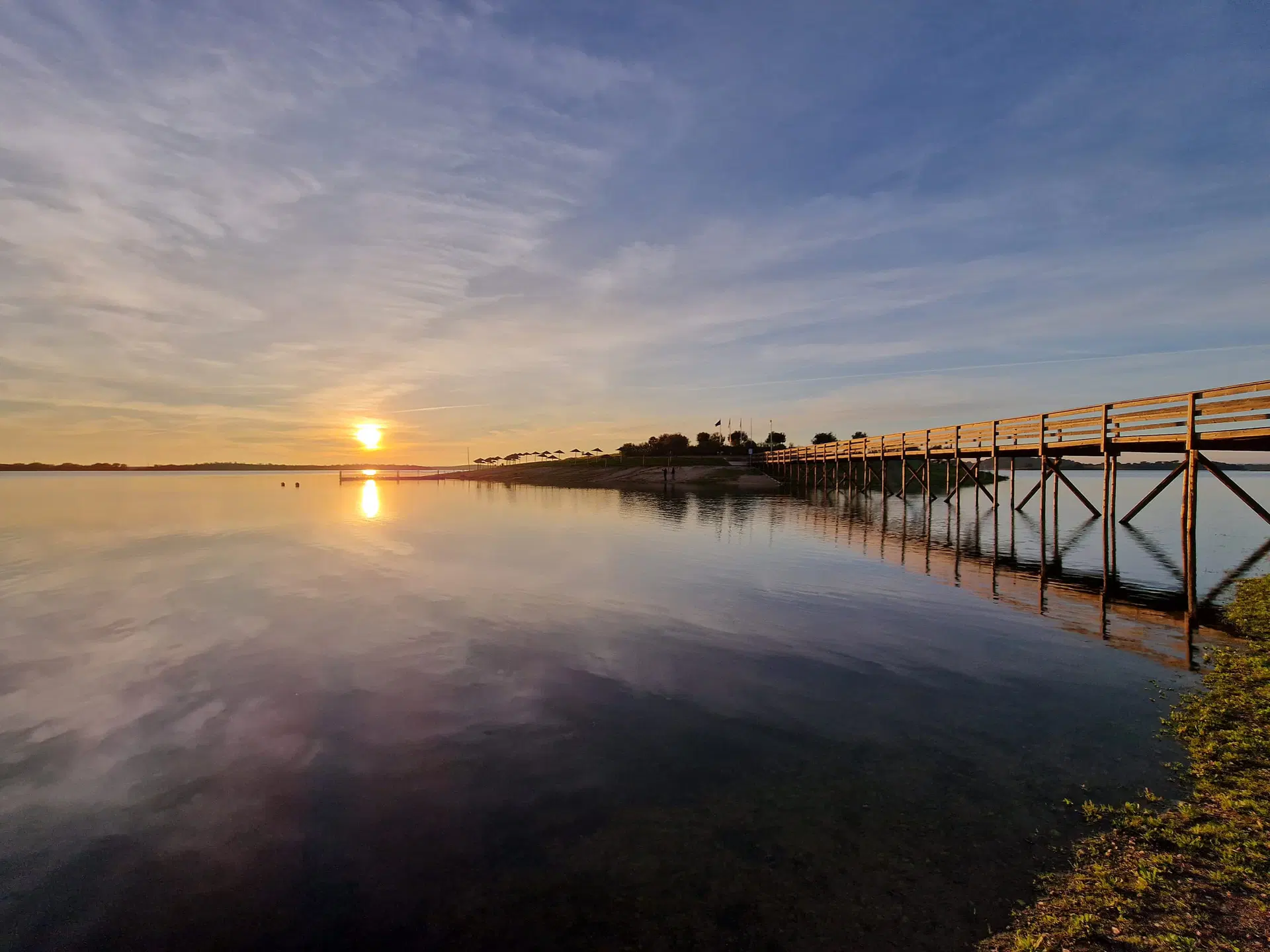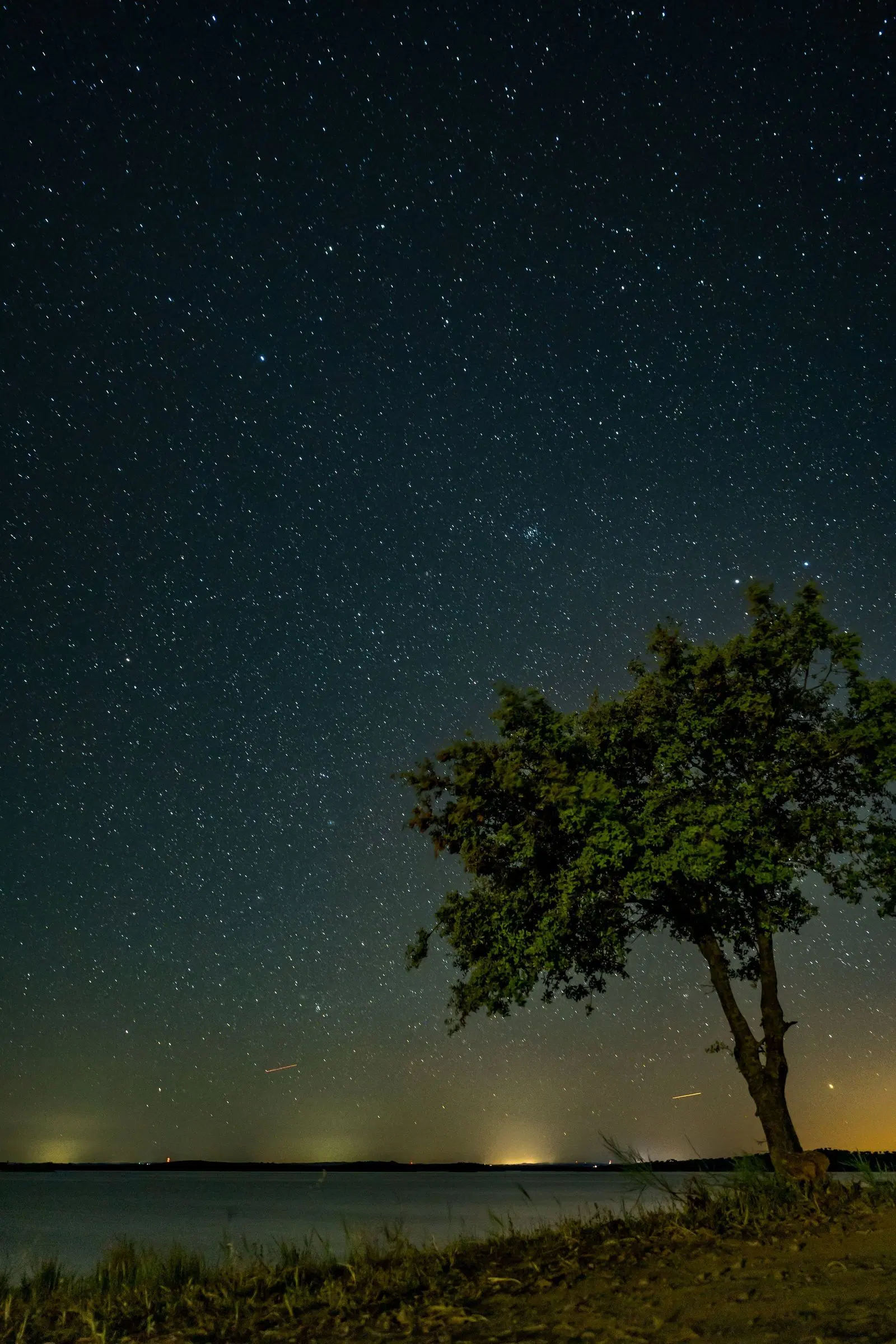
In 2011, Alqueva became the first destination in the world to receive Starlight certification for star tourism, awarded by the Starlight Foundation with support from UNESCO and UN Tourism.
The reason is simple: no large cities, no industry, very few people. The result is a sky that has all but disappeared from Europe.
The short answer
- For the Milky Way: choose a moonless night and give your eyes at least twenty minutes to adapt.
- For a guided session: book the Official Dark Sky Alqueva Observatory in Cumeada in advance. Sessions run from Tuesday to Saturday and depend on the season, Moon and weather.
- For an easy first look: turn off the courtyard lights at Casa de Santa Margarida and start with the naked eye.
- Bring: a warm layer, even in summer, and use the dimmest red setting on your phone if you need light.
What that means in practice
On a moonless night, away from village lights, you can see the Milky Way with the naked eye — the band of diffuse light crossing the sky from horizon to horizon. For most people who come here, it's the first time.
You need no equipment and no knowledge. Just step outside, let your eyes adjust for twenty minutes, and look up.
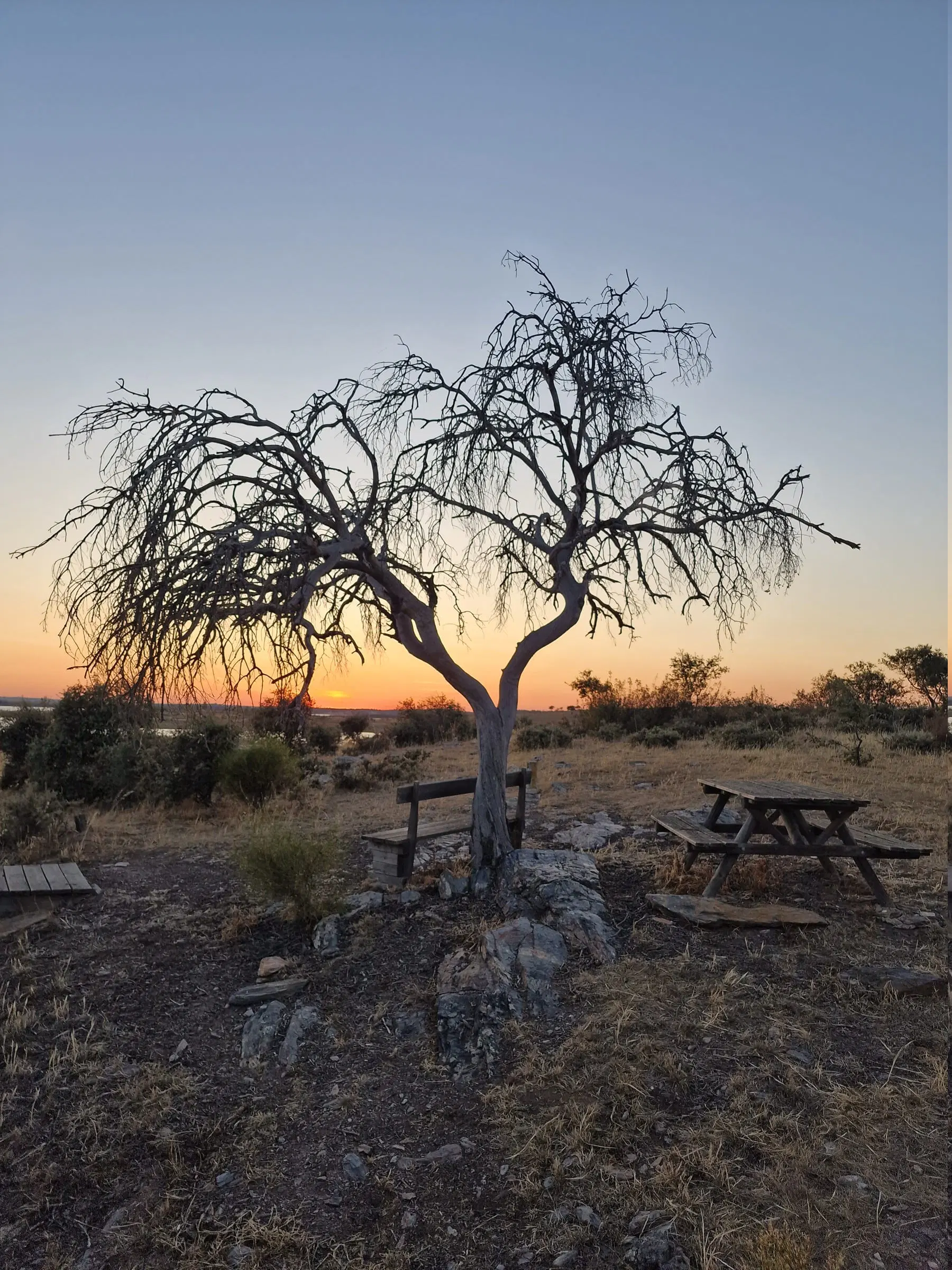
Dark Sky Alqueva
The official Dark Sky Alqueva observatory is in the village of Cumeada, near Reguengos de Monsaraz. From Mourão it's about twenty minutes by car.
The standard guided session lasts about one hour and fifteen minutes. Through the observatory's telescopes, the programme may include planets, lunar craters, nebulae, star clusters, galaxies and binary stars, depending on what is visible that night.
OLA — Alqueva Lake Observatory
There is a second option near Monsaraz: OLA — Alqueva Lake Observatory. Astronomy guides lead visitors around the night sky, explain constellations and use high-resolution telescopes to observe the planets and deep-sky objects visible that night.
OLA also rents powered observing platforms to amateur and professional astronomers, which is particularly useful if you bring a telescope or astrophotography equipment. Sessions depend on the weather and should be booked directly; always confirm the current programme and availability on the official website.
The Dark Sky route
The certification doesn't cover a single point: it applies to a route across ten Portuguese municipalities — Mourão among them — and, since 2018, Spanish municipalities across the border too, making it the first cross-border project of its kind.
In practice that means almost the whole region has good sky. You don't need the observatory to see stars; the observatory is for understanding what you're looking at.
When to come
Moonless nights are best for the Milky Way and faint objects. A bright Moon washes those out, but it can be worth observing in its own right: through a telescope, craters and mountain ranges become the main event.
Summer gives warm, comfortable nights with the Milky Way high overhead. Winter gives far longer nights and cleaner air, but bring proper layers: in the Alentejo the temperature drops fast after sunset.
There is no single best month for every visitor. Choose the Moon phase first, then the season: late spring to early autumn for comfort; autumn and winter for longer hours of darkness.
How to plan the evening
- Check the Moon phase before choosing the date.
- If you want telescopes and an explanation, book Cumeada before the rest of the evening fills up.
- Keep the hour before the session flexible: cloud and weather can change the plan.
- Avoid bright white screens and torches once you arrive. They reset your night vision.
- Bring another layer than you think you need. Dry Alentejo nights cool quickly after sunset.
If you are building a longer trip, combine the night session with Monsaraz in the late afternoon and use Mourão as your base, rather than driving back across the region after midnight.
Without leaving the house
Mourão is a small village and the sky above it is already good. In the courtyard at Casa de Santa Margarida, with the lights off, you see plenty — not like open country, but plenty.
It's a good way to end the day: out of the pool, let your eyes adjust, and stay a while.
Common questions
Do I need a telescope to see the stars at Alqueva?
No. On a moonless night, away from village lights, you can see the Milky Way with the naked eye. Just step outside, let your eyes adjust to the dark for about twenty minutes, and look up.
Where is the Dark Sky Alqueva observatory?
In the village of Cumeada, near Reguengos de Monsaraz — about twenty minutes by car from Mourão. There is also OLA, the Alqueva Lake Observatory, near Monsaraz. Both offer guided sessions and require advance booking.
Which night is best for stargazing?
A moonless night is best for the Milky Way and faint deep-sky objects. A brighter Moon is not a wasted night: lunar craters can be one of the highlights through a telescope. The observatory adjusts sessions to the Moon, season and weather.
Since when has Alqueva been a Dark Sky destination?
Since 2011, when it became the first destination in the world to receive Starlight certification for star tourism, awarded by the Starlight Foundation with the support of UNESCO and the World Tourism Organization. The route covers ten Portuguese municipalities, Mourão among them, and since 2018 Spanish ones too.