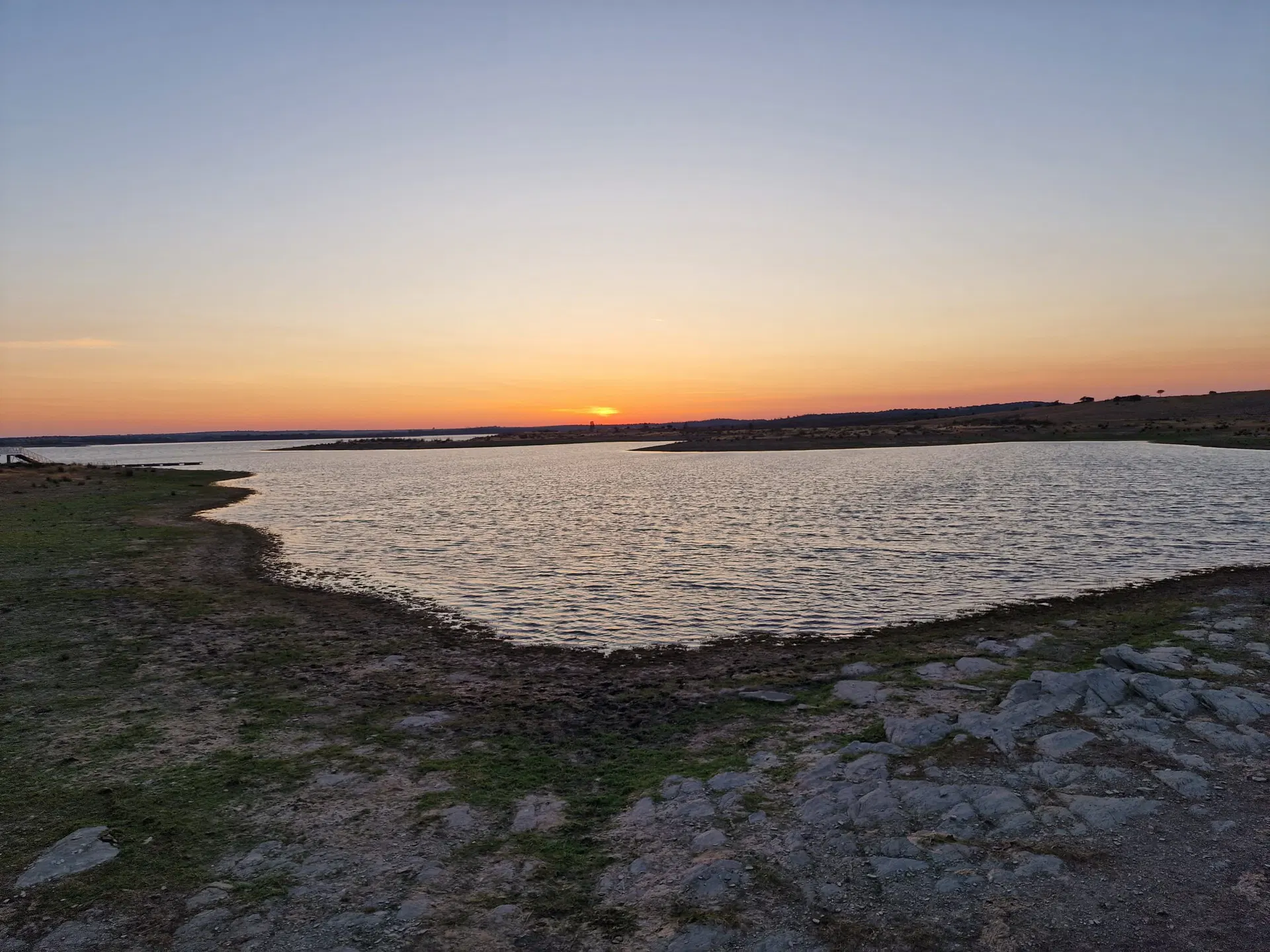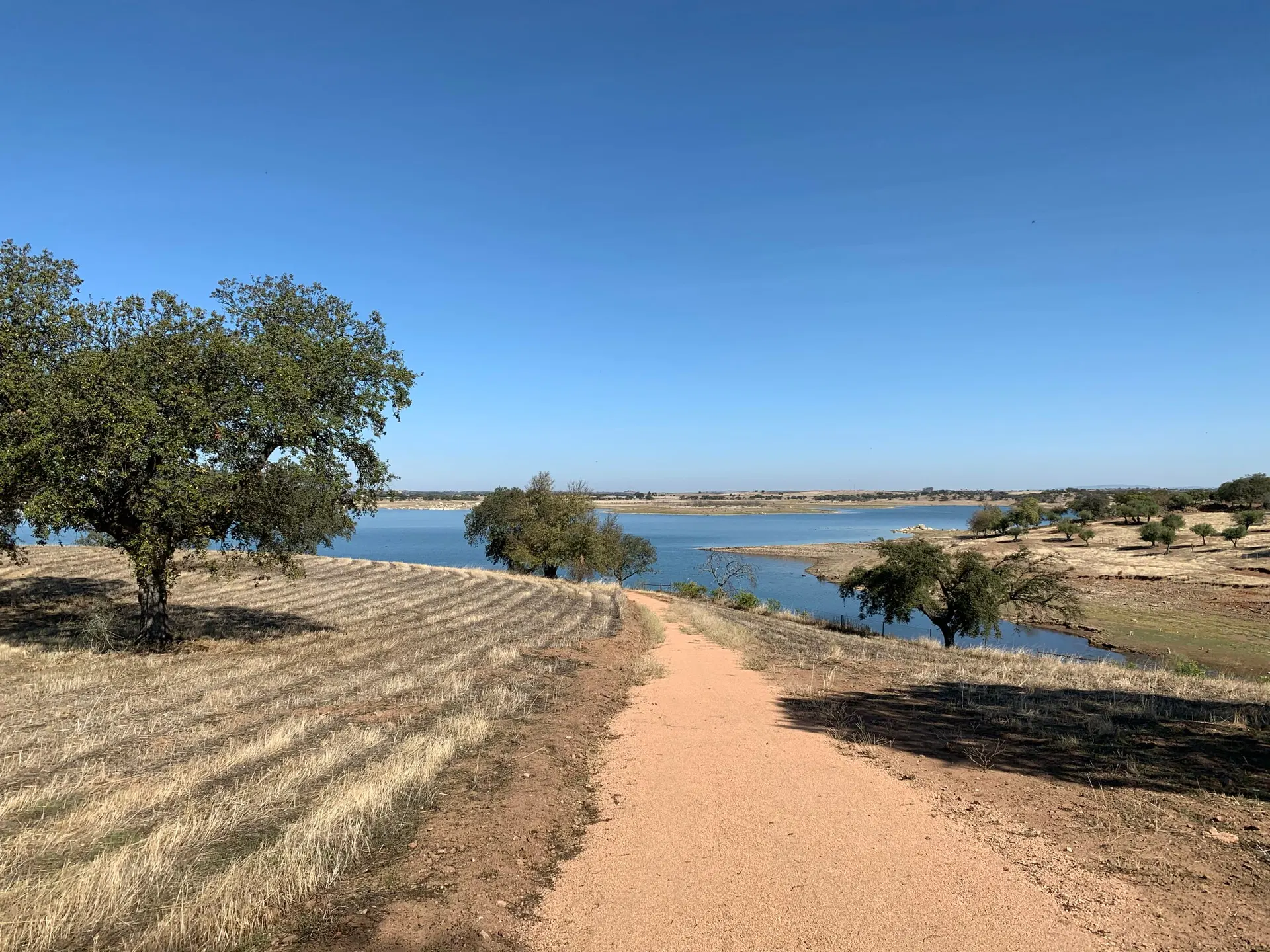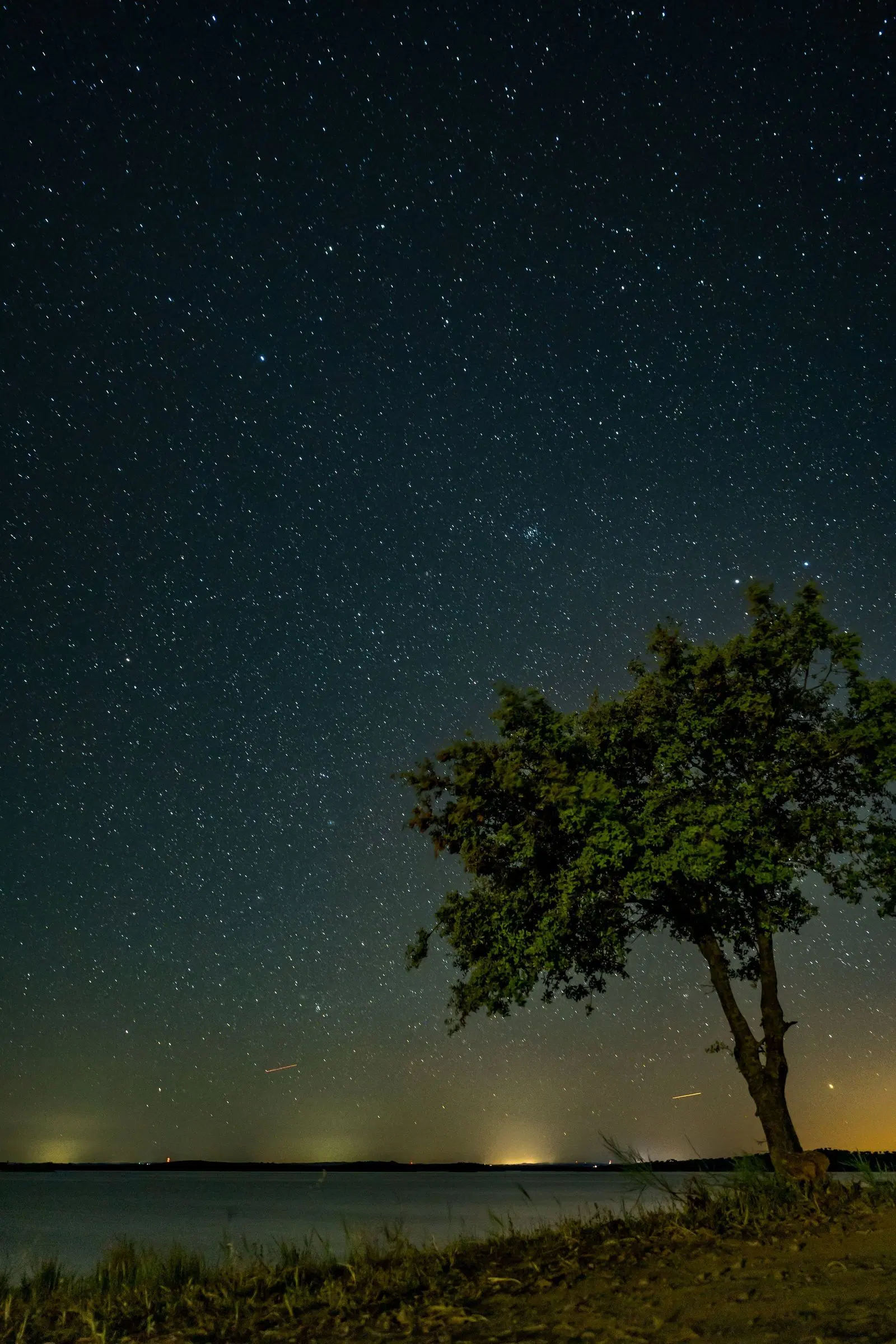
Alqueva is one of the easiest places in Portugal to realise that the night is part of the landscape. There is little artificial light, broad horizons and water, trees, walls and paths that give the sky a sense of scale.
You do not need to master photography. For a first image, three choices make most of the difference: a dark night, a simple location and a completely still device.
The right night matters more than the camera
For the Milky Way, look for nights close to the New Moon. A Full Moon brightens the sky and hides many stars in a photograph, although the Moon itself and a softly lit landscape can make good subjects.
Then check only two things: little cloud and no fog. Look again on the day itself, because a promising forecast can change.
Where to photograph
There is no single compulsory viewpoint. Look for:
- safe public access;
- an open horizon;
- no direct glare from lamps or cars;
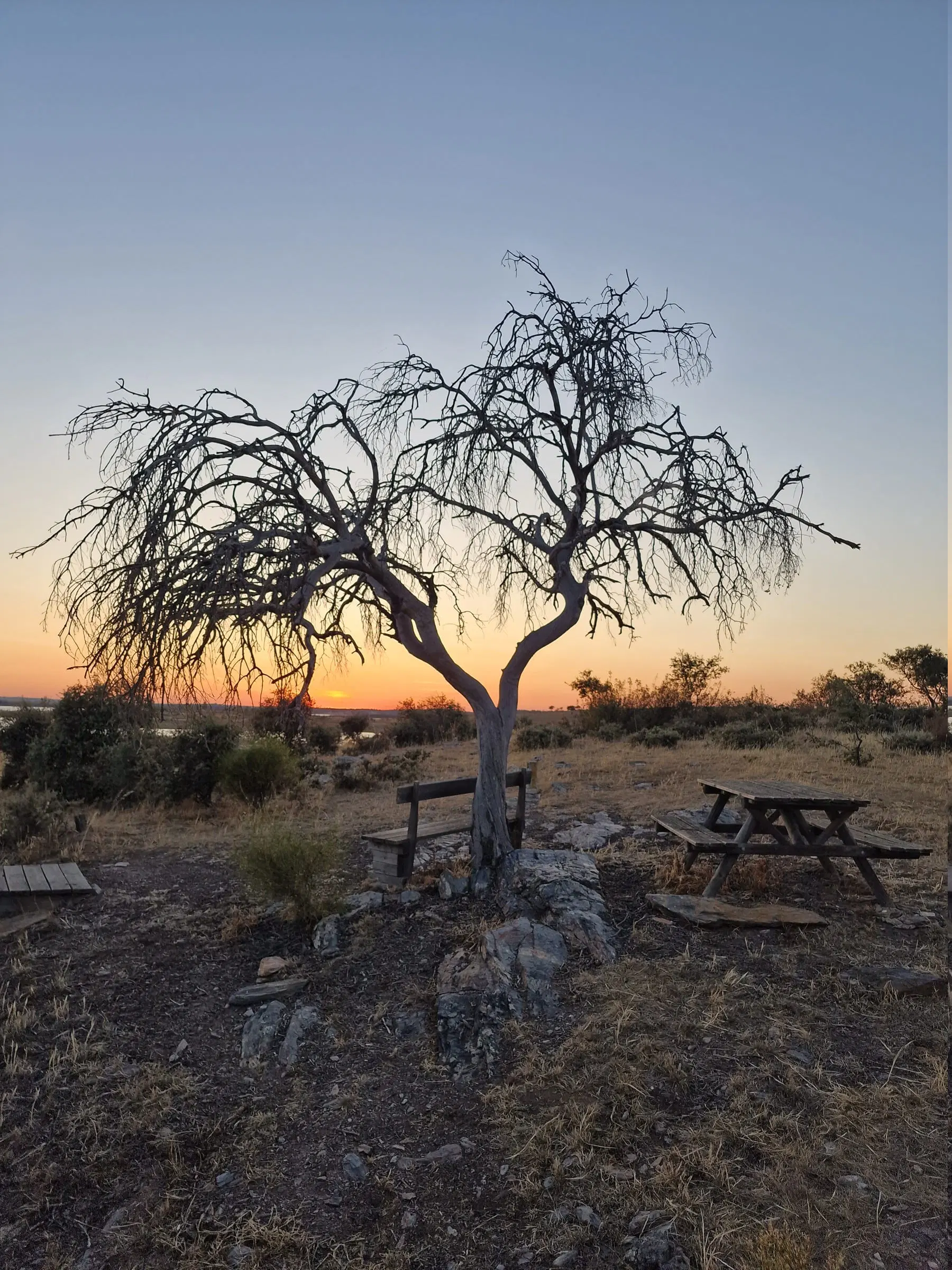
- one recognisable foreground element, such as a tree, wall, path or edge of the lake.
There are good horizons around Mourão and Monsaraz. Do not enter private land, park on farm tracks or approach the water in darkness before inspecting the ground by daylight.
A simple plan for the evening
- See the location in daylight. Choose where to stand and check the way back.
- Arrive before dark. Dusk lets you compose the landscape safely.
- Wait twenty minutes. Let your eyes adapt and turn off white lights.
- Keep the device still. Use a tripod, support or firm surface and the timer so you do not touch it during the photograph.
- Make a few variations. Adjust the framing or include more landscape instead of spending the evening inside menus.
With a phone
Use night mode, clean the lens and turn off the flash. Support the phone and let it finish without touching it. If it chooses the capture time automatically, allow the longest option only when the phone is firmly fixed.
The aim is not to reproduce professional images that reveal more light and colour than the eye can see. It is to keep the feeling of that place on that night.
With a camera, without turning the trip into a lesson
Bring a lens that includes sky and landscape, a tripod and a charged battery. If you already know your camera controls, use them; if not, this is not the night to learn dozens of settings. A strong composition and stability matter more than chasing a perfect configuration.
Observatories and local help
The Official Dark Sky Alqueva Observatory in Cumeada includes astrophotography in its programme and can arrange a photographic record by advance booking. OLA — Alqueva Lake Observatory near Monsaraz also provides powered platforms for visitors bringing their own equipment.
For a first visit, a guided session helps you recognise the sky before deciding where to point the camera.
What to bring
- warmer clothes than you expect, even in summer;
- water and closed shoes;
- a tripod or stable support;
- a charged battery;
- a small red light or a torch at its dimmest setting;
- an offline map, as some tracks have weak reception.
From the house
In the courtyard at Casa de Santa Margarida, turn off the lights and begin without going anywhere. The village still creates some glow, so this is not the darkest sky in the region, but it is the simplest and safest way to learn what your device can do.
For an evening dedicated to photography, use Mourão as your base, inspect the location before dinner and return with the composition already chosen.
Common questions
Can I photograph the Milky Way at Alqueva with a phone?
Yes, if the phone has a night mode and remains completely still. It will not match a dedicated astrophotography camera, but it can record both the sky and the landscape.
When is the best time to photograph stars at Alqueva?
Choose a clear night close to the New Moon. From late spring to early autumn it is more comfortable outside and the Milky Way is usually easier to find earlier in the night.
Do I need to visit an observatory?
No. Much of the region has a good sky. Observatories help you learn, use telescopes or access prepared facilities, but you can photograph from a safe public place away from direct light.
Do I need professional equipment?
Not to begin. A phone with night mode or a camera, a stable support, warm clothing and a small red light are enough to experiment.