Beaches
Mourão lake beach: Blue Flag, free parasols, floating pool
320 metres of sand on an island, a Blue Flag, free parasols and an enclosed pool for children. Everything about the second-largest lake beach on Alqueva.
3 min read
The lakeside village where Casa de Santa Margarida is: a castle, a Blue Flag lake beach, village restaurants and the ordinary life of an Alentejo town.
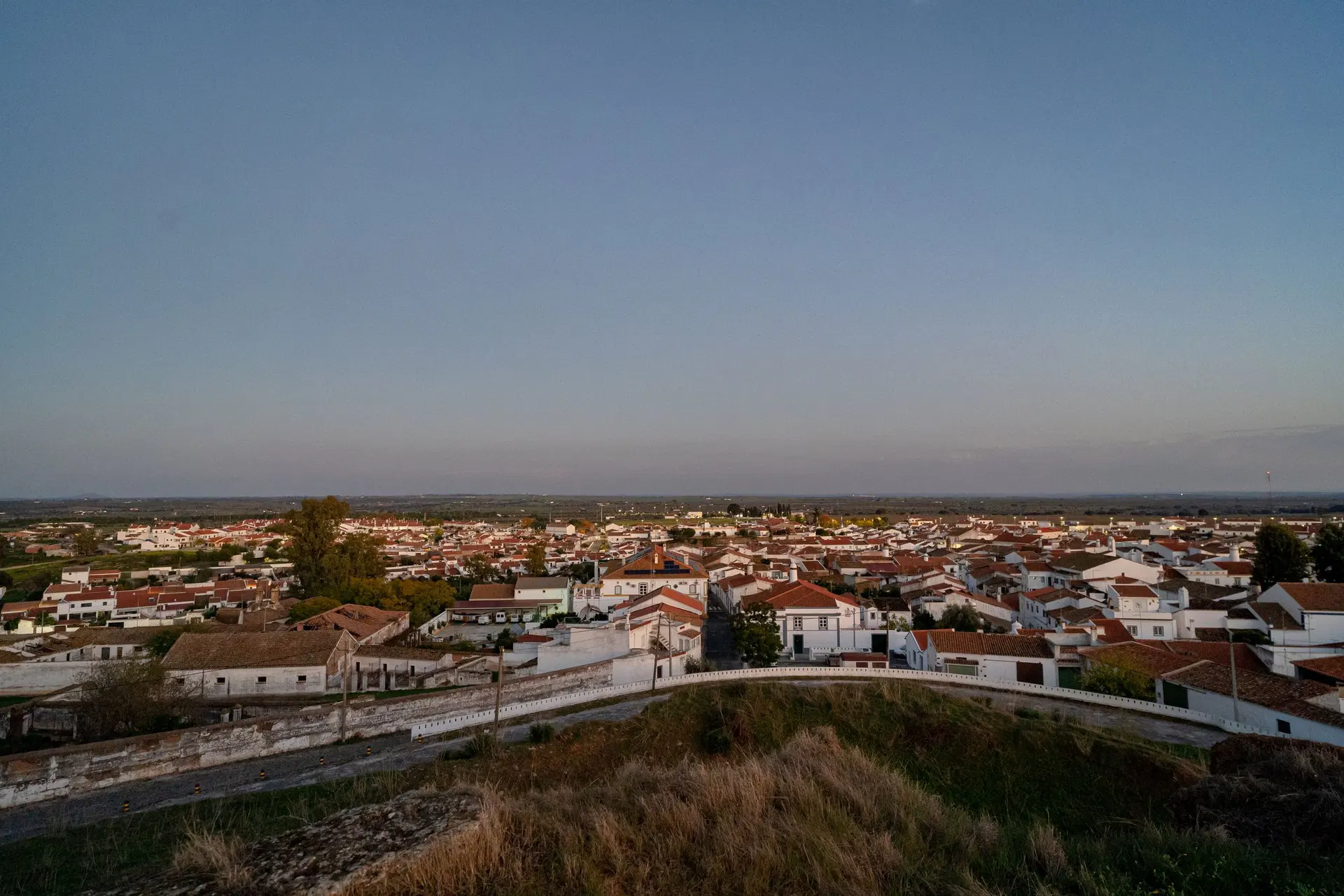
The village. Mourão is a village of just over two thousand people in the Évora district, on the left bank of the Guadiana — today the eastern shore of Lake Alqueva — and a few kilometres from the Spanish border. There is a medieval castle at the highest point, with a view across the whole plain, and a Blue Flag lake beach five minutes away by car. It isn't a tourist village, and that's the point: there's a grocer, a butcher, cafés with actual people in them mid-morning, and restaurants where lunch costs very little and is very good.
The castle. It was built in early 1343, in the reign of King Afonso IV, from schist, marble and granite, and the fourteenth-century walls still wrap around the old houses. Entry is free and the climb is short. From the top you see the plain running to the horizon and, beyond it, the water of Alqueva; late afternoon is when it becomes the best viewpoint in the village. On one of the roundabouts in Mourão there is a miniature of the castle and church — a decorative replica, not a monument.
The parish church. The Igreja Matriz de Nossa Senhora das Candeias, named after the patron saint, stands inside the castle walls. It was ordered by royal decree in 1681, under the prince-regent Pedro, and consecrated in 1692; it is Baroque, with a white marble doorway, and the damage from the 1755 earthquake was only properly repaired in restorations in the 1960s and 1970s. The statue of the patron saint is carved in Ançã limestone in a Gothic-Manueline style. The village also has the Misericórdia church, from around 1758, and the church of São Francisco, from 1740.
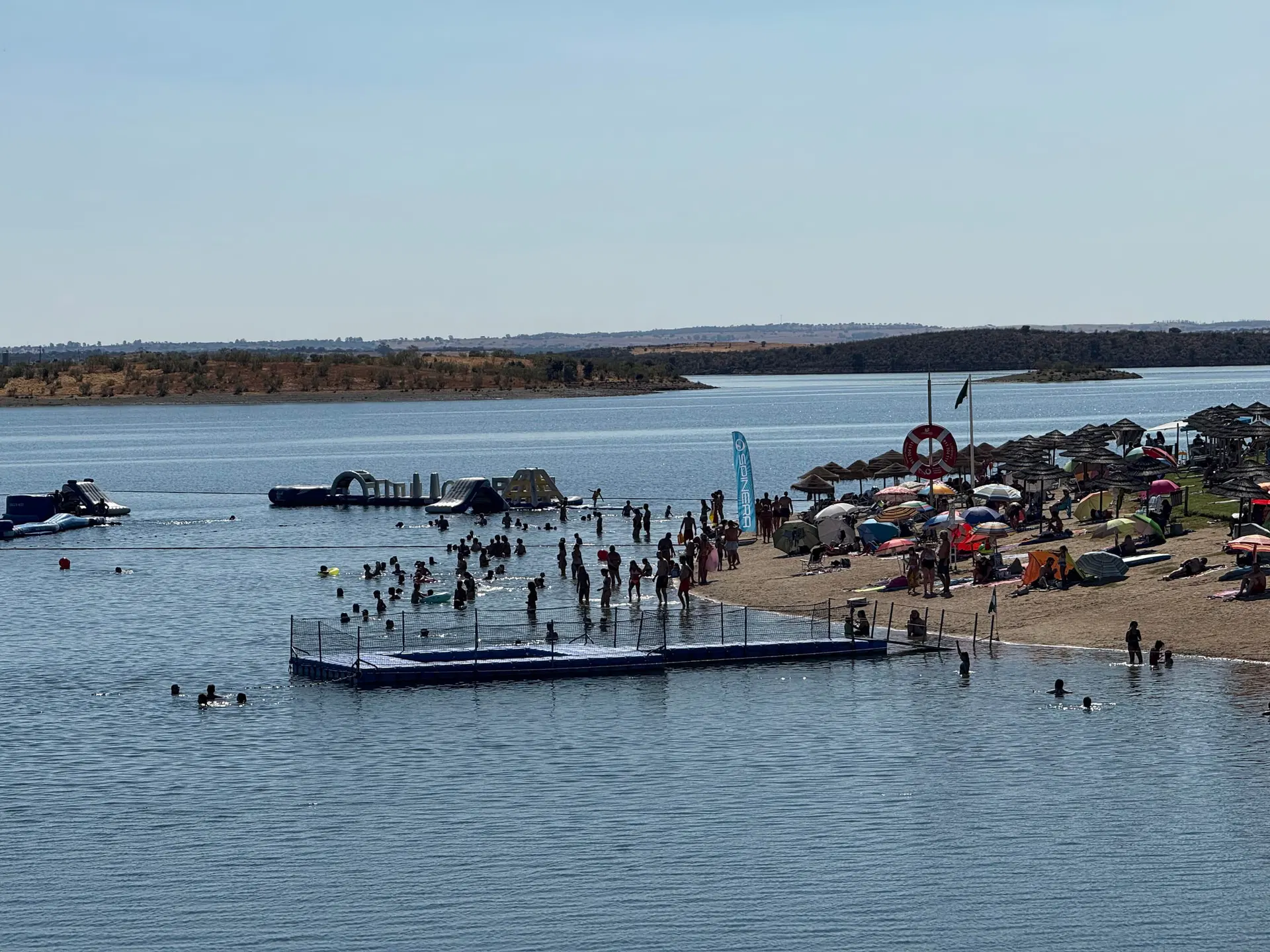
The lake beach. This is why many people pick Mourão as a summer base: 320 metres of sand on an island reached by a wooden boardwalk, with a Blue Flag, around 45 free parasols on a lawn, an enclosed floating pool for children and a floating platform with a jumping tower and slide. There are changing rooms, a picnic park with barbecues, free parking and an amphibious wheelchair. Of the 320 metres, 100 are lifeguarded in the bathing season, from 9am to 7pm; in 2026 that ran from 13 June to 13 September. It is the second-largest beach on Alqueva and five minutes from the house.
Where to eat. The village has six restaurants listed by the town council. Adega Velha is the best known — regional cooking inside an old wine cellar, with clay amphorae and old radios — and Pátio da Oliveira does dishes of the day in the centre; A Chaminé, O Chafariz, Churrasqueira O Beiral and Café Restaurante Orvalha complete the list. Order migas (fried bread or potato crumbs with pork), ensopado de borrego (lamb stew over bread), grilled black pork, açorda (a bread, garlic and coriander soup with a poached egg) and sericaia, the local egg pudding with Elvas plums. Almost all close one day a week, and from October to May many serve lunch only. In summer the beach bar does light meals.
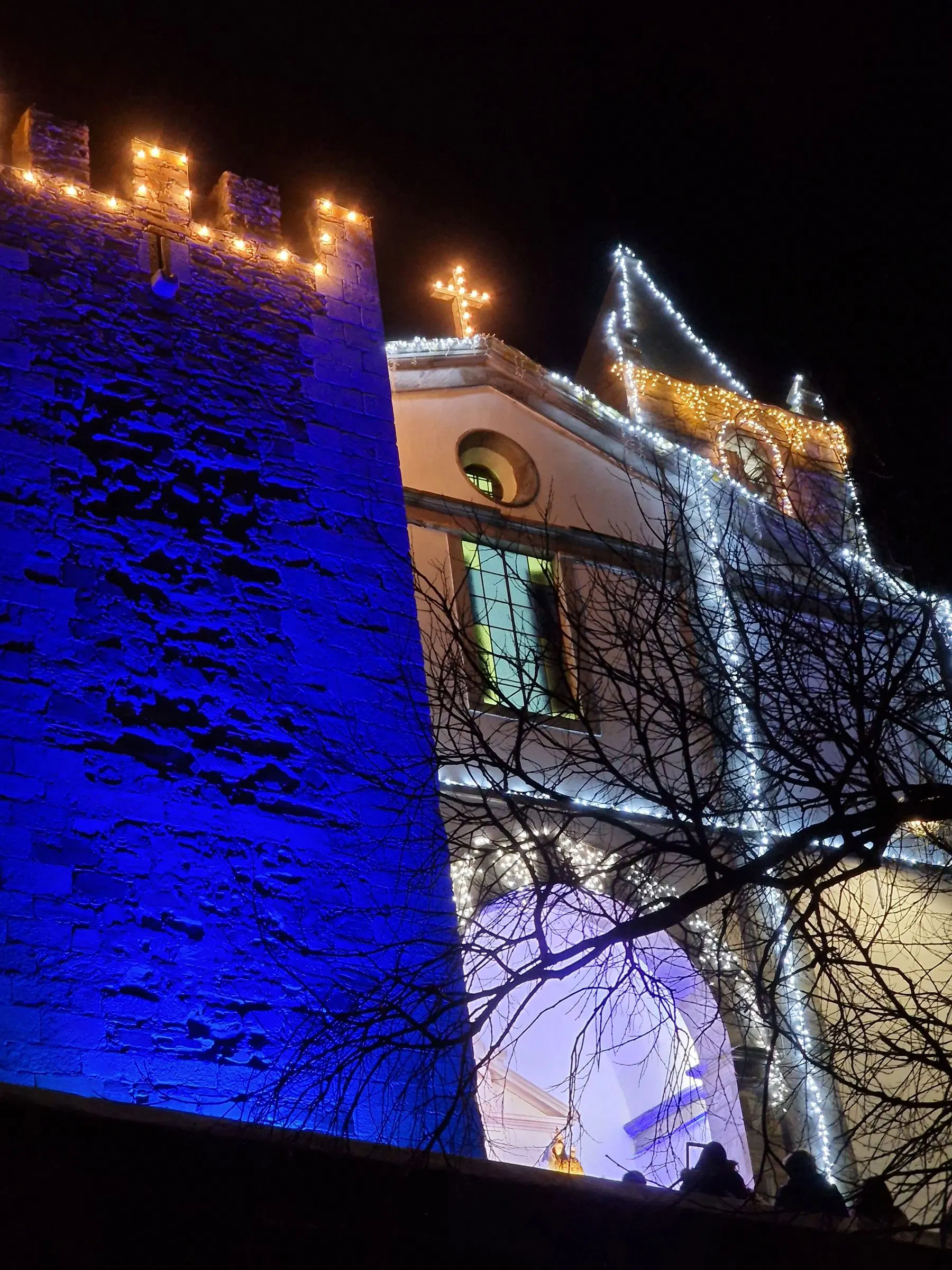
Festivals and the calendar. The feast of Nossa Senhora das Candeias fills ten days between late January and early February, with a novena, street party, bullfighting festival and the main day on 2 February, with a procession and fireworks; in 2026 it ran from 24 January to 3 February. In May there are three days of the Congresso das Migas, the food festival created in 2022 around the Alentejo's signature dish — in 2026 it was 22 to 24 May. At Christmas the village puts up lights, a market and an ice rink. Dates shift from year to year: check the Mourão town council's agenda before you plan around one.
Getting here. From Lisbon it's about 2h30 by car; from Évora, an hour; from Badajoz, 1h20, and the same from Elvas. Olivenza, on the Spanish side, is 55 minutes away. There is no railway: Mourão is a car destination, and the car is what lets you make the most of what's around, because distances on Alqueva are deceptive — you often have to drive around the water.
Practical life. For cooking at home there's the Meu Super supermarket, the Retiro Azul grocery, the Padaria da Praça bakery and Tons do Campo, plus the butcher; for a bigger shop, Reguengos de Monsaraz is 25 minutes away. There's a Galp petrol station in the village's industrial zone, open 6am to 11pm. Contrabanda, in the centre, is the prettiest shop in Mourão — homeware and gifts.
What's around. The lake beach and the Great Lake at 5 minutes; Aldeia da Luz and the Museu da Luz at 20, telling the story of the village that Alqueva submerged (the museum closes on Mondays); Monsaraz at 20, across the bridge; the Dark Sky observatory at Cumeada and Reguengos de Monsaraz at 25; the pottery workshops of São Pedro do Corval at 25; Amieira Marina at 50; Moura at 55; Évora at an hour; Badajoz at 1h20.
The house. Casa de Santa Margarida is in the centre of the village, on Rua de Santa Margarida: two bedrooms for up to four guests, a private pool in an enclosed courtyard, self check-in and free parking by the door. It's five minutes from the beach and twenty from Monsaraz — in the middle of everything without being on top of anything.
Beaches
320 metres of sand on an island, a Blue Flag, free parasols and an enclosed pool for children. Everything about the second-largest lake beach on Alqueva.
3 min read
Villages
A castle, a parish church, the second-largest lake beach on the lake and the ordinary life of a real Alentejo village. What to see in Mourão and why stay here.
2 min read
What's on
Mourão's traditional festivals, roughly when they happen, and where to check the official calendar before planning a trip.
2 min read
Heritage
Begun in 1343 under King Afonso IV, with the parish church built into its walls. Free, always open, a short walk from Mourão. What you see and when to go.
7 min read
Eating
Confirmed restaurants in Mourão, including Vila Velha, what to order at an Alentejo table, where to get coffee and bread in the morning, and what to buy to cook at home.
6 min read
What's on
Mourão's Congresso das Migas: when it usually happens, what the 2026 edition included, and where to confirm future dates before travelling.
1 min read