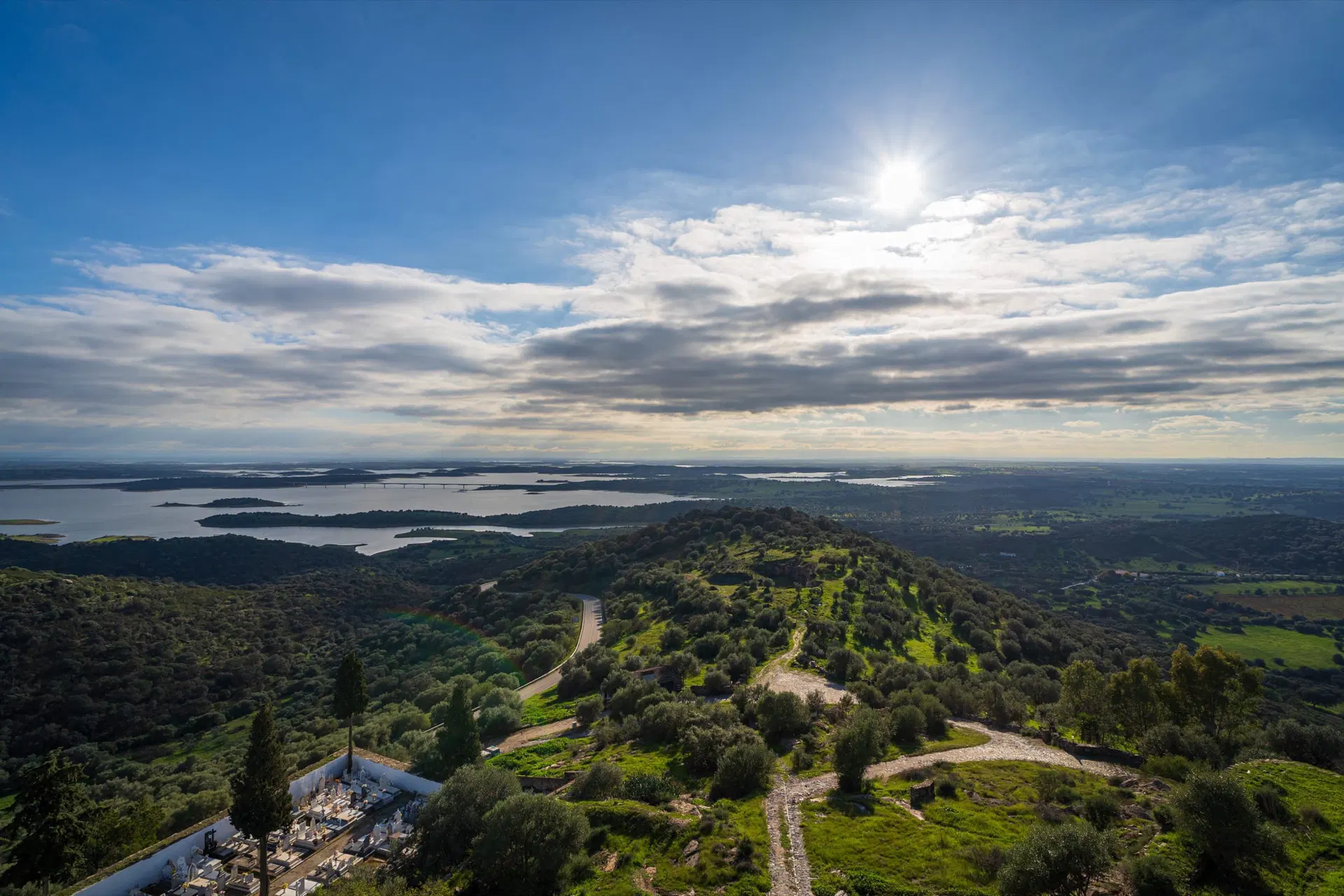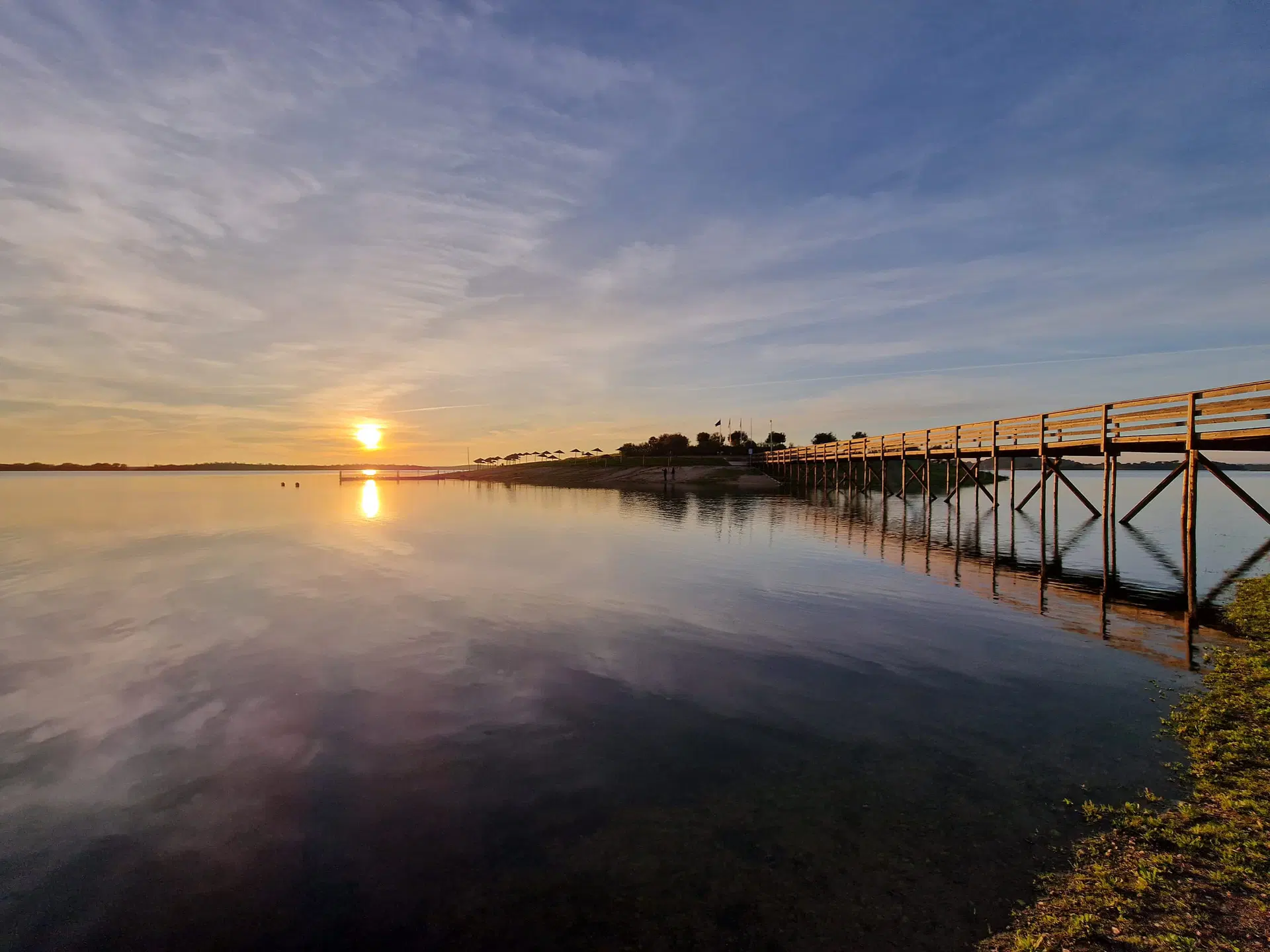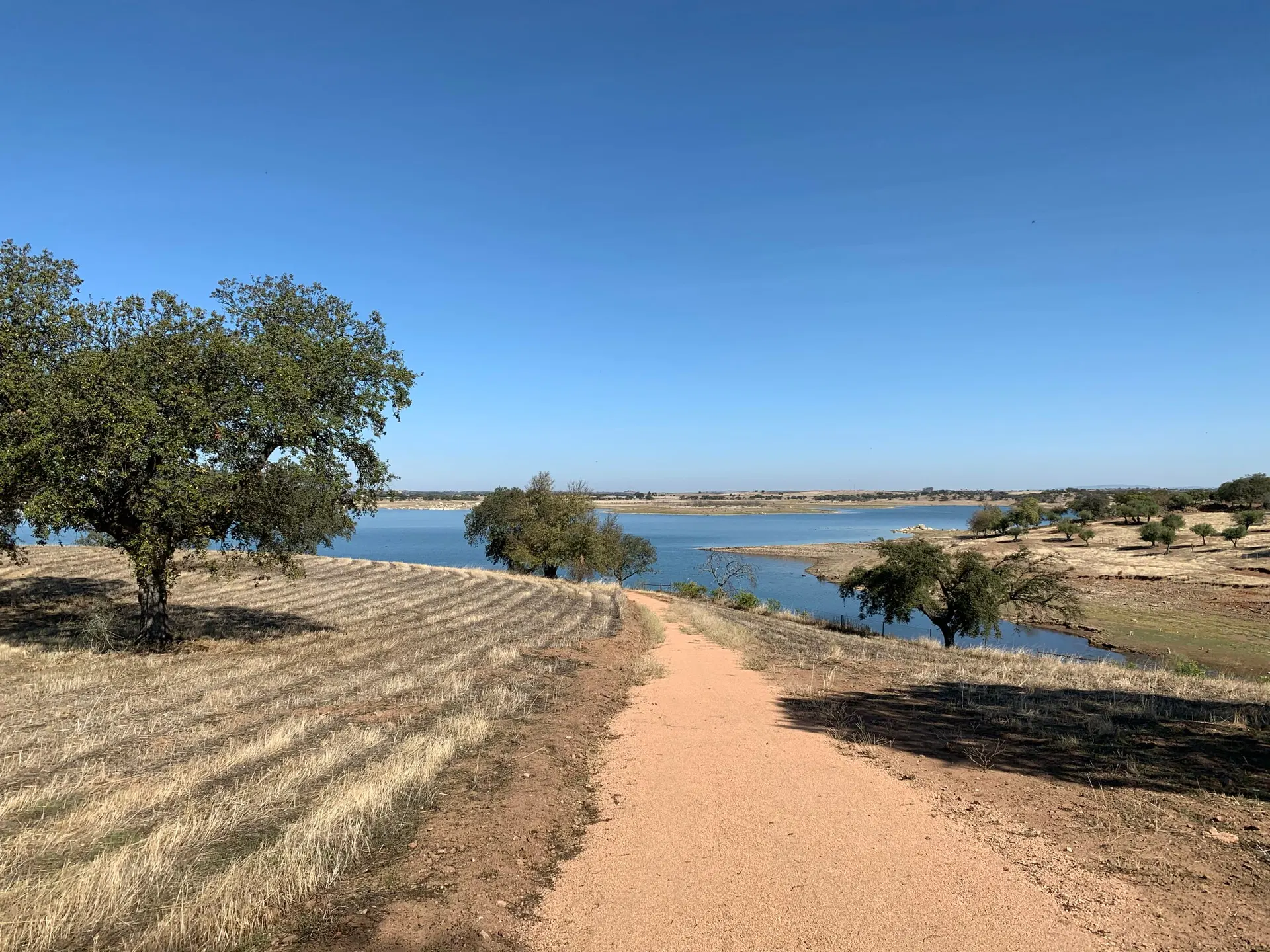
Alqueva isn't a place, it's a region: 250 km² of water with over a thousand kilometres of shoreline, spread across ten municipalities between Évora and the Guadiana. Saying "we're staying on Alqueva" is like saying "we're staying in Tuscany" — the next question is always where.
And it matters more here than in most places, for one practical reason: distances are deceptive. Two points that look close on a map can be forty minutes apart, because the lake is between them and you have to drive around it. Choosing the wrong area costs you an hour in the car every day.
This guide is written from Mourão, on the eastern shore. We have a house here, so we're not neutral — but what follows is what we'd tell a friend who asked.
The areas, and what changes between them
Mourão and the eastern shore
The quieter side of the lake. Mourão is a village of just over two thousand people, with a castle, a grocer, a butcher and cafés with actual people in them mid-morning.
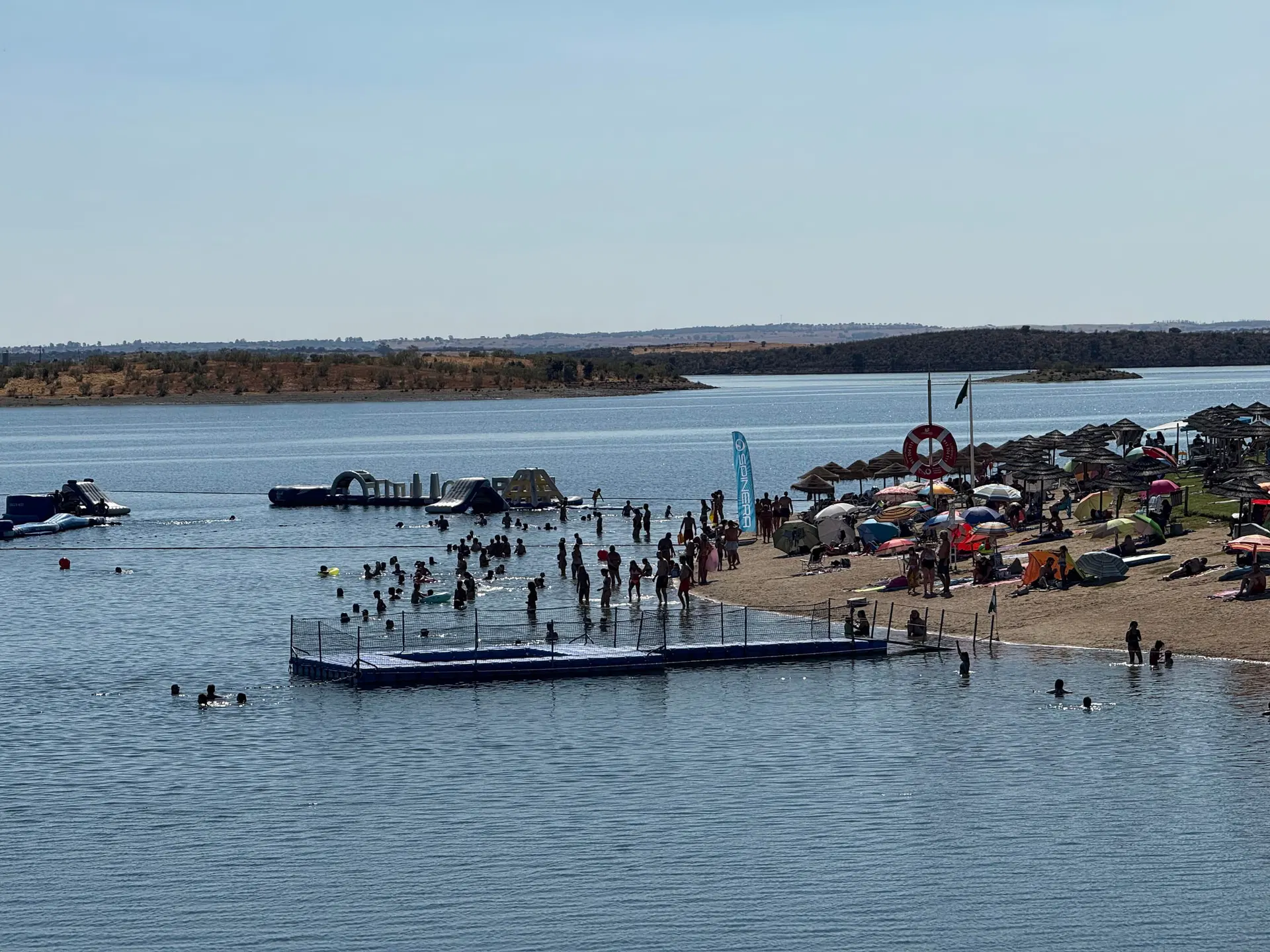
What you gain: the second-largest lake beach on Alqueva is five minutes by car from the centre, and it’s one of the few with a Blue Flag and lifeguards. Restaurant prices are the lowest in the region. And it's genuinely dark and quiet at night — which counts, if you came for the stars.
What you give up: fewer places to stay and less choice for dinner. Monsaraz is twenty minutes away, across the bridge.
Monsaraz and Reguengos
Monsaraz is the walled medieval village on the hilltop. Staying inside the walls has an obvious appeal: you wake up within them and see the lake from the window.
What you give up: it's expensive, it's the most visited spot in the region, and in summer it fills with coach parties between eleven and five. Reguengos, ten minutes away, is the practical alternative — it's where the wineries and the big supermarket are.
Amieira and the southern shore
Amieira Marina is the region's boating hub and the departure point for most houseboats. It makes sense if you've come mainly for the water. It's far from Monsaraz — allow forty to fifty minutes.
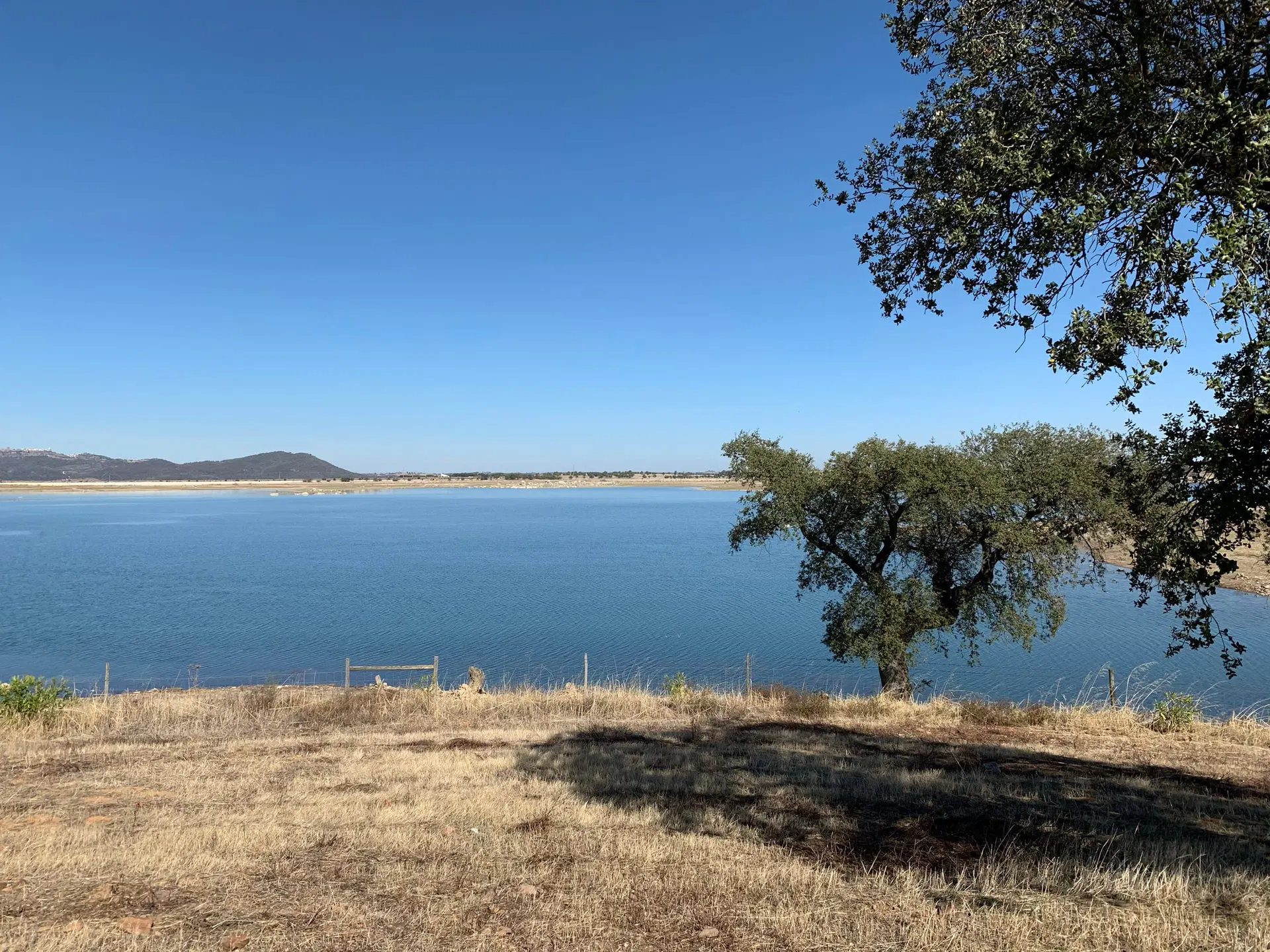
What type of place to choose
A holiday house with a pool. The most common choice, and for good reason: in July and August the Alentejo goes past 35°C, and a private pool stops being a luxury and becomes infrastructure. Having a kitchen matters too, because many restaurants close one day a week and some don't open for dinner out of season.
Alentejo farmhouses and rural tourism. Restored agricultural properties, usually isolated in open country. They're beautiful and very quiet. Check the distance to the nearest village before booking: some are fifteen minutes down a dirt track from the first café.
Hotels and pousadas. Mostly in Monsaraz and Reguengos. They make sense for a short two-night stay where setting up house isn't worth it.
Houseboats. Sleeping on the lake, without a boat licence. It's a genuine experience, but it's accommodation and transport at once — it doesn't work as a base for exploring the region by land.
For families, for couples
With children, what decides it is the distance to supervised water. Mourão lake beach has 100 metres of lifeguarded sand, an enclosed floating pool for small children, shade on grass and proper changing rooms — the easiest option on the lake. Being five minutes from it changes your days.
As a couple, quiet wins. The small villages on the eastern shore are calmer than Monsaraz in high season, and the night sky is the same.
When to book
July and August sell out early — there isn't much accommodation in this region and the supply doesn't grow. September is probably the best month: the water is still warm, the beach stays open until mid-month, and the queues in Monsaraz are gone. In May and June everything is still green, which in the Alentejo doesn't last long.
A note about our house
Casa de Santa Margarida is a holiday house in Mourão, with a private pool in the courtyard, two bedrooms and room for four. It's five minutes' drive from the lake beach and twenty from Monsaraz.
It's a house for four, and it was designed that way: two couples, or a small family. It sits inside the village, which means you walk out to dinner and walk back — no dirt roads in the dark, no reaching for the car every time. The courtyard is enclosed by whitewashed walls, so the privacy comes from how the house is built rather than from being far from anyone.
Common questions
Which part of Alqueva should I choose?
It depends what you're after. Mourão and the eastern shore give you the lake's second-largest beach five minutes away, the lowest restaurant prices in the region and real quiet at night, with less accommodation to choose from. Monsaraz has the walled-village charm but is expensive and fills with coach parties between eleven and five in summer. Reguengos is the practical alternative, with the wineries and the big supermarket.
Why does the area matter so much at Alqueva?
Because distances are misleading. It's 250 km² of water with over a thousand kilometres of shoreline: two points that look close on the map can be forty minutes apart, because you have to go around the lake. Choosing the wrong base costs you an hour of driving a day.
Is Alqueva a place or a region?
A region — 250 km² of water spread across ten municipalities between Évora and the Guadiana. Saying 'we're staying at Alqueva' is like saying 'we're staying in the Algarve': the next question is always where.
House with a pool, or a hotel?
With children or at the height of summer, a pool where you're staying stops being an extra: it's what saves the afternoons between two and five, when the heat rules out anything outdoors, and it spares you driving twice a day.