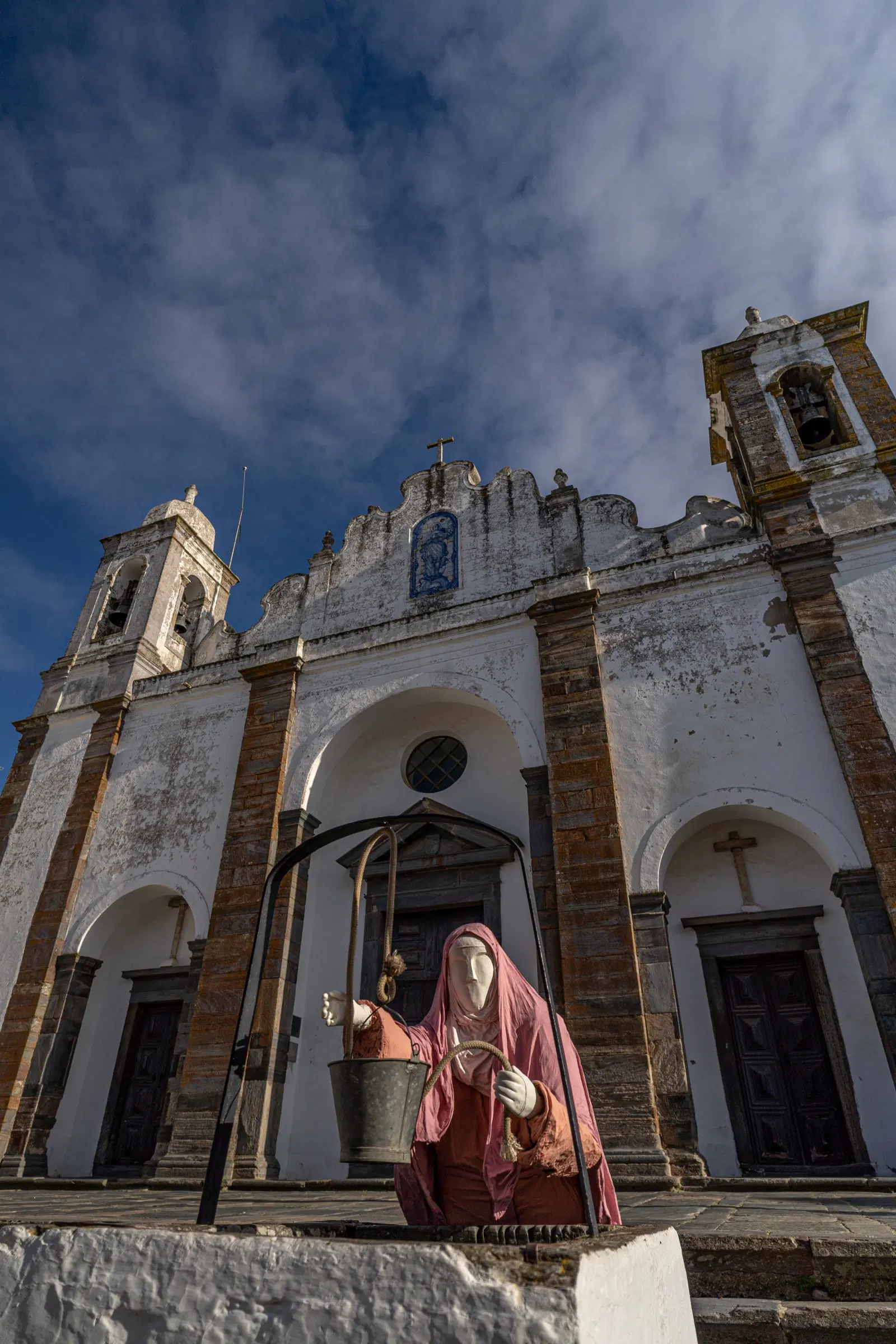
Villages
Visiting Monsaraz: what to see in the walled village
What to see in Monsaraz, how long it takes, where to park and what time to go to miss the coach parties. A practical guide, 20 minutes from Mourão.
2 min read
The walled medieval village on the hilltop across the lake — twenty minutes from Mourão. What to see, when to go, where to eat and where to sleep.
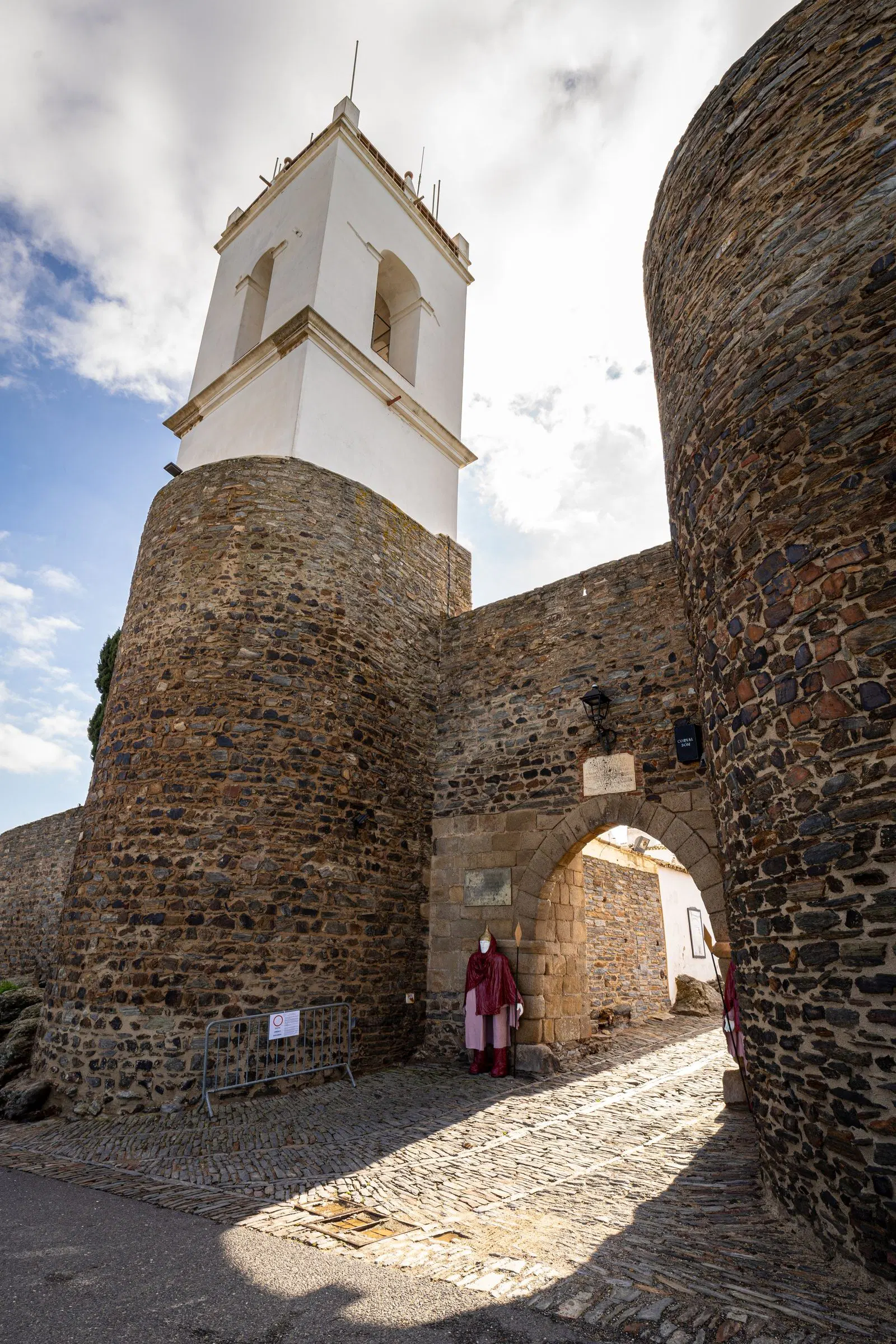
The walled village. Monsaraz stands on a hill above Alqueva, inside its walls, with cobbled streets and whitewashed houses. It's the most photographed sight in the region, and deservedly: the view from the castle over the lake is one of the best in Portugal. You enter through the Porta da Vila, under a white clock tower, and from there the village is essentially two parallel streets joined by alleys — the Rua Direita runs from end to end. You can see it in a morning or an afternoon; from Mourão it's about twenty minutes by car, across the bridge.
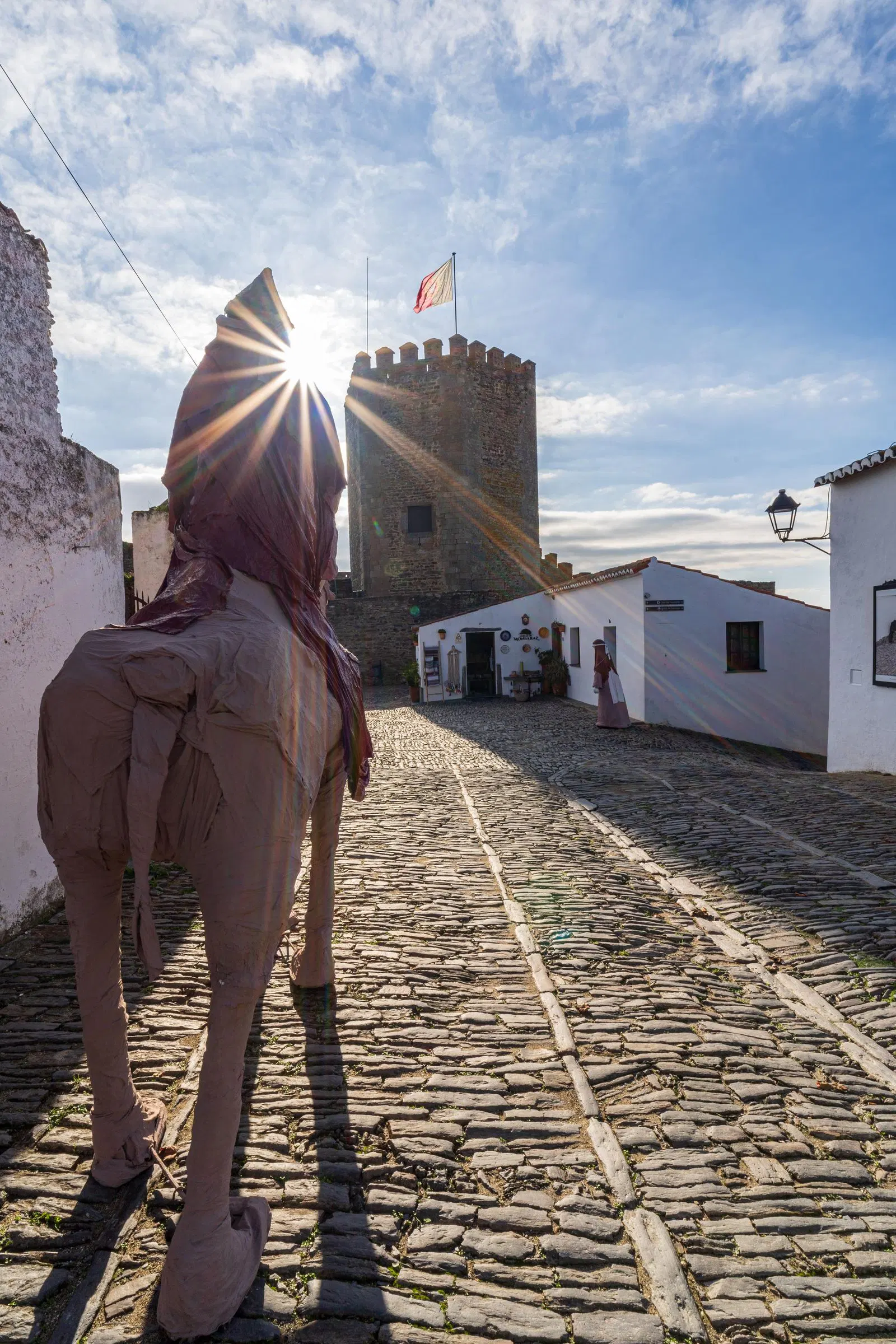
The castle and the bullring. The castle takes the northern tip, the highest point, and was built over three reigns: under Afonso III the knight Martim Anes raised the keep enclosure, its five square towers, the bastion and the southern stretch of the outer wall; Dinis added the keep tower and almost all the outer barbican; Fernando closed the inner curtain. The old parade ground is now a bullring with stone terraces: around 1830 the villagers built it from the stone of the ruined military buildings, and the bullfight of the Senhor Jesus dos Passos festivities continues. The Alentejo tourist board lists the castle as always open, with no closing day; the climb from the main gate takes ten minutes, on uneven cobbles.
The parish church and pillory. The Igreja Matriz de Nossa Senhora da Lagoa stands on the main square, with a white and ochre façade and two bell towers, and the pillory in front. Next door, the Fresco Museum, in the former town hall and courthouse, holds a fifteenth-century wall painting of a kind rare in Portugal — it's small and takes half an hour.
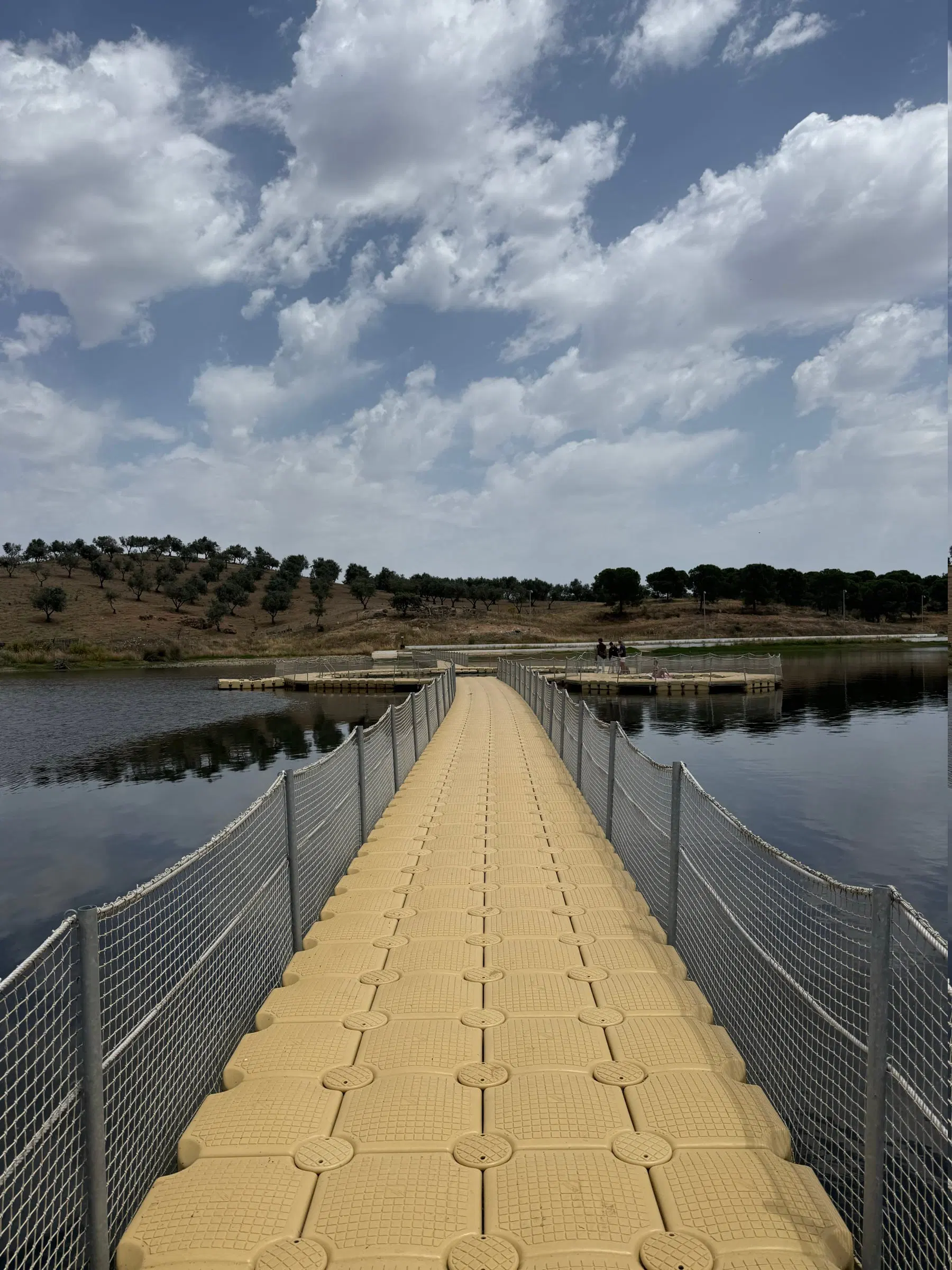
Monsaraz lake beach. It's at the Centro Náutico in Telheiro, about three kilometres below the village: leave Monsaraz towards Telheiro and, at the menhir roundabout, follow the signs for the nautical centre. It flies the Blue Flag in 2026, with a lifeguarded bathing season from 1 June to 13 September, a sandy strip, lawn and shaded area, water access for people with reduced mobility, free parking, paddleboard and wakeboard hire and a restaurant-bar with a terrace on the lake — one of the very few places on Alqueva where you can eat right on the water.
Where to eat. In Monsaraz you pay for the view: prices are higher than in the villages around and service more formal. Inside the walls are Sabores de Monsaraz, Xarez, Taverna Os Templários, Casa do Forno, Casa Modesta, Lumumba, O Gaspacho and Casa da Muralha; the village is narrow, with the lake on one side and the plain on the other, so when you book, ask for the terrace. Outside the walls, Sem-Fim in Telheiro occupies an old olive-oil mill with the machinery still in place. In summer and at weekends, book ahead; the line-up changes from year to year, but the pattern holds — careful Alentejo cooking and a first-rate view.
Menhirs and the stone circle. The plain around Monsaraz is one of the richest megalithic areas in Portugal. The Xerez cromlech, identified in 1969, has around fifty standing stones in a rare square layout with a 3.6-metre central menhir; because of the Alqueva reservoir it was re-excavated and moved in 1998 to a site beside the Orada convent near Telheiro, reached by a dirt track that an ordinary car can manage. The Outeiro menhir, known locally as Penedo Comprido, is over 5.6 metres tall, and the decorated Bulhoa menhir is dated to the fourth to third millennium BC. All are a few minutes from the village.
Parking and the right hours. There's no driving inside the walls. There is free parking at the entrance and everything from there is on foot, on uneven cobbles and uphill — comfortable shoes help. The hour matters more than you'd think: coach parties arrive around eleven and leave around five, and in between, in summer, the narrow streets fill up. Before ten or in the late afternoon it's a different village, and the light is better, the white walls turning golden and the lake silver. For guided visits or special arrangements, the Monsaraz tourist office answers on +351 266 508 040.
Where to stay. Honestly: there are few guest houses inside the walls and they fill early, and most people who visit Monsaraz sleep in the villages around it, twenty or twenty-five minutes away. Ours is in Mourão, across the bridge: Casa de Santa Margarida has two bedrooms for up to four guests, a private pool in an enclosed courtyard and free parking by the door, and from there Monsaraz is a morning before the coaches or a late afternoon after them.
Planning the day. Monsaraz isn't a full-day visit, and that's a good thing. Mourão lake beach in the morning and Monsaraz in the late afternoon; or Monsaraz early and the Cumeada Dark Sky observatory at night, 25 minutes from Mourão. On the way there is São Lourenço do Barrocal, a country hotel that makes wine and takes visitors, and Reguengos de Monsaraz, with the wineries of the sub-region, 25 minutes from the house.
Villages
What to see in Monsaraz, how long it takes, where to park and what time to go to miss the coach parties. A practical guide, 20 minutes from Mourão.
2 min read
Heritage
The medieval castle at the top of Monsaraz, the view over the lake, and what to know before you climb. Twenty minutes from Mourão.
2 min read
Beaches
The Monsaraz lake beach at the nautical centre on Alqueva: Blue Flag 2026, bathing season, parking, restaurant, accessibility and how to combine it with the village.
6 min read