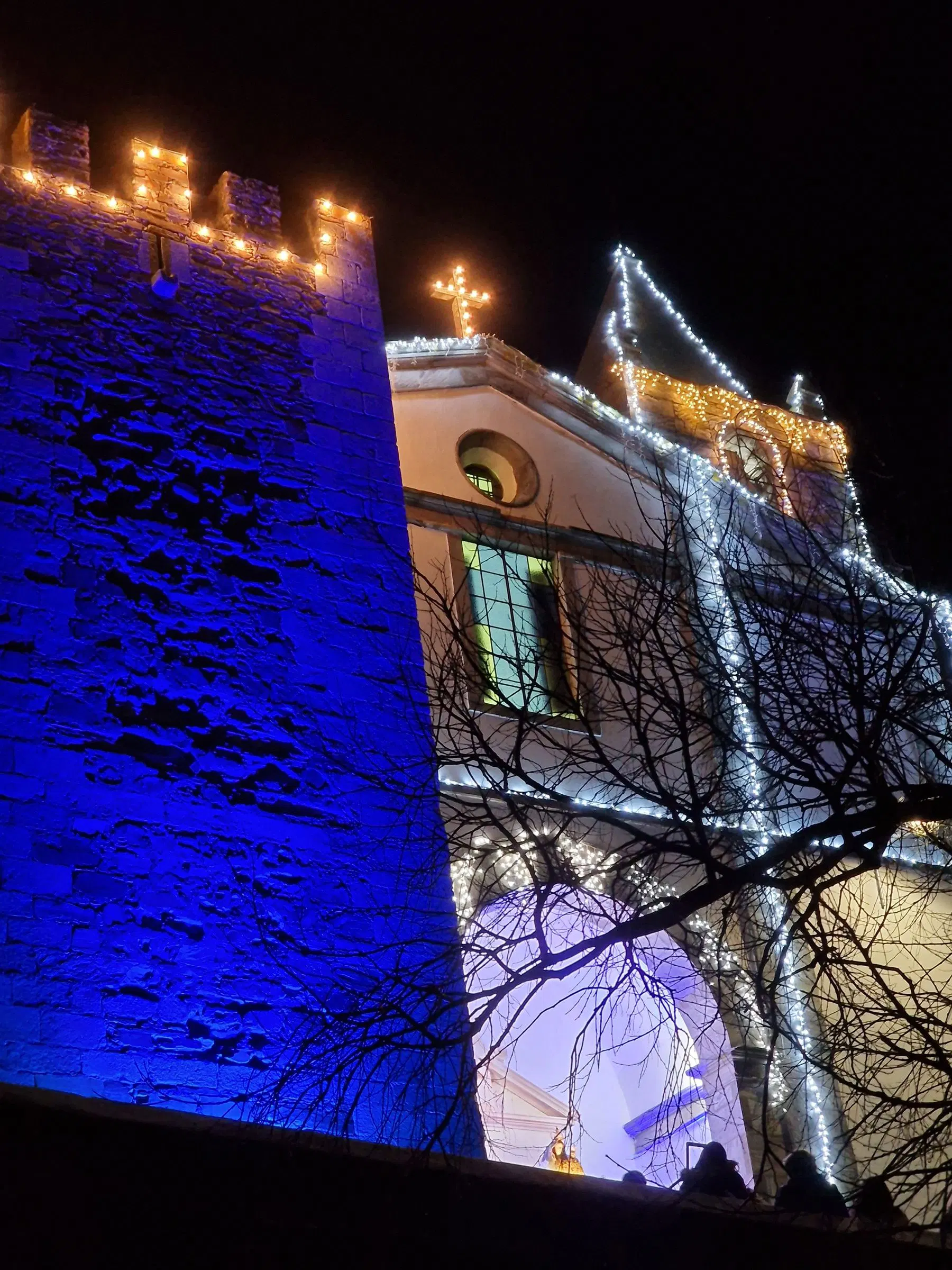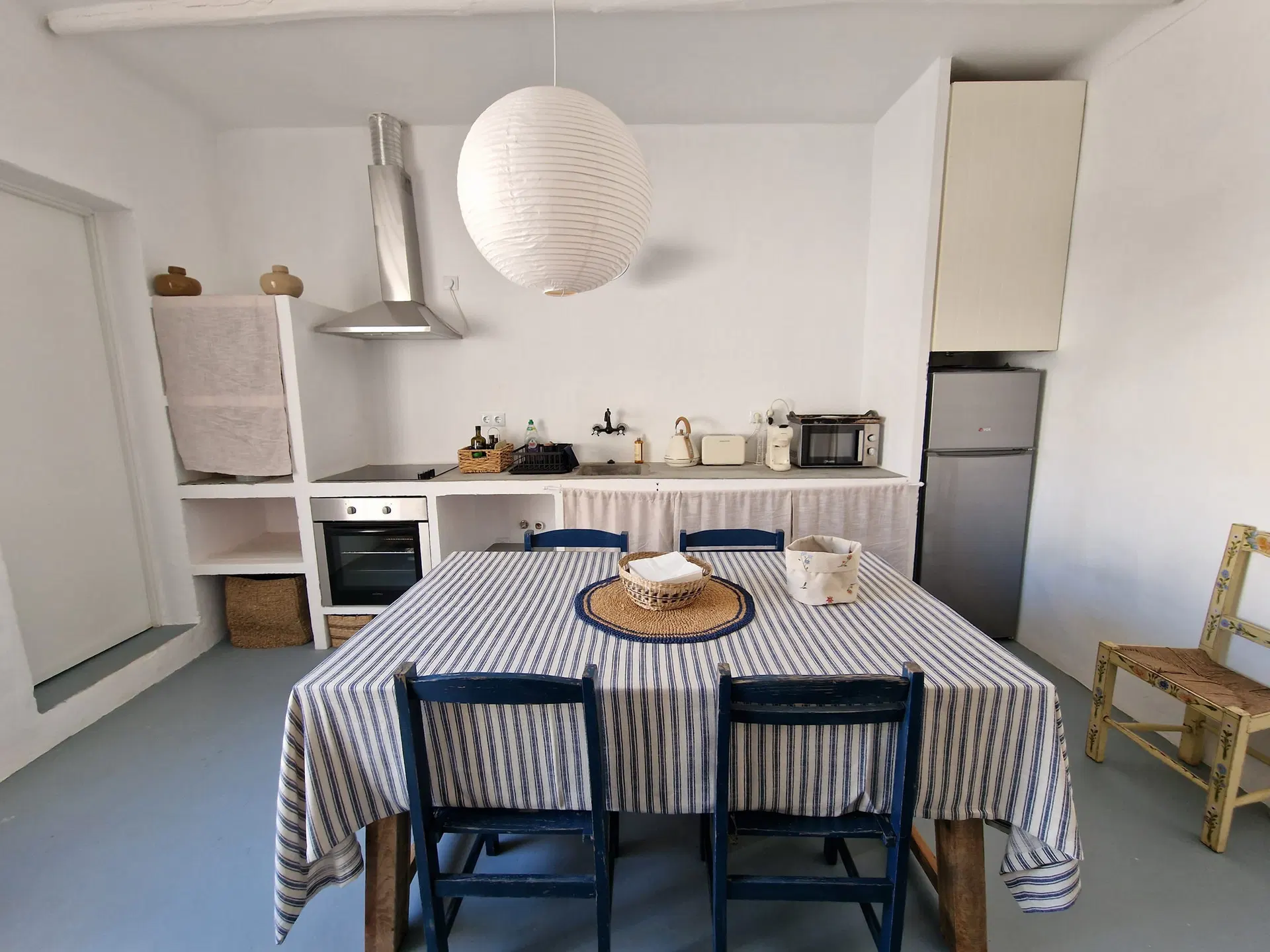
This guide brings together five confirmed restaurants inside the village, with Vila Velha alongside them: on foot, none is more than a few minutes from Casa de Santa Margarida. What you get is Alentejo cooking in small, family-run places, with no twenty-page wine list and no view of the lake — that's Monsaraz, and it's covered in the guide to restaurants around Alqueva.
This guide is about the village. Where to eat, what to order, where to get coffee in the morning and what to buy for dinner at home. No opening hours and no prices, deliberately: in places like these they change often, and the only way not to get caught out is to phone before you leave the house.
The village restaurants
There are five restaurants we could confirm in the village, and we also include Vila Velha.
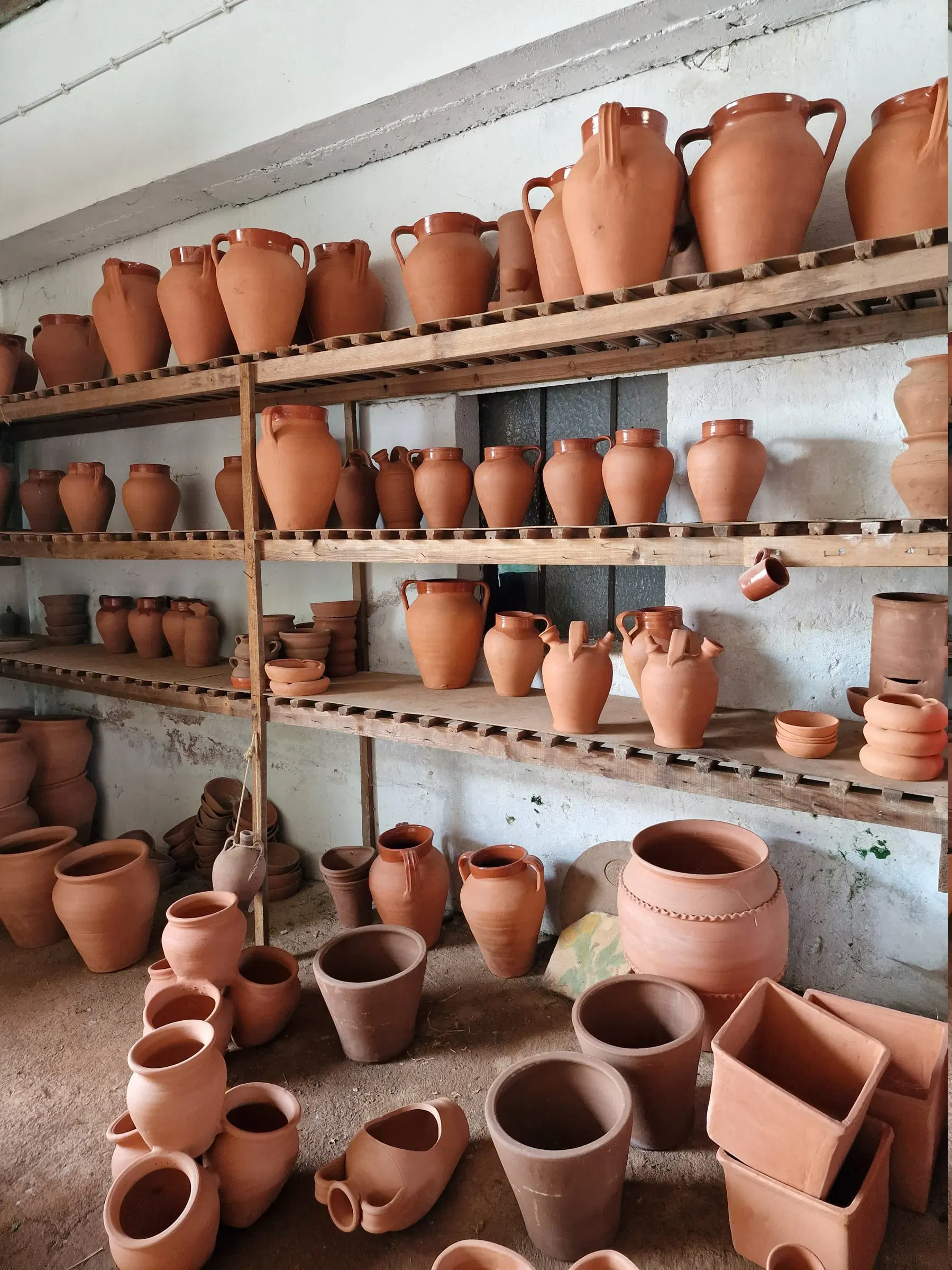
Restaurante Adega Velha — The best-known place in Mourão and the only one in the municipality in the Alentejo tourist board's catalogue. Regional cooking in an old adega (wine cellar), with the clay talhas that once held the wine and old radios along the walls. It's the one that fills first at weekends, and the official listing itself recommends booking. If you only eat out once in Mourão, this is where.
Pátio da Oliveira — In the centre, simple, with dishes of the day. Home cooking, the kind you have for a weekday lunch without thinking too hard about it.
Restaurante Vila Velha — On Travessa dos Pinheiros, it brings together traditional food, an outdoor patio and big TVs showing football. A good stop for an unhurried lunch or watching the match over a meal.
O Nosso Cantinho, O Chafariz and Churrasqueira O Beiral complete the list. They are village places, with no pretensions — grills, dishes of the day, a coffee at the end. Which is exactly what you go for.
Before you leave the house: three things to know
Almost all of them close one day a week. Not the same day for everyone, and with only a few places that can mean just one or two open on a given day. Monday tends to be the thin one.
Outside summer, some serve lunch only. From October to May, dinner midweek can mean a phone call in the afternoon to find out who's opening that evening.
Mealtimes are Portuguese, not Spanish. Lunch is around 1pm, dinner around 8pm. After 2.30pm at lunch, or 9.30pm at dinner, the kitchen may already be closing. Earlier than much of southern Europe, later than Britain — and there's no sitting down at 6pm.
What to order
Mourão's cooking is that of the inland Alentejo: bread, olive oil, garlic, coriander and pork. There are no secrets, only good produce. A few words explain the menu.
- Migas — the signature dish of the region and of the village, which holds a festival in its honour. Bread (or potato) crushed into pork fat and served with the pork on top. Ask for the bread version, à alentejana.
- Açorda alentejana — a bread soup of garlic, coriander, olive oil and a poached egg. Simple and full of flavour.
- Ensopado de borrego — lamb stew, cooked slowly and served over slices of bread.
- Sopa de cação — dogfish soup, with vinegar and coriander, despite being far from the sea. An Alentejo classic.
- Porco preto — Iberian black pork: secretos, plumas, presa, simply grilled. It's what the region does best.
- Cheese and bread — to start, Serpa or Nisa cheese with Alentejo bread.
- Sericaia with an Elvas plum — the regional dessert, a soft cinnamon sponge with a preserved plum.
To drink, Alentejo wine. Reguengos de Monsaraz, 25 minutes away, is one of the wine sub-regions and the reds are generous and cheap — the wineries guide says which to visit.
Coffee and bread in the morning
Mourão is a village where the cafés have people in them mid-morning. The Padaria da Praça bakes its own bread and pastries and is the natural stop for breakfast, or for bread to take home. The village cafés do the morning coffee and toast; the council's list of bars includes the Morango Bar.
A shopping stop in the village
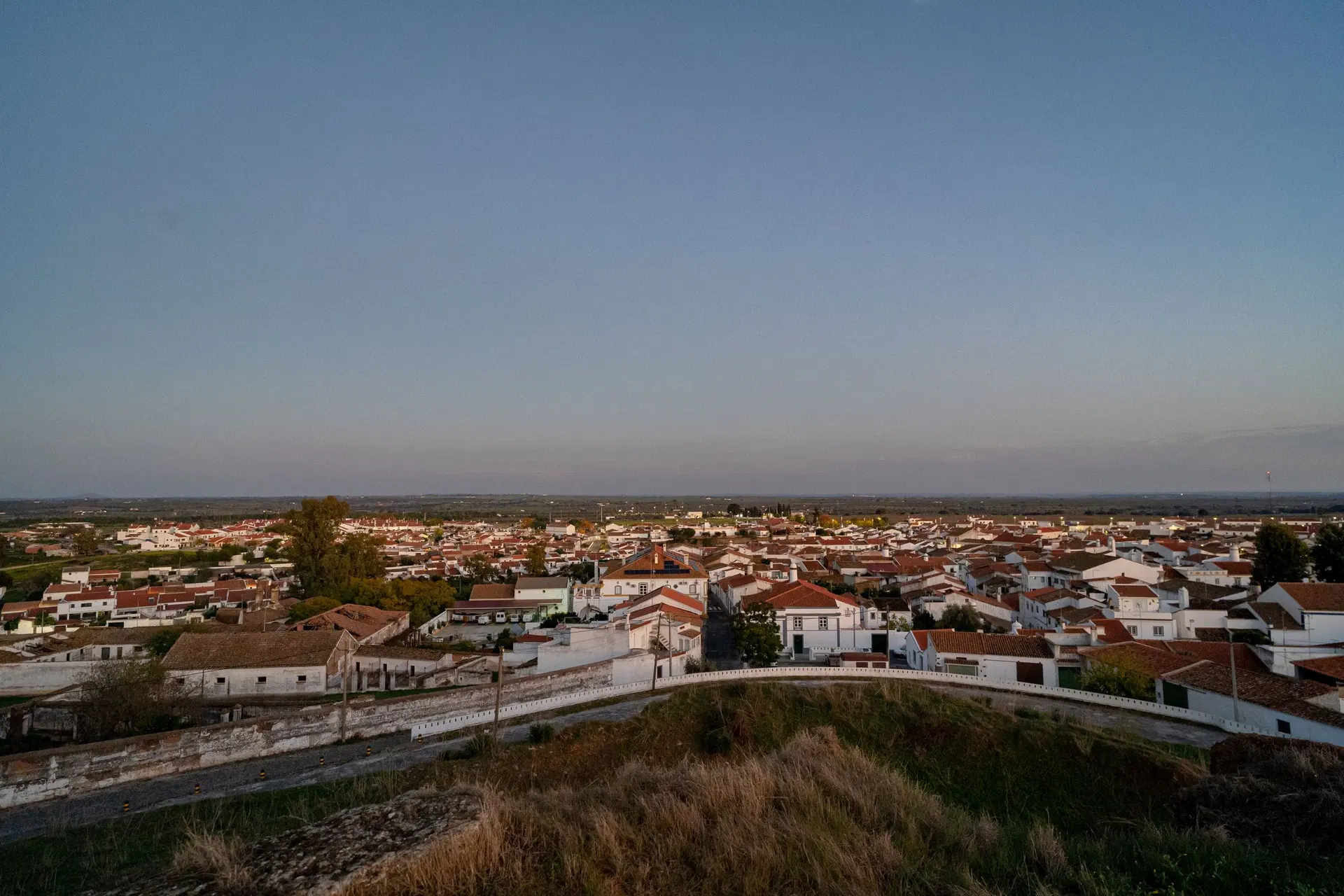
Contrabando is not somewhere to eat, but it is worth stopping by: homeware and gifts, and the prettiest shop in the village — the name is no accident; the border is only a few kilometres away.
If you are here in May, the Congresso das Migas guide explains what to expect and where to confirm the next date.
Cooking at home
Keep at least one dinner to cook in the courtyard. The village has the Meu Super supermarket, the grocery at Retiro Azul, Tons do Campo, the Padaria da Praça and a butcher — enough for a decent dinner without getting in the car. Local bread, cheese, cured ham, tomatoes, olive oil and a bottle from Reguengos: in August, when it cools at dusk, this is often the best meal of the stay.
For a big shop — several days, a full house — Reguengos de Monsaraz has larger supermarkets and is 25 minutes away by car.
Beyond the village
This guide stops at the last street of Mourão. For everything else — the tables with a view in Monsaraz, the handful of places right on the water, the wineries of Reguengos and the Michelin Green Star restaurant at Herdade do Esporão — see the guide to restaurants around Alqueva.
Two notes on what's close:
- In summer, the bar at the Mourão lake beach (Map), 5 minutes by car, serves light meals by the water.
- Aldeia da Luz (Map), 20 minutes away, belongs to the municipality of Mourão, but the council's official restaurant list only includes places in the village itself. If you want to eat in Luz, check locally before making the trip.
Where to stay
Casa de Santa Margarida is in the centre of Mourão, on Rua de Santa Margarida: the restaurants we recommend are all on foot, so is the bakery, and the equipped kitchen and big courtyard table are there for the dinner you cook yourself. Two bedrooms, up to four guests, a private pool and free parking by the door.
Common questions
Which restaurants does this guide recommend in Mourão?
This guide recommends Adega Velha, Pátio da Oliveira, O Nosso Cantinho, O Chafariz and Churrasqueira O Beiral, and also includes Restaurante Vila Velha on Travessa dos Pinheiros. They are all inside the village, a few minutes' walk from each other and from Casa de Santa Margarida.
Which is the best-known restaurant in Mourão?
Adega Velha. It's the one in the Alentejo tourist board's catalogue and in the travel guides: Alentejo cooking in an old wine cellar, with clay wine jars and old radios decorating the rooms. It fills up, especially at weekends, so it's worth booking.
Do Mourão's restaurants close one day a week?
Most do, and it isn't the same day for all of them. In a village of two thousand people that can mean very little open on a given day. The rule is simple: phone ahead, especially on Mondays and outside summer, when some serve lunch only.
What do you eat in Mourão?
Unpretentious Alentejo cooking: migas with pork, açorda, lamb ensopado, sopa de cação, grilled black pork. Cheese and bread to start, sericaia to finish, and wine from Reguengos de Monsaraz, the wine sub-region next door.
Can you buy food to cook at home in Mourão?
Yes. The village has the Meu Super supermarket, the grocery at Retiro Azul, Tons do Campo, the Padaria da Praça bakery and a butcher. For a big shop, Reguengos de Monsaraz is 25 minutes away by car.