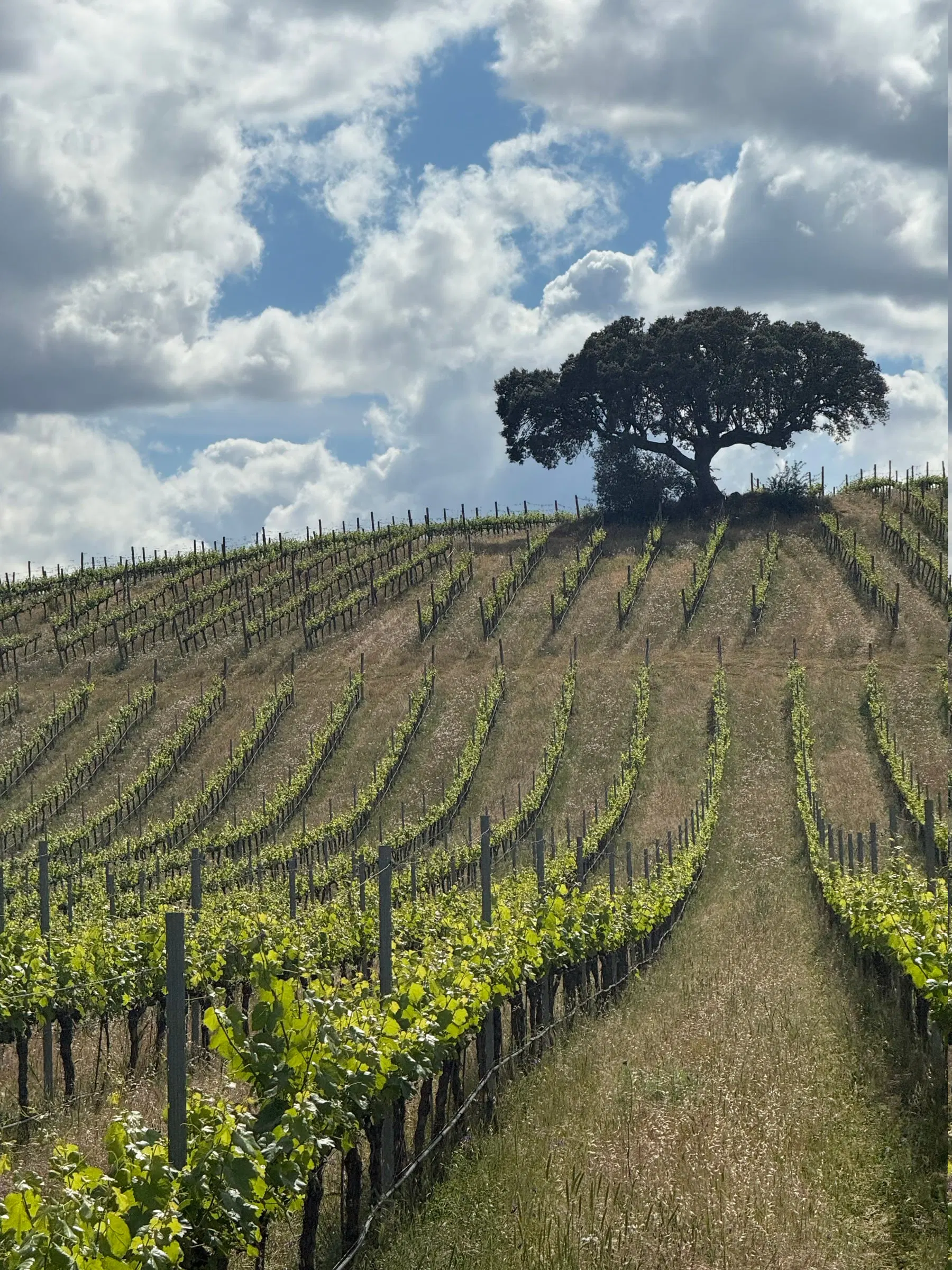
Reguengos de Monsaraz is one of the Alentejo's wine sub-regions, and it's 25 minutes from Mourão. It was European Wine City in 2015 — a distinction that says something about how many producers fit into a town this size.
There are around eleven producers in the sub-region and most take visitors. These are the ones that make sense from Alqueva.
Herdade do Esporão
The best known and the best set up for visitors. Guided cellar tours with tastings, a shop, and a restaurant open since 1997 serving terroir cooking built on Alentejo produce.
The obvious choice if you want a full visit and lunch in one place. Also the most in demand, so booking is essential in summer and at weekends.
Ervideira
Open every day of the year, with visits and tastings by appointment. They also run less usual programmes, including blind tastings.
But what makes it interesting if you're on Alqueva is something else.
CARMIM
The Reguengos de Monsaraz cooperative, and the largest wine cooperative in Portugal, with hundreds of members. It's the opposite of the boutique estates: industrial scale, low prices, and the wines people actually drink every day in the Alentejo.
Worth visiting for exactly that reason — you understand the weight of wine in the local economy in a way a small estate doesn't show you.
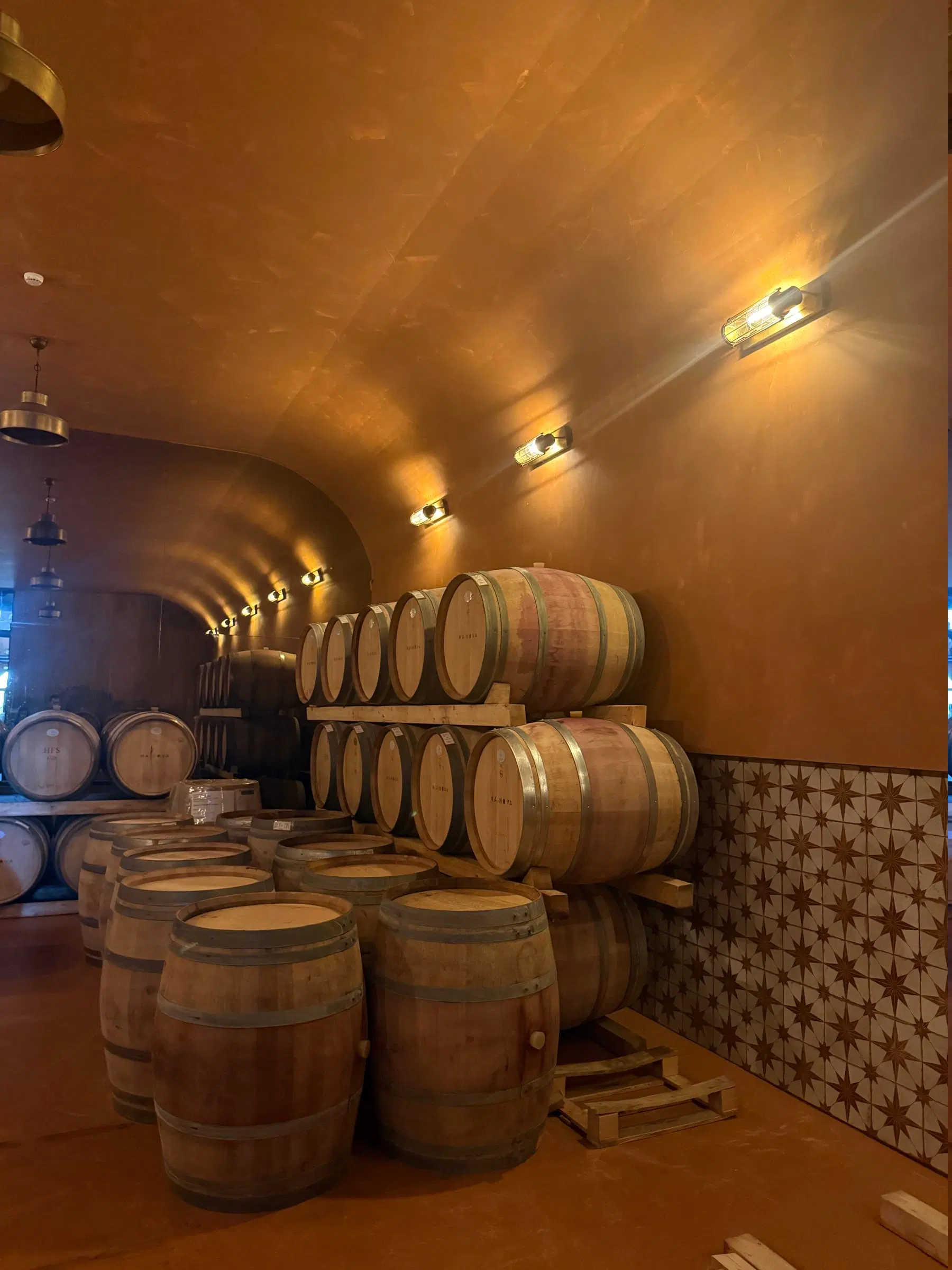
Herdade da Mainova
In Vimieiro, near Évora — this isn't a half-hour visit like the others on this list: it's about 100 km and an hour and a half's drive from Mourão. Worth it mainly if you're already headed to Évora and want a stop on the way.
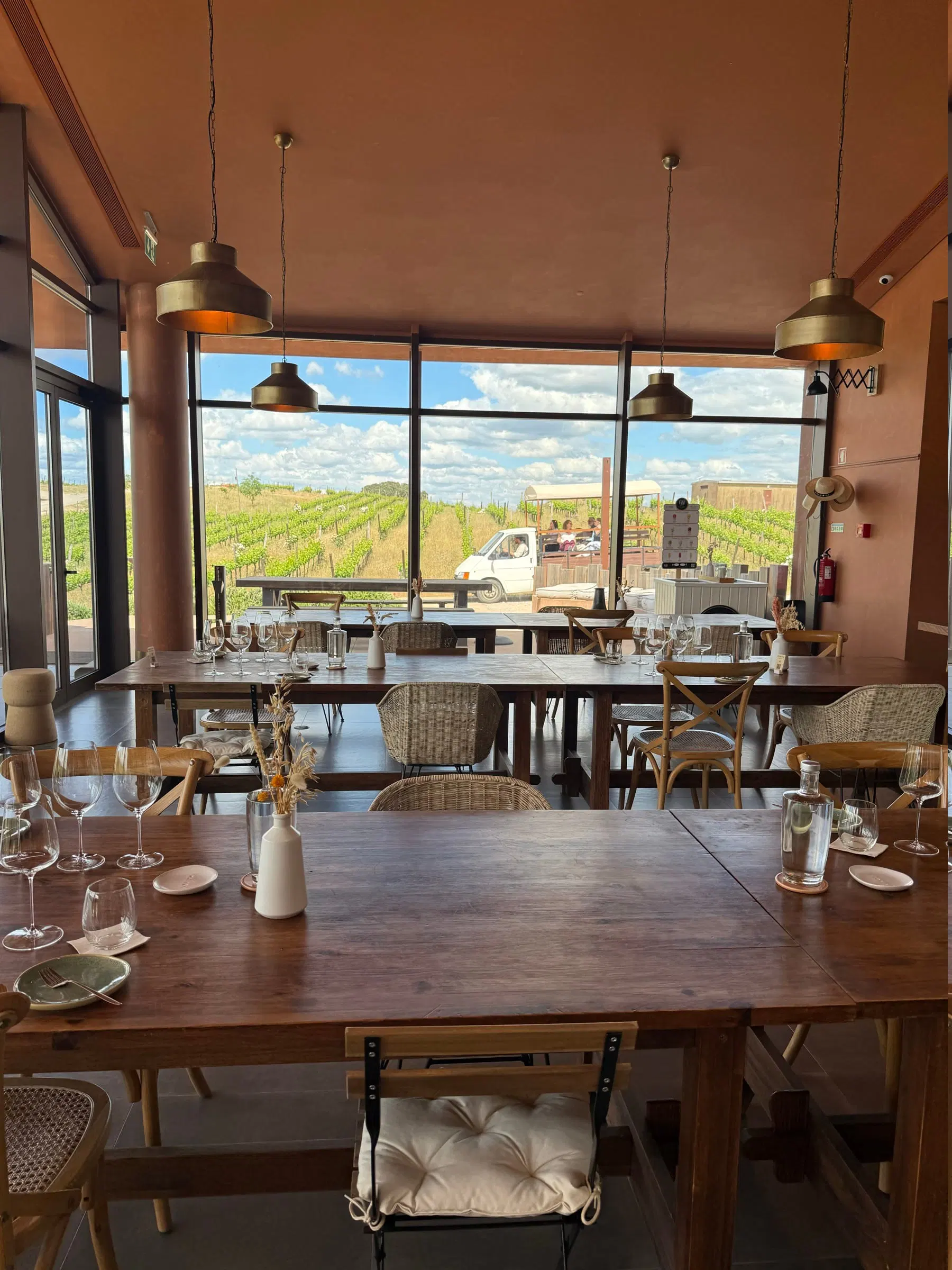
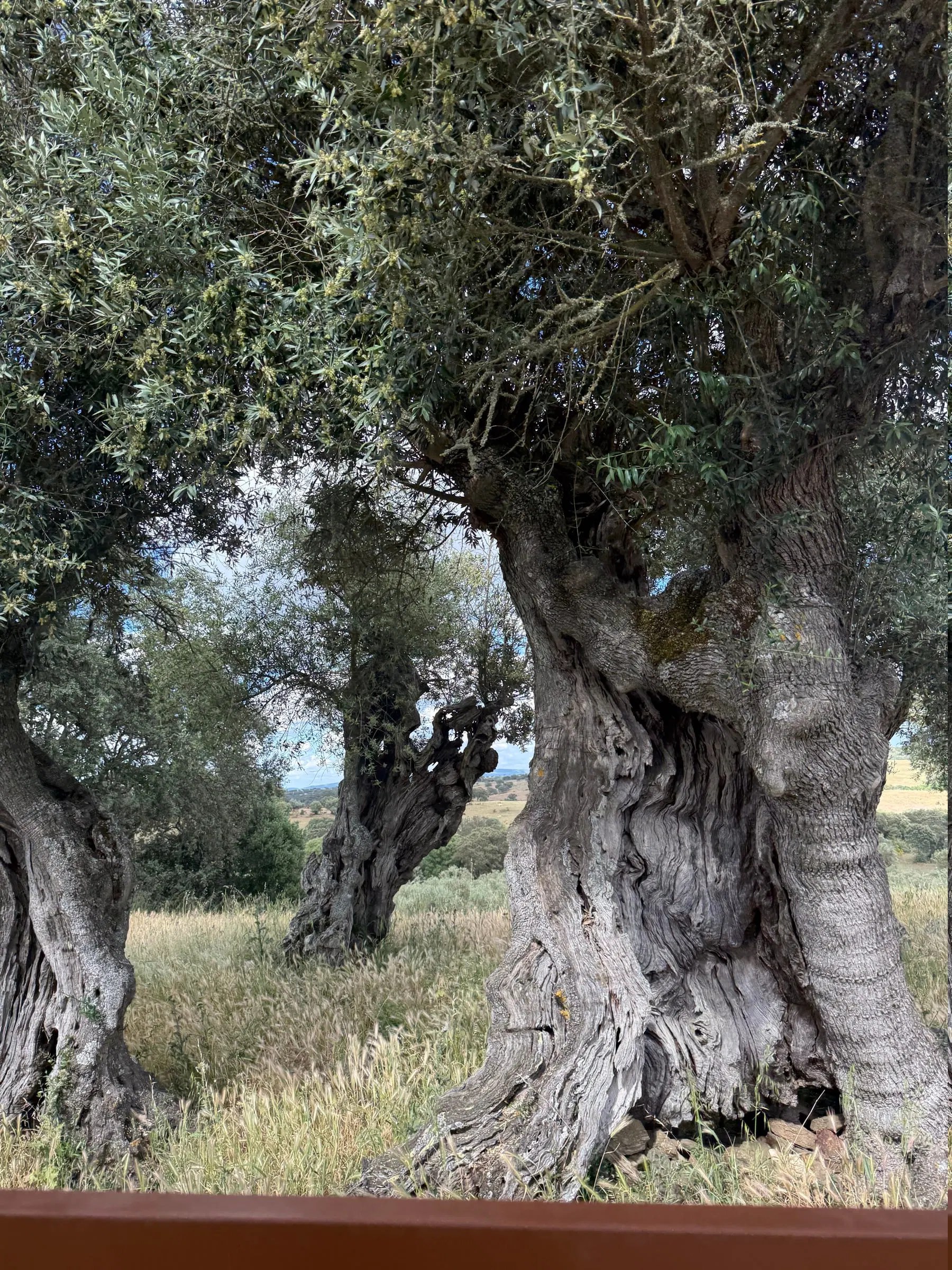
It's a project run by the Monteiro family, with Bárbara Monteiro at the helm since 2019, on a 200-hectare organic estate of vineyard, olive grove and cork oak. The contemporary architecture alone, concrete and copper above the vines, is reason enough to visit.
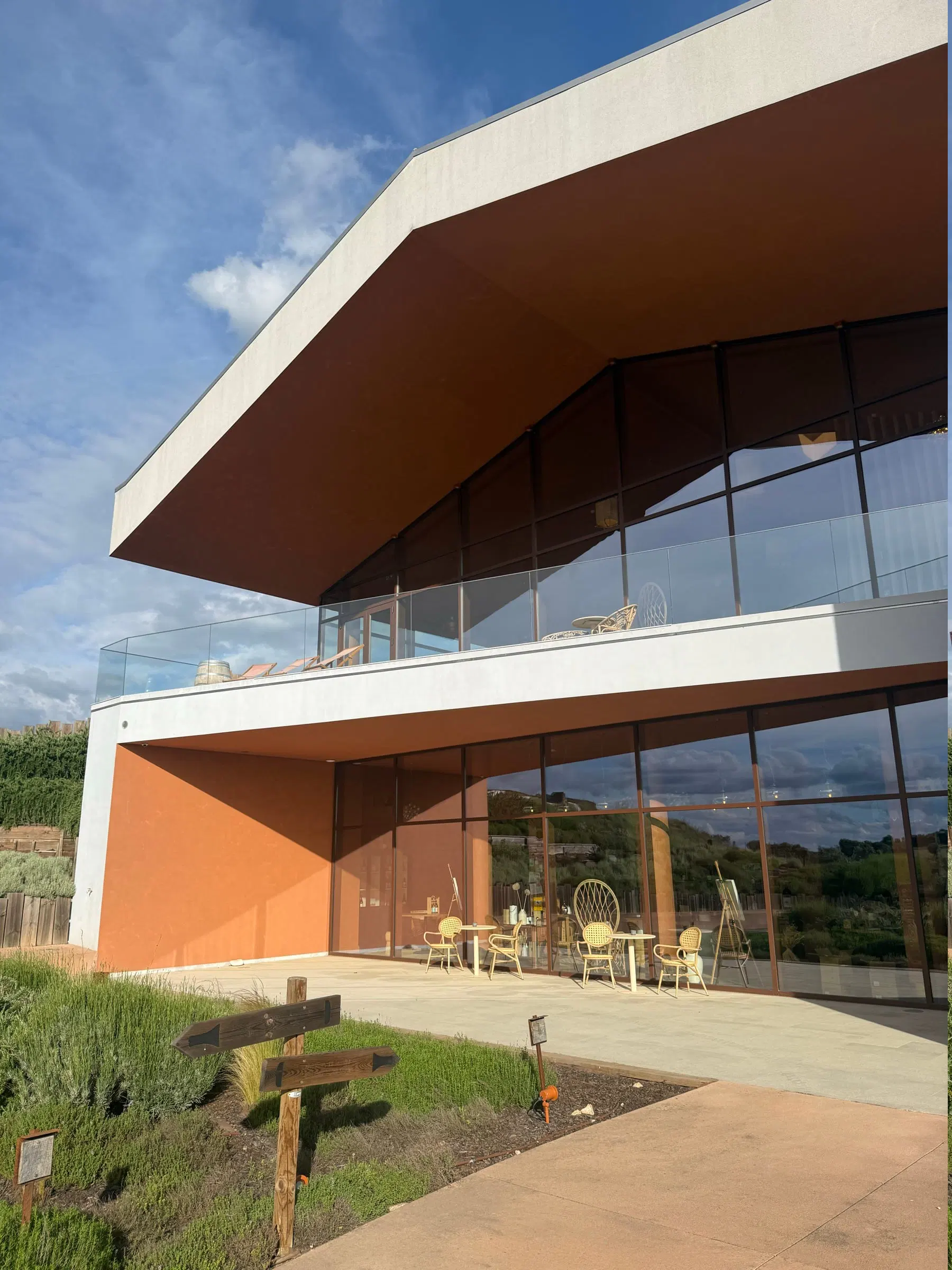
Open every day, 10am to 6pm, with tastings from €40 and a vineyard picnic experience at €75. The estate's motto is "the art of blending grapes" — it shows in wines built as blends rather than single varietals.
Sharish Gin
In Reguengos de Monsaraz, on Caminho do Moureal, Sharish's Distillery and Gin Interpretation Centre is another possible stop — not wine, but in the same neighbourhood and the same tasting spirit.
Founded in 2014 by António Cuco, it runs visits at 11am and 3:30pm daily, booking required. The guided tasting includes four gins and a tonic, for €20.
Before you go
Always book. Almost no winery takes visitors without an appointment, and those that do may be mid-harvest or with groups. An email or phone call the day before sorts it.
Outside summer, confirm. Many cut their hours between October and March, and some close for cellar work.
Allow a morning or an afternoon. A visit with tasting takes an hour to ninety minutes. Two wineries in a day is possible; three is rushed.
If you're tasting, someone drives. The roads between Mourão, Reguengos and Monsaraz are rural and there are checks. Many wineries provide spittoons, which solves it.
Harvest: late August and September. Some producers run harvest programmes for visitors. It's the most interesting time to visit and the one that books out first.
What to try
The sub-region's reds are typically full-bodied, from Aragonez, Trincadeira and Alicante Bouschet, often with Touriga Nacional and Cabernet Sauvignon.
Look out for vinho de talha — wine fermented in clay amphorae, a Roman tradition that survived in the Alentejo and almost nowhere else. Some restaurants in Mourão and Monsaraz serve it by the glass.
Buying without visiting a winery
If you'd rather not book anything, the grocers and wine shops in Reguengos and Monsaraz have a good selection at better prices than the estate shops. And local restaurants serve regional wine by the glass for very little.
Common questions
Where are the Alqueva wineries?
In Reguengos de Monsaraz, one of the Alentejo's wine sub-regions, 25 minutes from Mourão. It was European Wine City in 2015 and has around eleven producers in the sub-region, most of which take visitors.
Which winery is best set up for visits?
Herdade do Esporão — guided cellar tours with tastings, a shop, and a restaurant open since 1997 cooking with local produce. It's also the most popular, so booking is essential in summer and at weekends.
What is Vinho da Água?
A wine from Ervideira that ages submerged in the Alqueva lake. Since 2015, bottles of Conde d'Ervideira spend eight months at around 30 metres deep, after ten months in barrel. According to the producer it's the water pressure that changes it: on the nose it's almost identical to the original, in the mouth it's more integrated. It took gold at the Japan Wine Awards in 2017 and the China Wine Awards in 2016.
Is the cooperative worth visiting?
It is, for a different reason than the boutique estates. CARMIM, in Reguengos, is the country's largest wine cooperative, with hundreds of members — it shows you the weight of wine in the local economy in a way a small estate can't.