On 8 February 2002 the gates of the Alqueva dam closed. The water began to rise and, in time, covered the village of Luz — houses, streets, the church, the cemetery.
The village was in the Mourão municipality. It had 423 inhabitants.
The village that was built again
The process dragged on for two decades. From 1981 three options were debated: compensate the residents, move them to a neighbouring village, or build a new village. That last one was chosen, because it was what the people preferred.
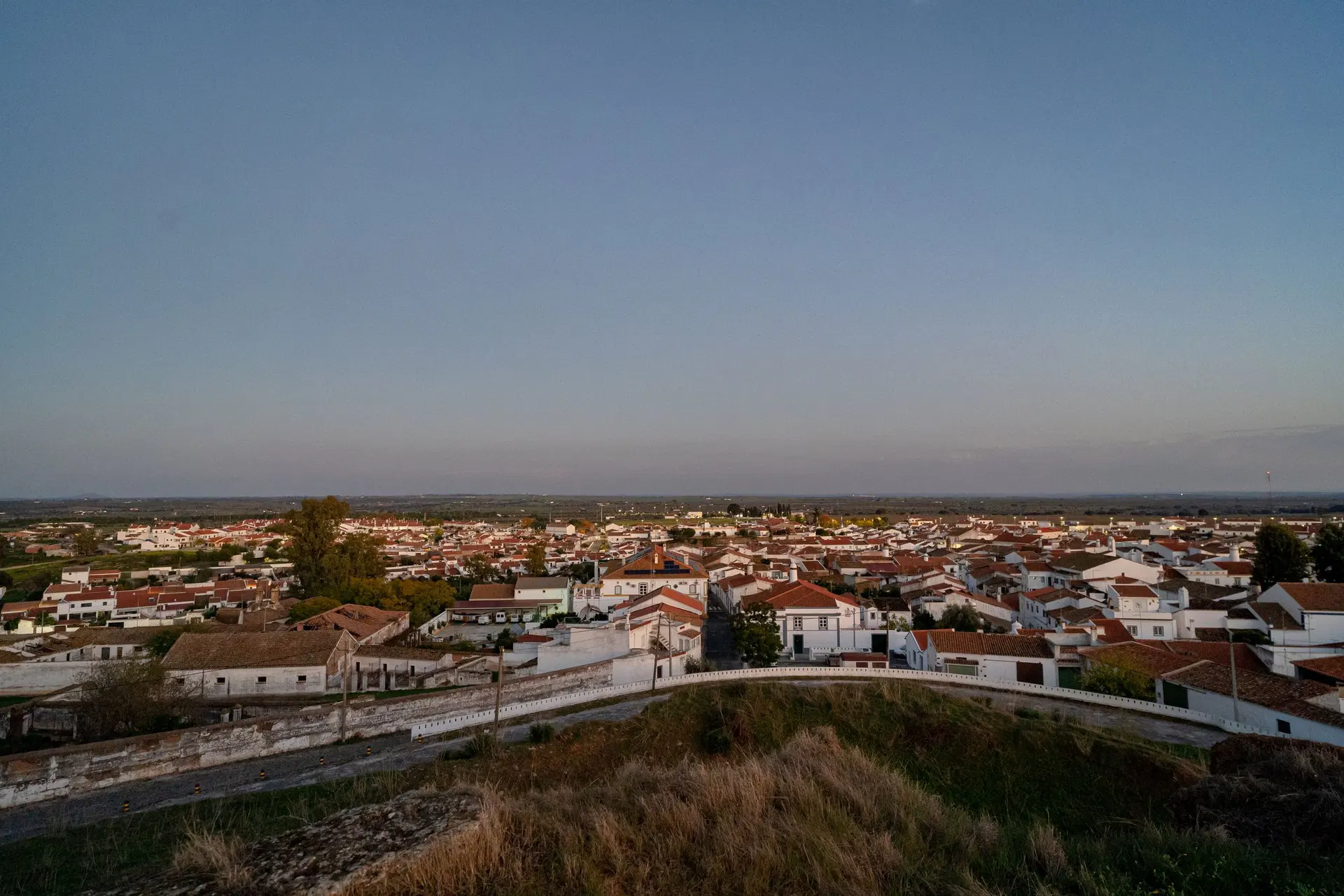
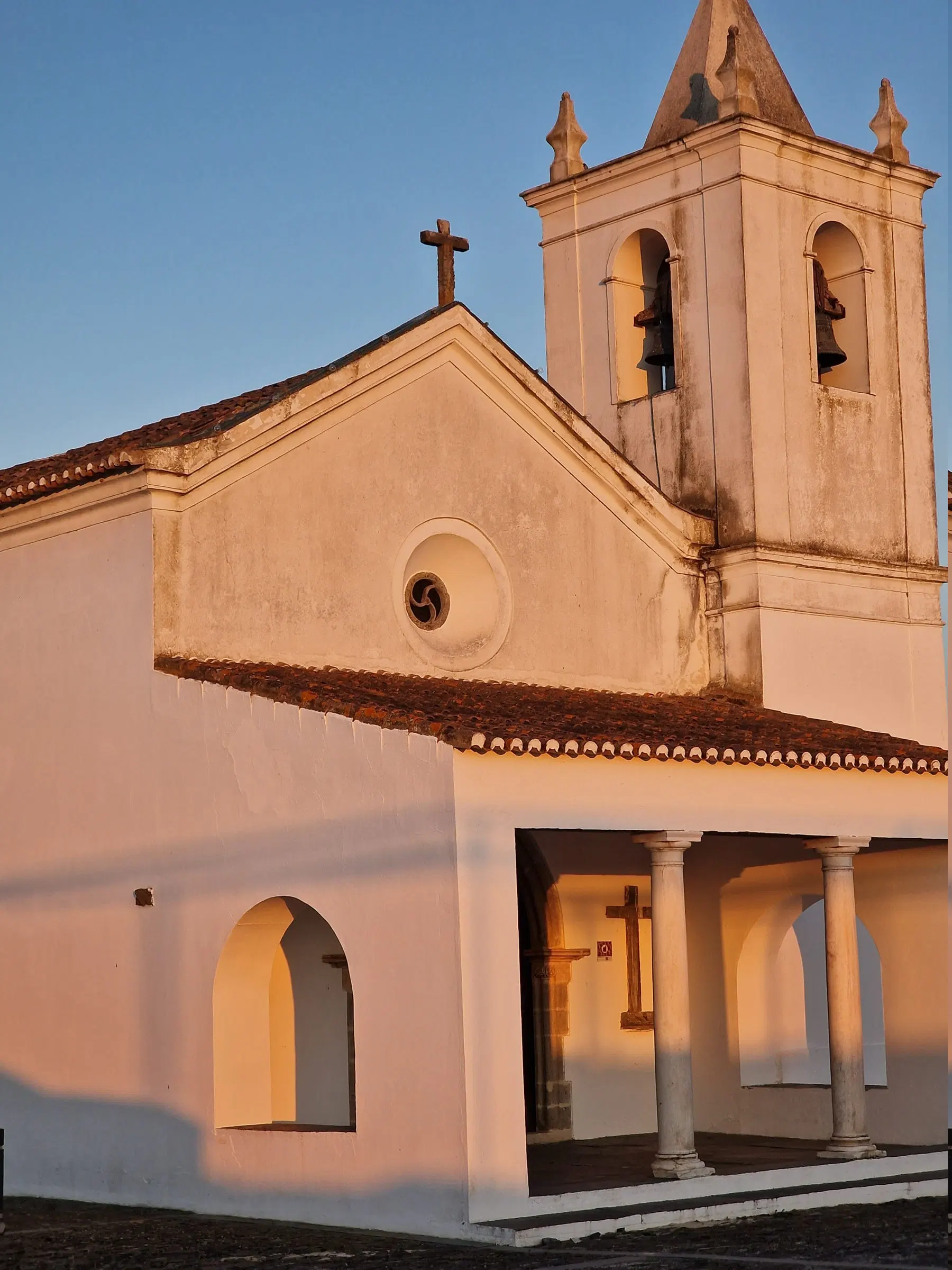
Construction began in 1998 and finished in 2002. Two kilometres uphill from the original, a village went up with 212 houses, streets, squares, shops, a school, a health centre, sports facilities, a bullring, a washhouse, a public garden — and replicas of the Fonte Santa and the Church of Nossa Senhora da Luz.
The cemetery was moved, with the bodies.
The Museu da Luz
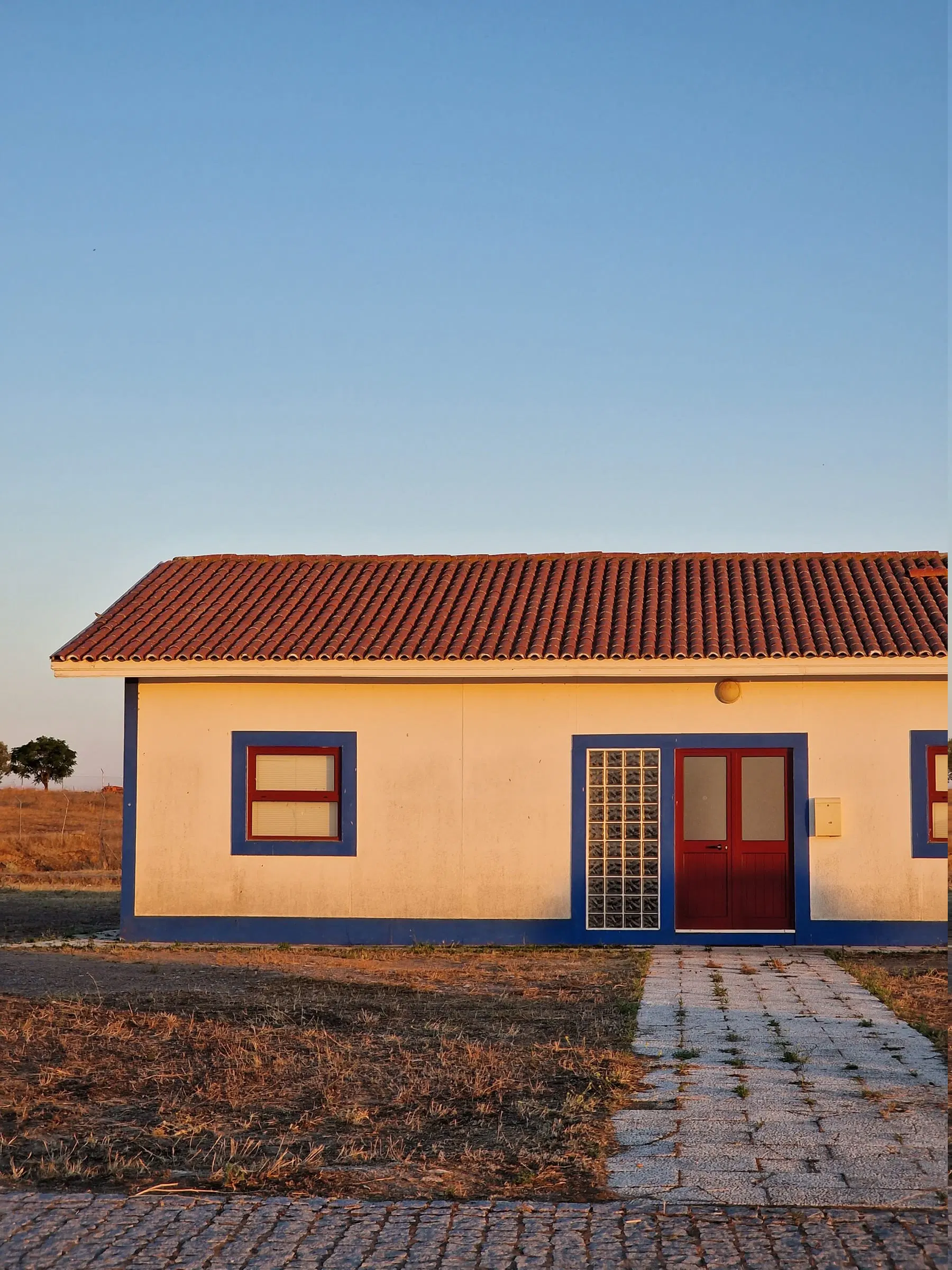
The Museu da Luz opened in 2003, as part of the relocation, and exists to hold the memory of the old village and the people who lived there.
It isn't a museum of beautiful objects. It's a museum about what it means for an entire community to be lifted up and set down somewhere else — with records, photographs, testimony, and the archive of what went under the water.
It is probably the most moving visit in the region.
What you see today
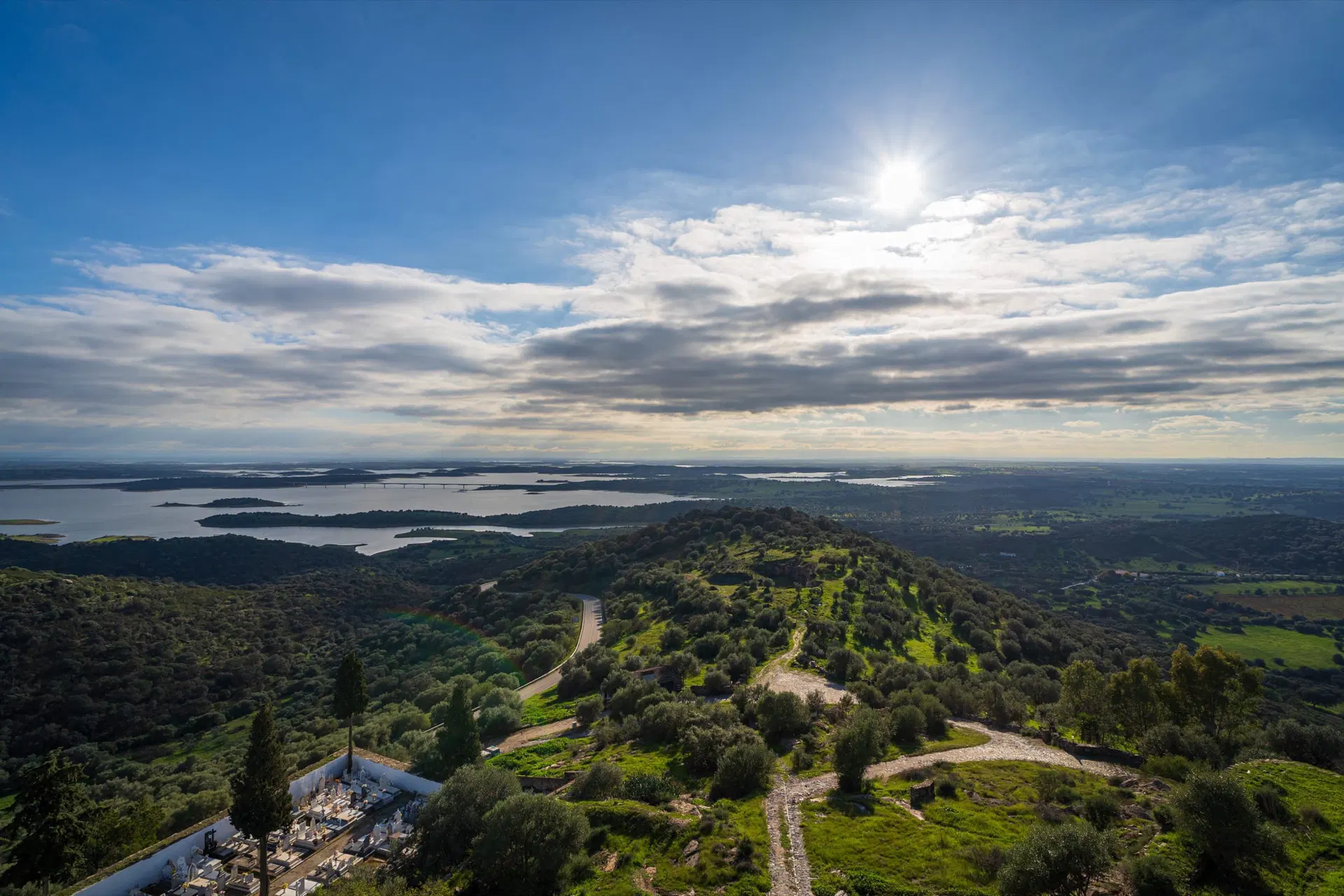
You see a new Alentejo village, white and orderly, with the strangeness of having been built all at once. And you see the water, right there, over the place where the other one was.
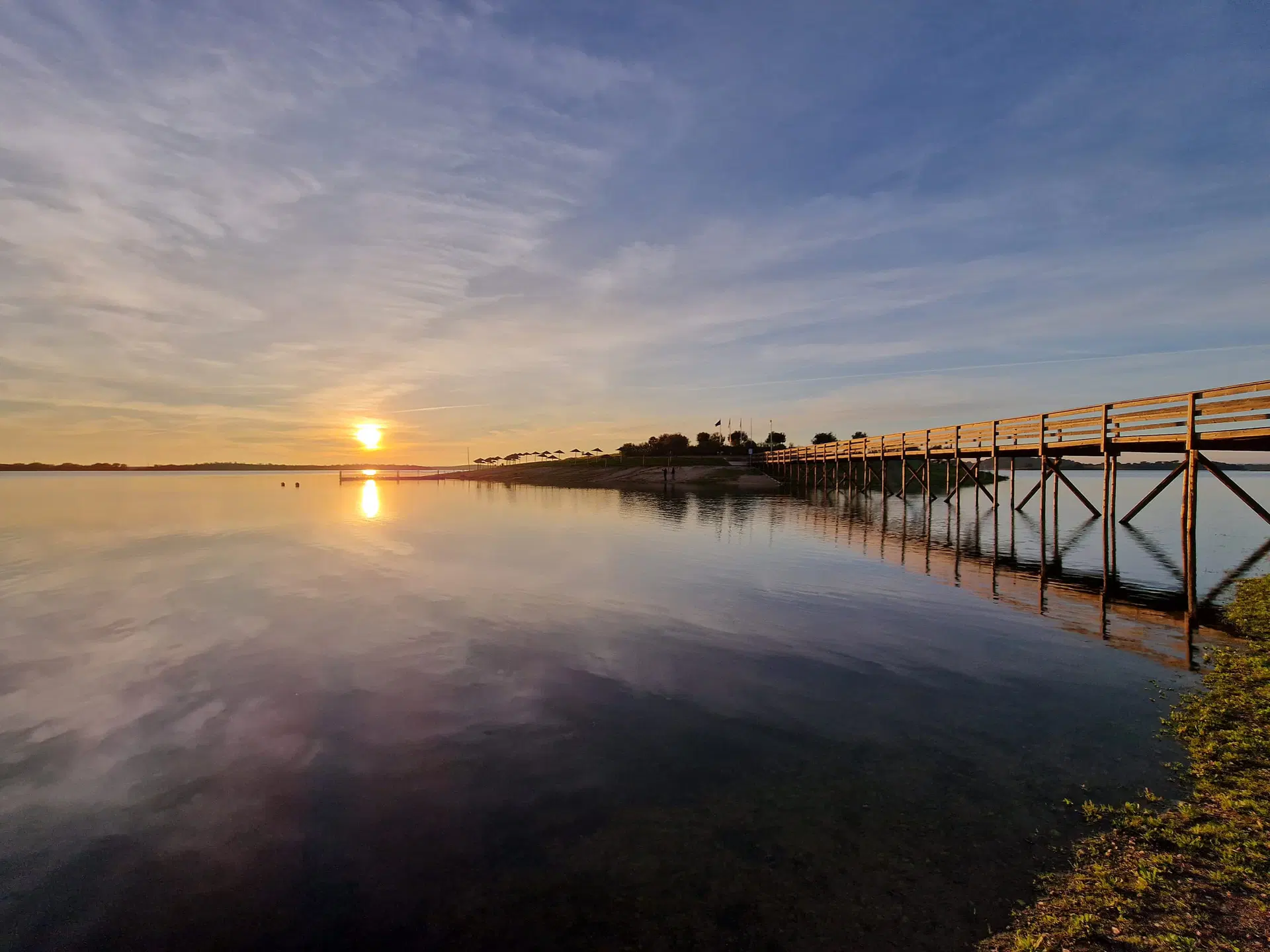
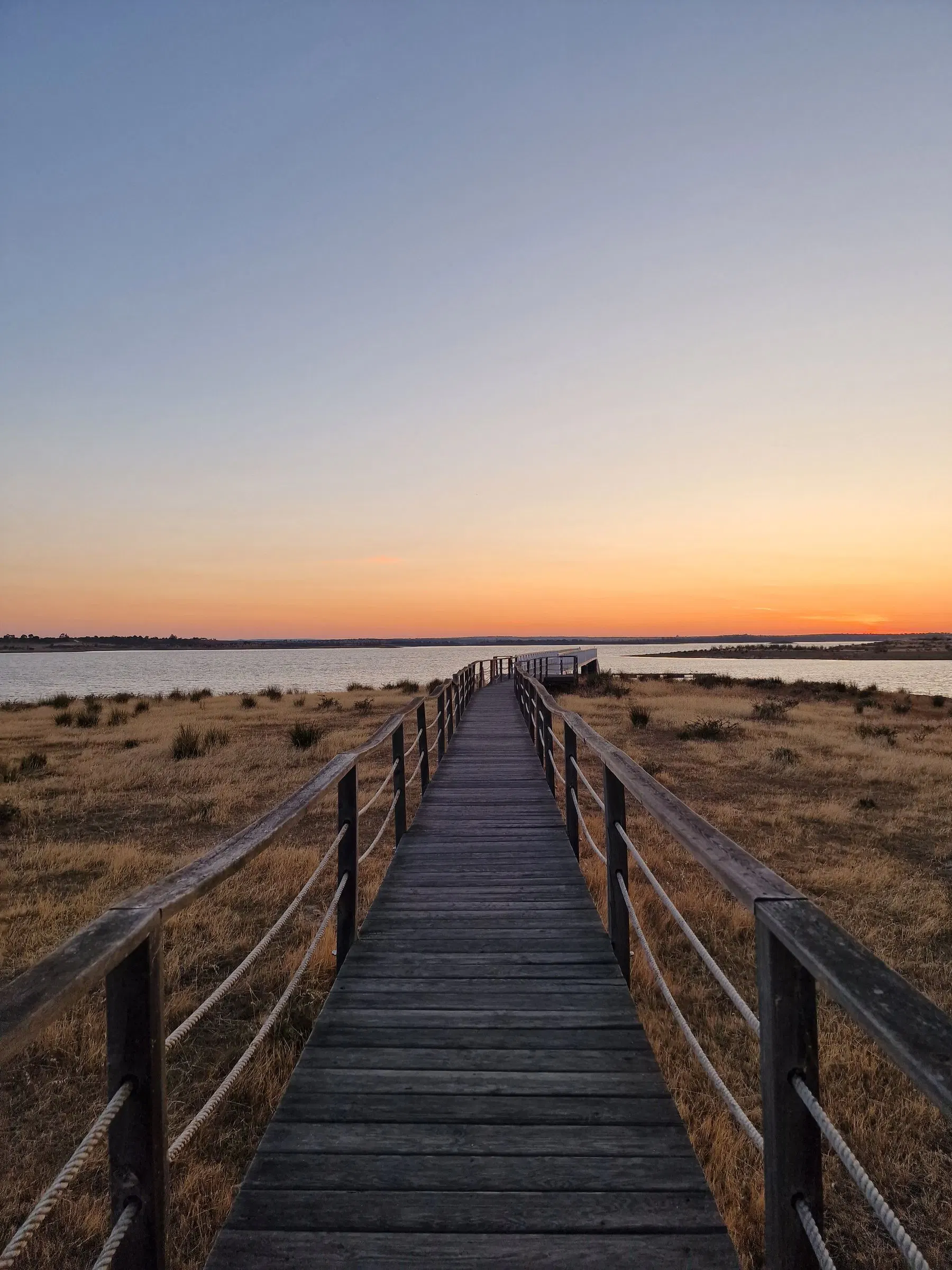
The shore is accessible and there are boardwalks. Late in the day, with the lake in front and the replica church behind, the scale of the thing lands.
Getting there
Aldeia da Luz is in the Mourão municipality, about 20 minutes by car from Mourão village.
It pairs well with a morning at the lake beach, or an afternoon before a stargazing session at Cumeada.
Common questions
Why was Aldeia da Luz submerged?
On 8 February 2002 the Alqueva dam closed its gates. The water rose and covered the village — houses, streets, the church, the cemetery. The village was in the municipality of Mourão and had 423 inhabitants.
Was the village rebuilt?
It was. From 1981 three options were debated — compensation, moving people to a neighbouring village, or building a new one — and the last was chosen because it was what the residents preferred. Construction ran from 1998 to 2002, two kilometres above the original: 212 houses, streets, squares, shops, a school, a health centre, a bullring, and replicas of the Fonte Santa and the church of Nossa Senhora da Luz. The cemetery was moved, bodies included.
What is the Museu da Luz?
A museum opened in 2003 as part of the relocation, to hold the memory of the old village and the people who lived there. It isn't a museum of beautiful objects: it's about what it means for an entire community to be lifted and put somewhere else. Check opening hours before travelling — being a municipal facility in a small village, they vary by season and there are closing days.