Three things are made properly around here and earn their place in the case on the way home: clay, loom and basketwork. This isn't market-stall craft — it's production that survives because people still buy it, and you can watch it being made.
Clay
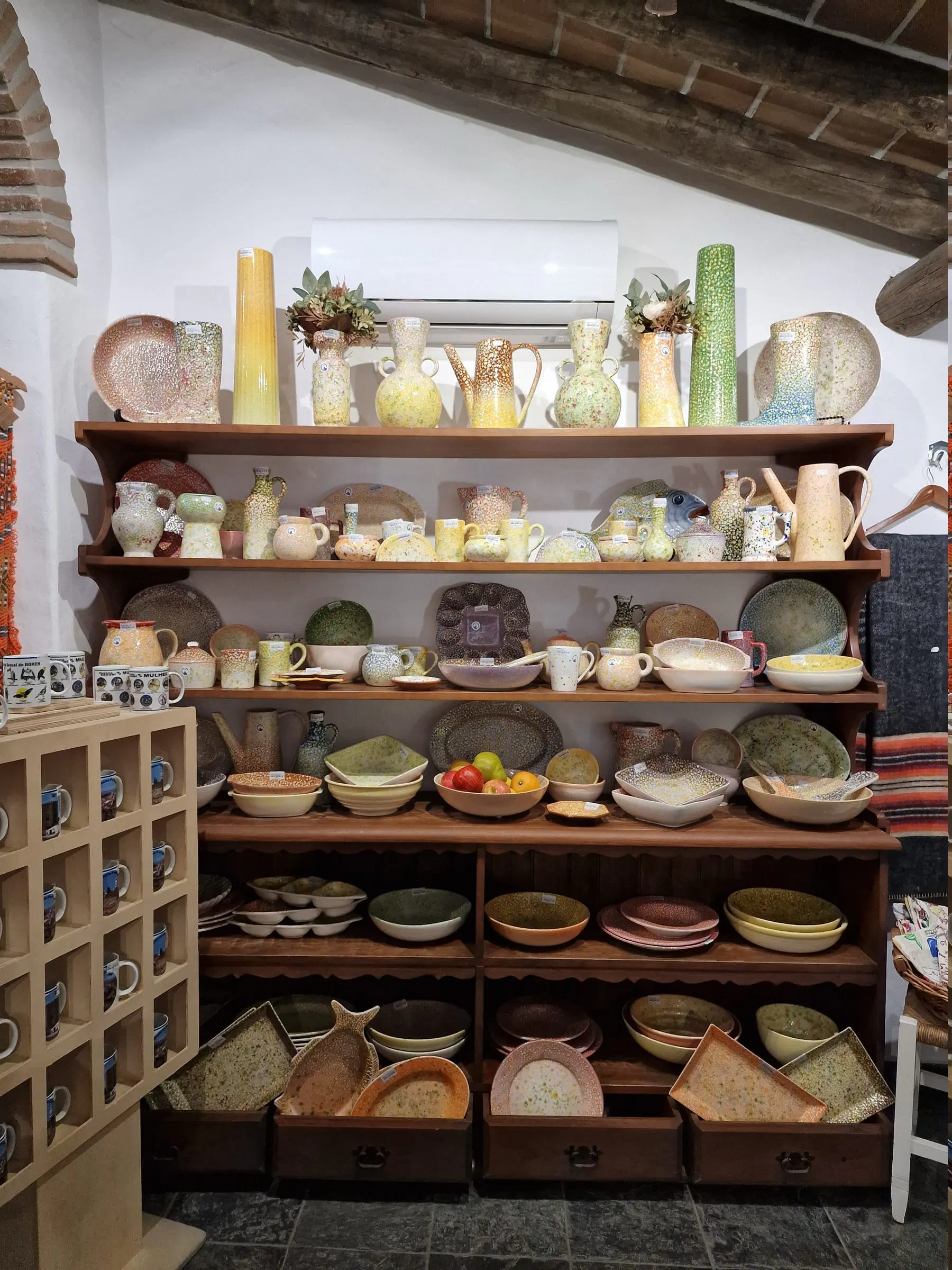
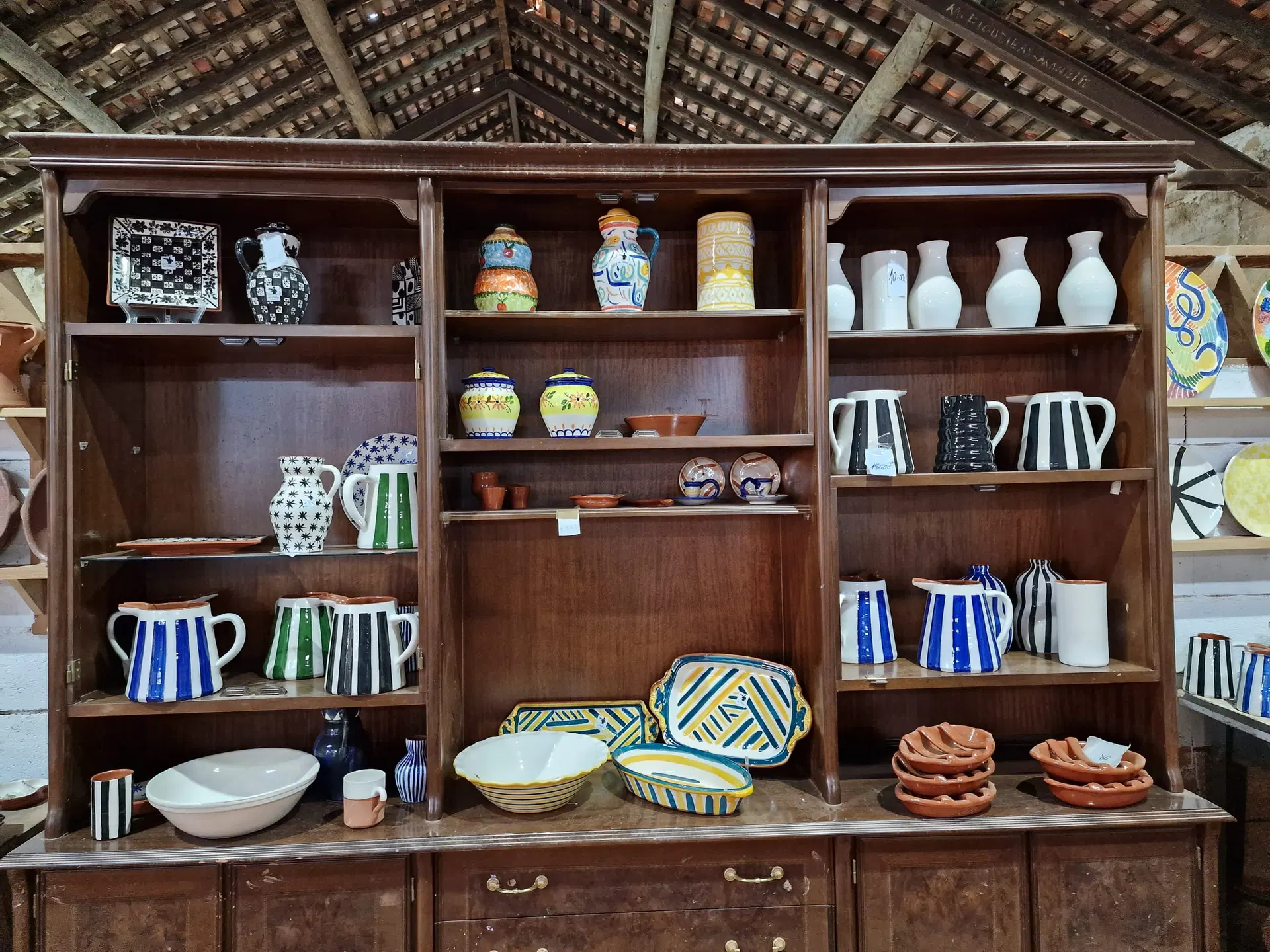
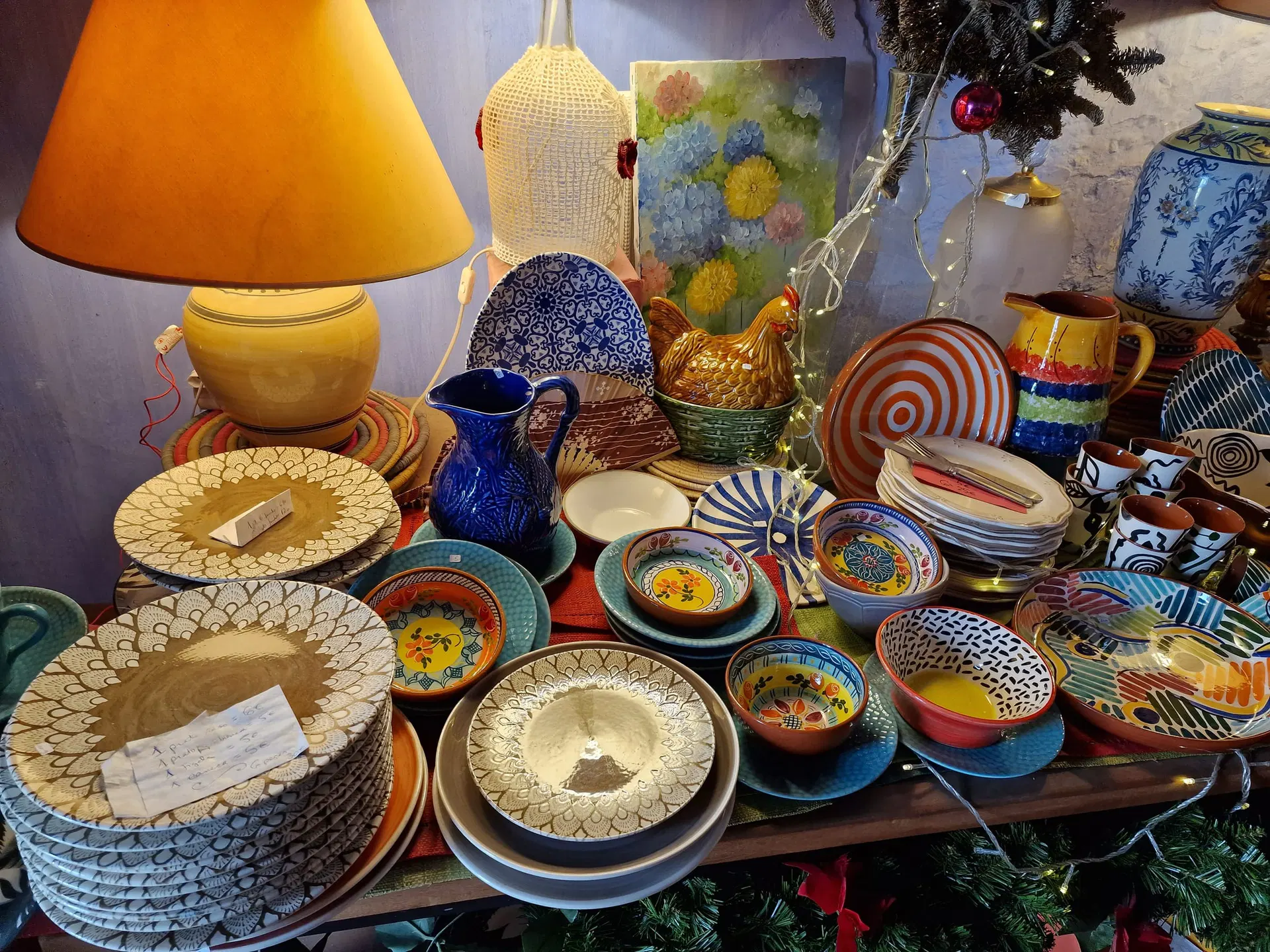
The centre is São Pedro do Corval, 25 minutes away, with around twenty-one working potteries — the largest pottery centre in the Iberian Peninsula. You buy from the potter, in the workshop where the piece was made.
There are two registers: the hand-painted glazed ware, in blue and yellow patterns, which is what people recognise as Alentejo pottery; and unglazed clay, plainer, cheaper and better-looking than it sounds.
Blankets
Alentejo loom-woven blankets are wool, in broad stripes and strong colours. They're still made in a few places in the region and sold mostly in Monsaraz and Reguengos.
They're heavy, they last decades, and they're one of the few things people buy travelling that actually get used at home.
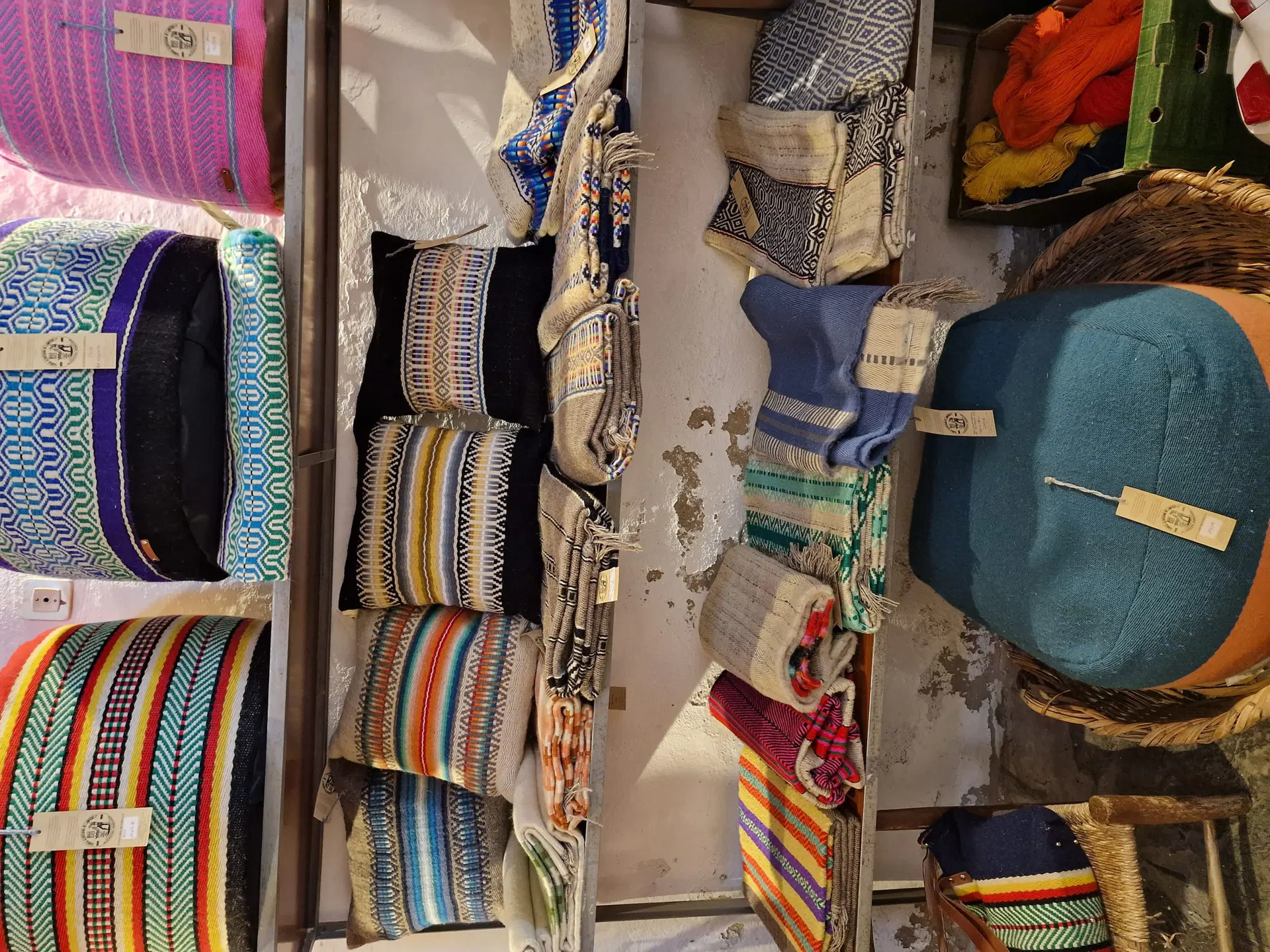
Basketwork
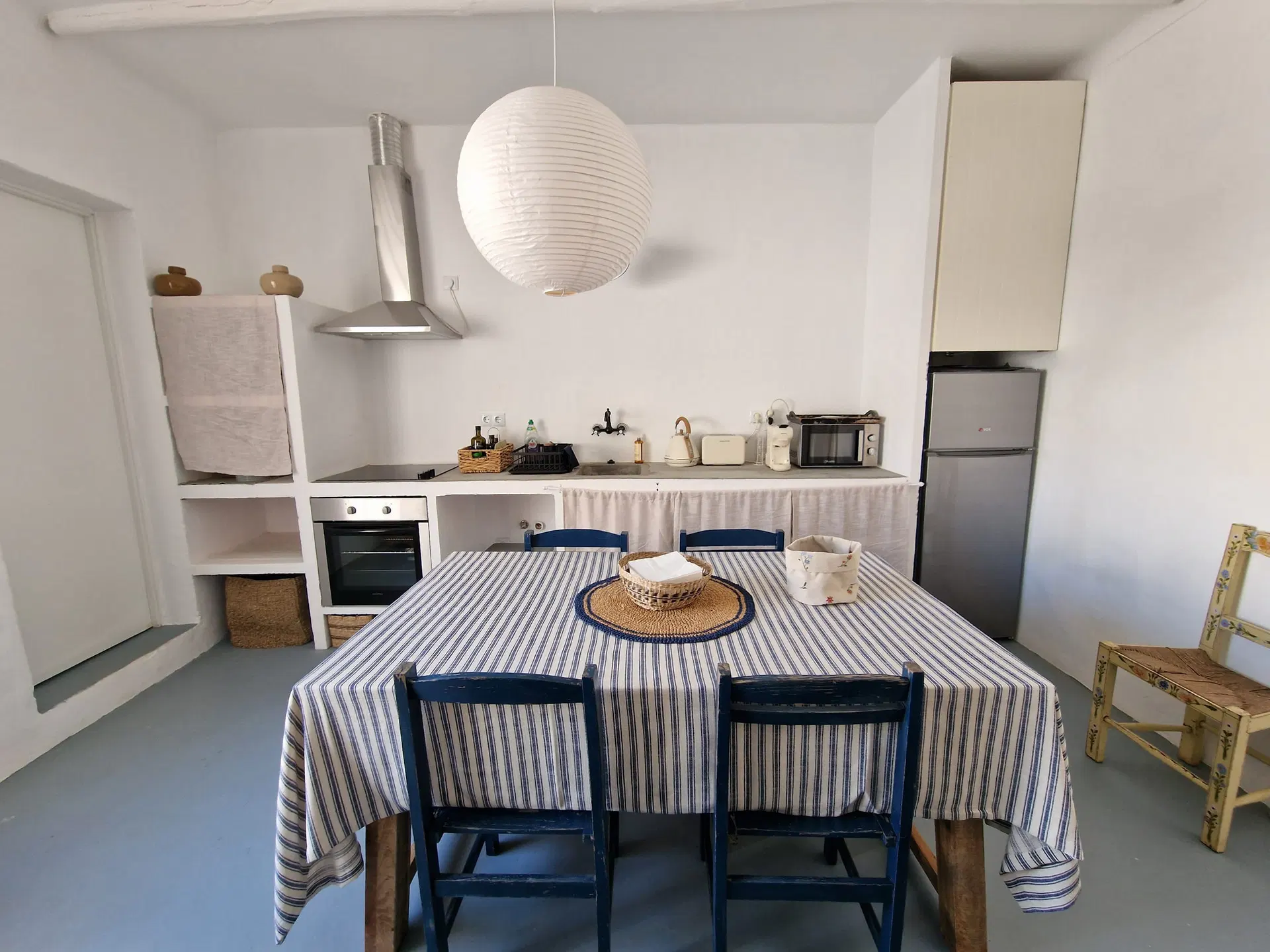
Palm, rush, willow. Shopping baskets, trays, mats, and the woven wall discs you see in half the restored Alentejo houses — this one included.
Where to buy
São Pedro do Corval — clay, at source and at the maker's price. Guide to the village →
Monsaraz — several shops inside the walls, with pottery, blankets and basketwork. Dearer, but it's on the route if you're visiting anyway, and the selection is good.
Reguengos de Monsaraz — the larger town, with more shops and the wineries.
Mourão — Contrabando, for homeware and gifts.
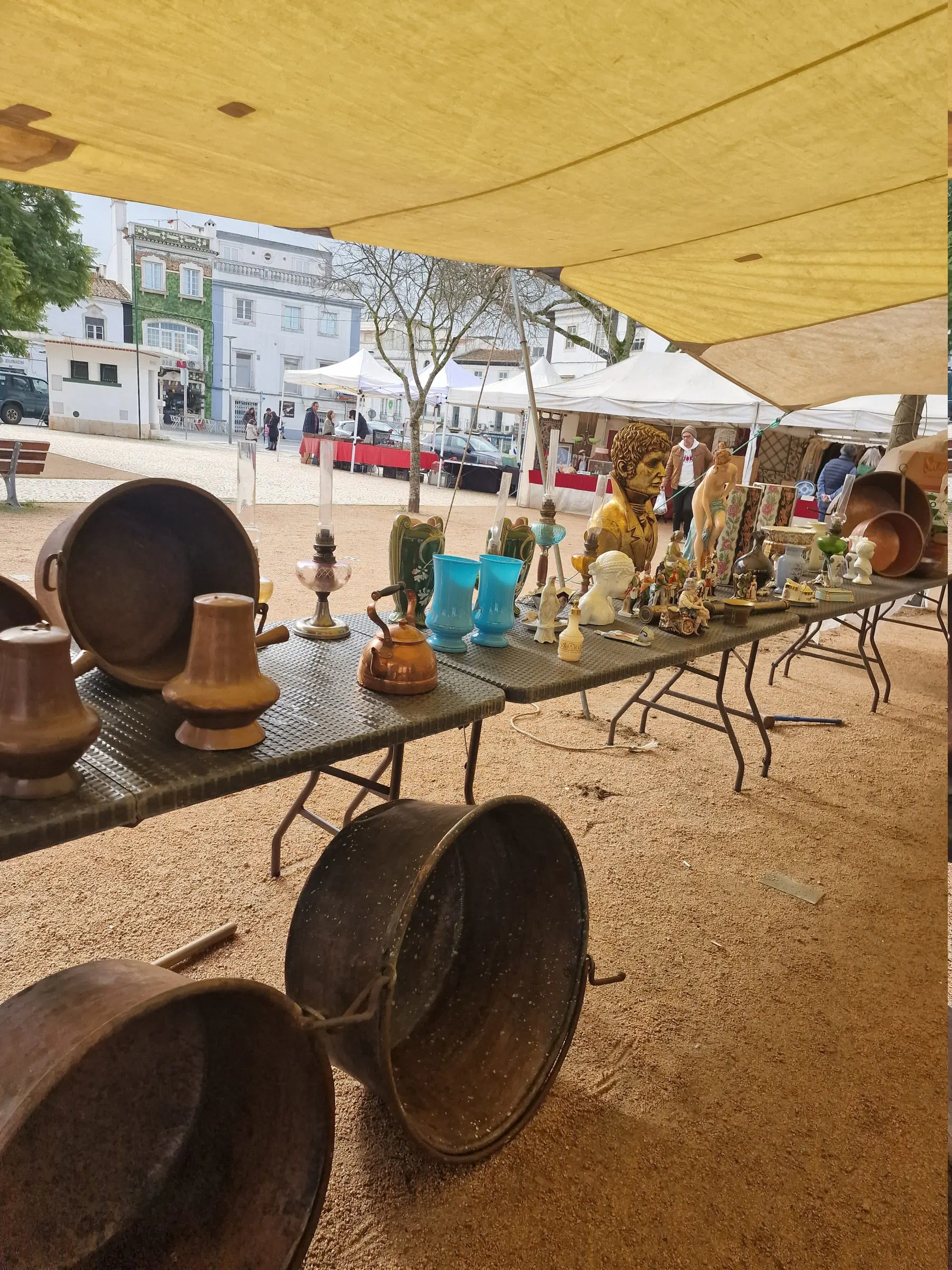
And there are the antique fairs and monthly markets held across the region, where anything turns up: copper, old china, tools, furniture.
Two practical notes
Bring paper and space. Clay breaks and clay weighs, and everyone buys more than they meant to.
Reckon on the hours. Outside Monsaraz in summer, many shops close at midday and on Sundays. It isn't reluctance — it's the local clock.
Common questions
What should you take home from the Alentejo?
Hand-painted clay pottery, loom-woven wool blankets and rugs, palm and rush basketwork, and cork. Beyond crafts: olive oil and wine from the Reguengos sub-region.
Where is it cheapest?
From the maker. In São Pedro do Corval you buy pottery in the workshop where it was thrown, at a fraction of homeware-shop prices. In Monsaraz you pay more, but the view comes free.
Do the shops open on Sundays?
In Monsaraz in summer, nearly all of them. In Corval and the smaller villages expect Sunday and midday closing. Off season, a phone call first saves the drive.