Twenty-five minutes from Mourão there's a village whose main street is almost entirely potteries. São Pedro do Corval is the largest pottery centre in the Iberian Peninsula, with around twenty-one working studios, and it's the easiest thing to fold into a day that already includes Monsaraz — it's right next door.
What it is, and why it's different
This isn't a village with two or three souvenir workshops. It's a whole village that lives off clay, where the pieces are made on the spot — thrown on the wheel, painted by hand, in the back room of the shop where you buy them.
The tradition is old; clay has been worked here since Roman times. But what matters to a visitor is simpler: you walk in, you watch it being made, and you buy from the person who made it.
Casa do Barro
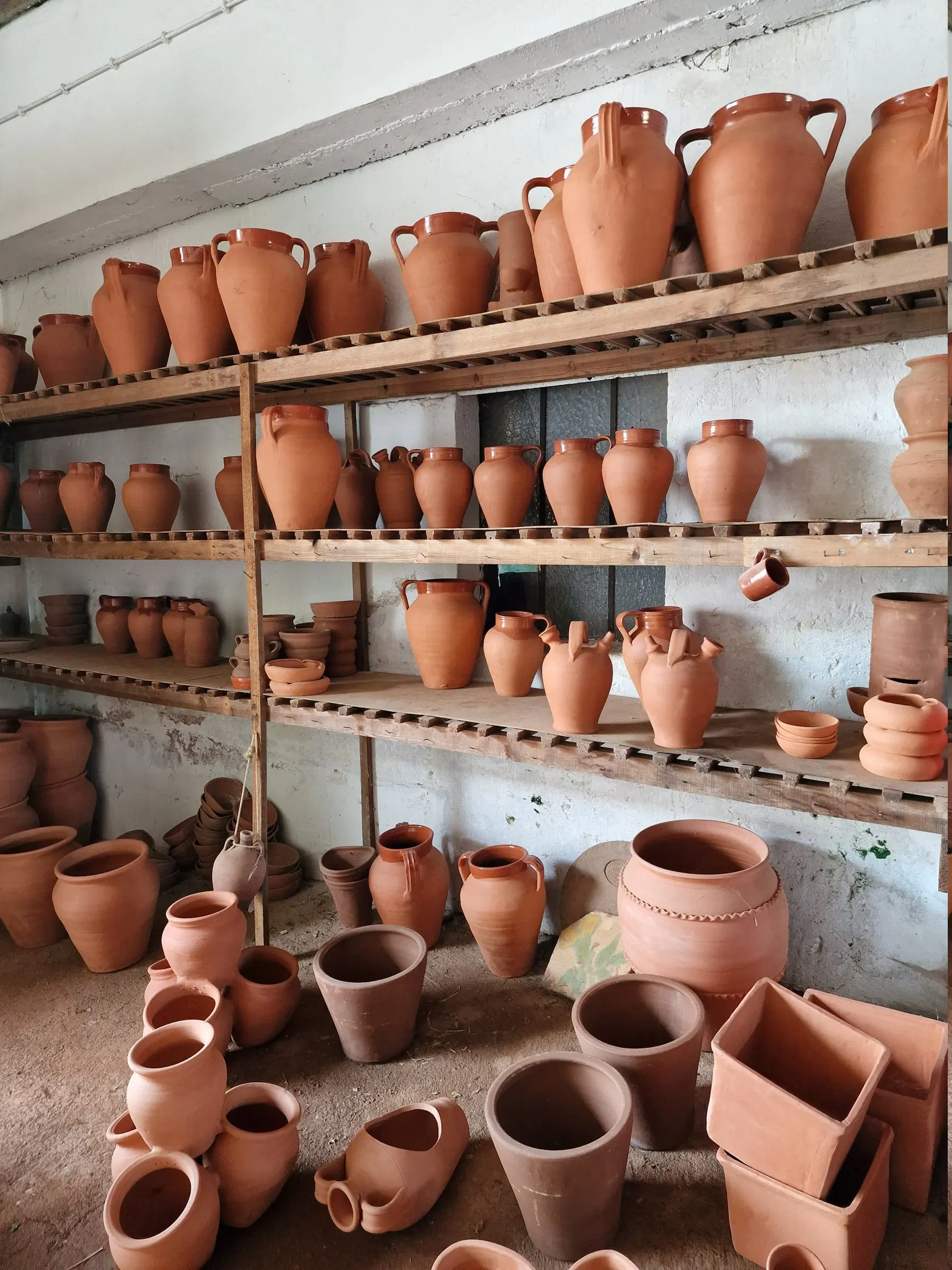
The pottery interpretation centre, on Rua do Jardim, is the right starting point if it's your first time. It's housed in an old pottery and keeps the two original wood-fired kilns, the clay-straining tank and the wheels.
It's there to make sense of what you're about to see — and it's where you ask which workshops are open that day, which changes. Opening hours and admission are on the Reguengos de Monsaraz council site; we don't publish them here so as not to give you stale information.
How to visit
You walk the main street and go in wherever a door is open. No booking is needed to look or to buy.
Three workshops come up again and again from people searching for the village by name: Olaria Bulhão, Olaria O Patalim and Olaria Tavares. They aren't the only ones — they're the ones people look for — and the best way to choose is to go into several, because each potter has their own hand and their own patterns.
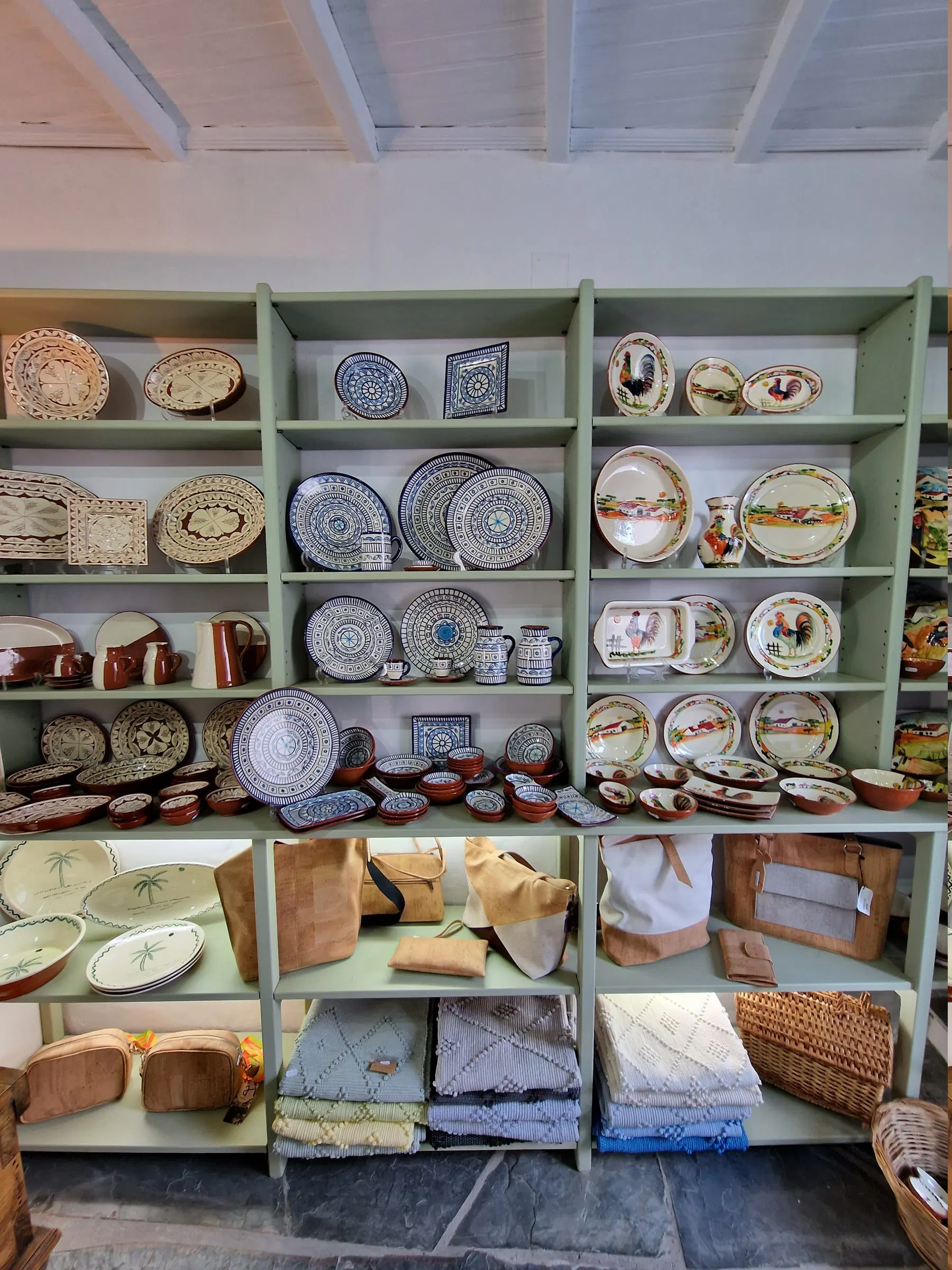
Mid-morning is the best time: the workshops are working and haven't closed for lunch yet. Many shut in the middle of the day, as most things do in the Alentejo.
What to buy
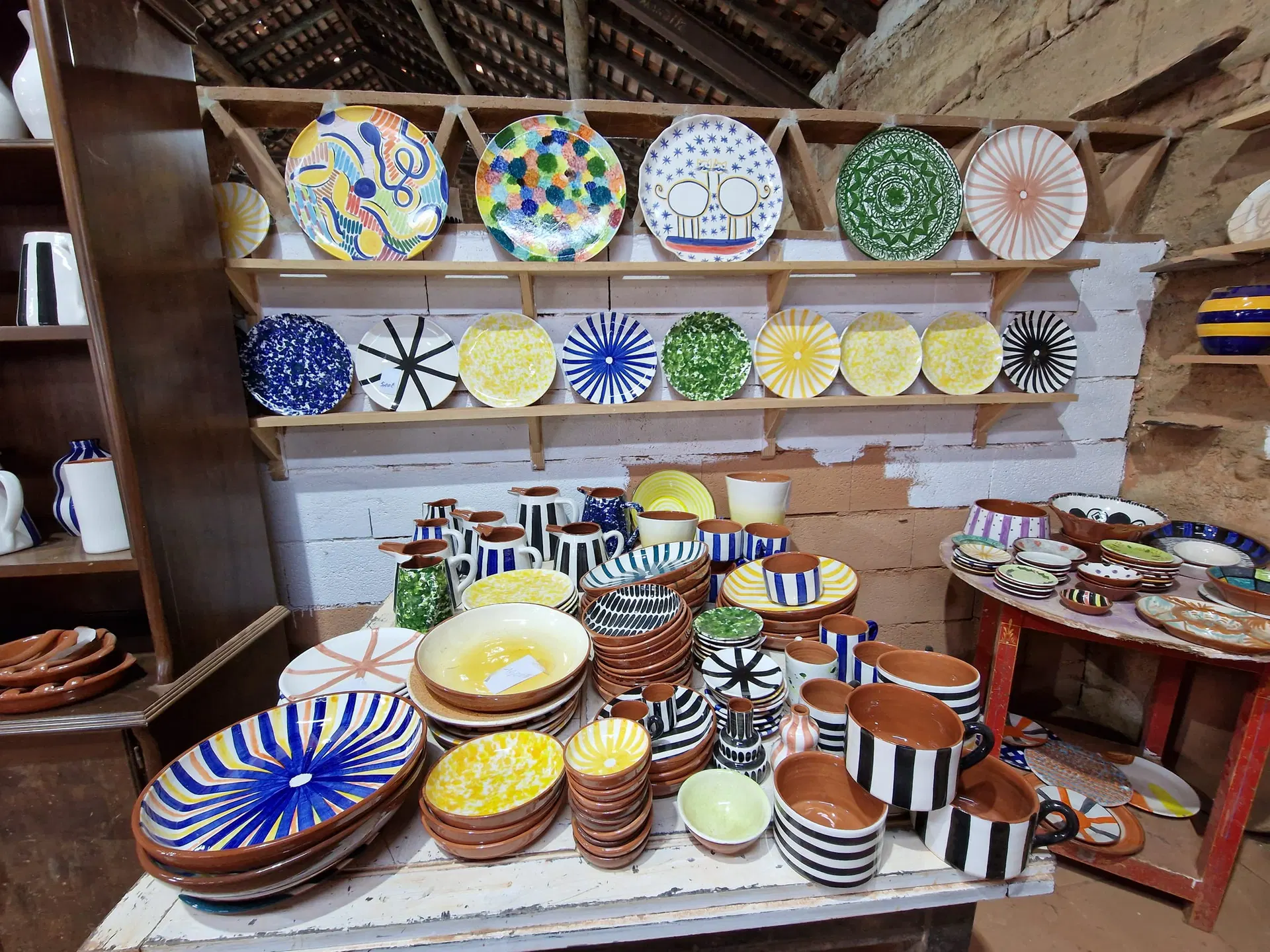
Everyday tableware, mostly: plates, bowls, jugs, serving dishes, and the clay talhas that in the Alentejo were used to make and keep wine. There's the hand-painted glazed ware, which is what people recognise as Alentejo pottery, and there's plain unglazed clay — soberer and cheaper.
Prices are the maker's, not a reseller's. A hand-painted plate costs a few euros — one of the few places where real craft is still cheap.
Two practical notes: bring newspaper and case space, and reckon on weight. Clay is heavy, and everyone buys more than they meant to.
Fitting it into a day
Corval sits between Mourão and Reguengos, ten minutes from Monsaraz. This works well:
- Morning — Corval, with the workshops at work.
- Lunch — Reguengos de Monsaraz, ten minutes on, where there's more choice. Where to eat →
- Afternoon — Monsaraz, staying for sunset over the lake.
It also works in reverse if you'd rather have Monsaraz without the coach parties: the village is emptier before eleven.
Common questions
Where is São Pedro do Corval?
In the municipality of Reguengos de Monsaraz, Évora district. It's 25 minutes by car from Mourão and about 10 from Monsaraz, which makes it an easy detour to fold into a day you're already spending out.
How many potteries are there in São Pedro do Corval?
Around 21 working workshops. It is the largest pottery centre in the Iberian Peninsula — not a village with two or three studios, but a main street where most of the doors are a pottery.
Can you watch the potters work?
Yes. Many workshops leave the working area open to anyone who walks in, and you'll see a piece thrown on the wheel and painted by hand. It isn't staged for visitors: it's where the pieces are actually made.
Are there pottery workshops you can join?
Several studios run sessions, usually by appointment and mostly in summer. We don't publish prices or times here because they change — phone the workshop or ask at Casa do Barro.
How much does the pottery cost?
Considerably less than a homeware shop in Lisbon, because you're buying from the person who made it. A hand-painted plate costs a few euros. Leave room in the case and bring newspaper.