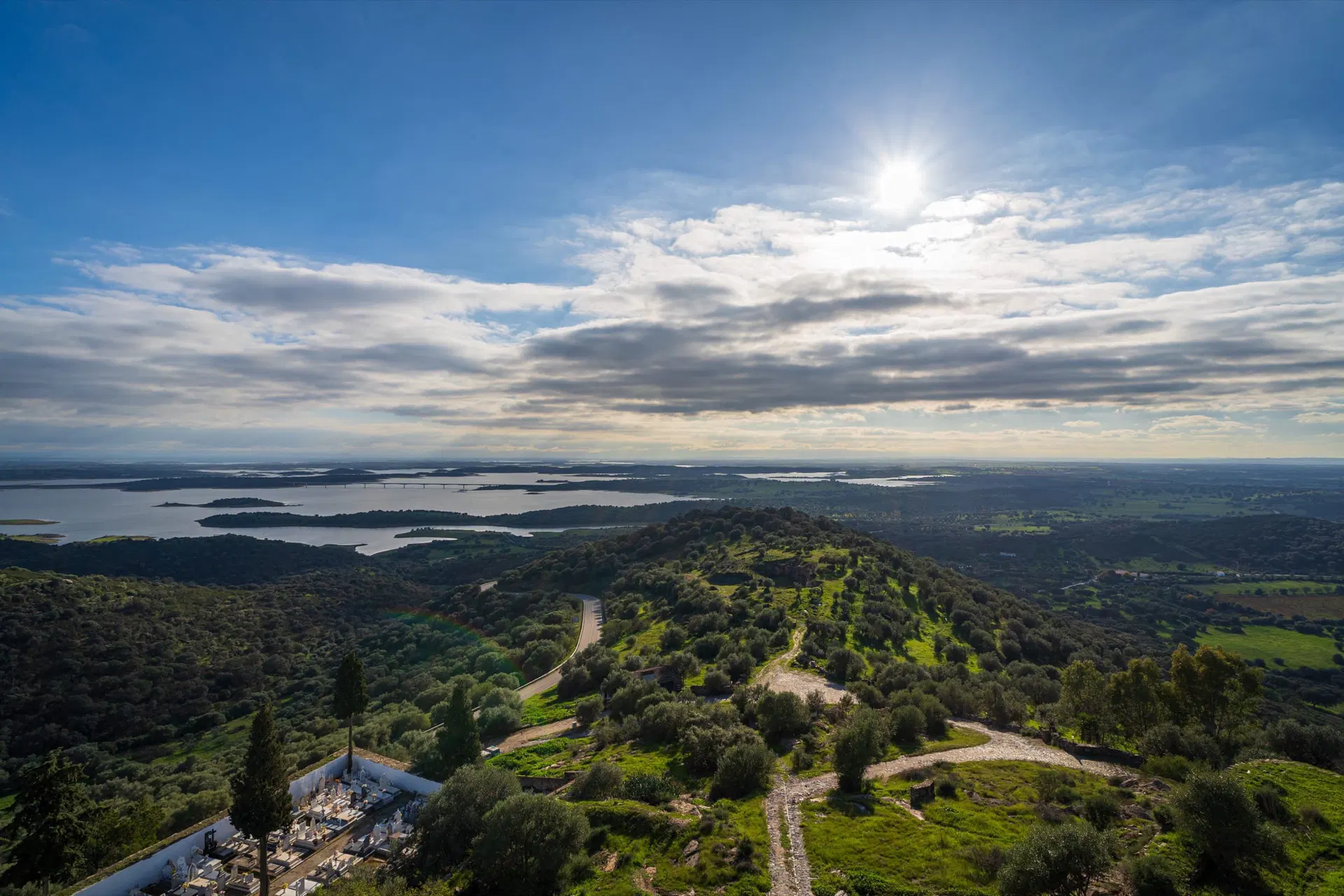
This isn't in the region's travel guides and it should be: Mourão is a good place to watch birds, and winter — the season nobody comes — is the best of them.
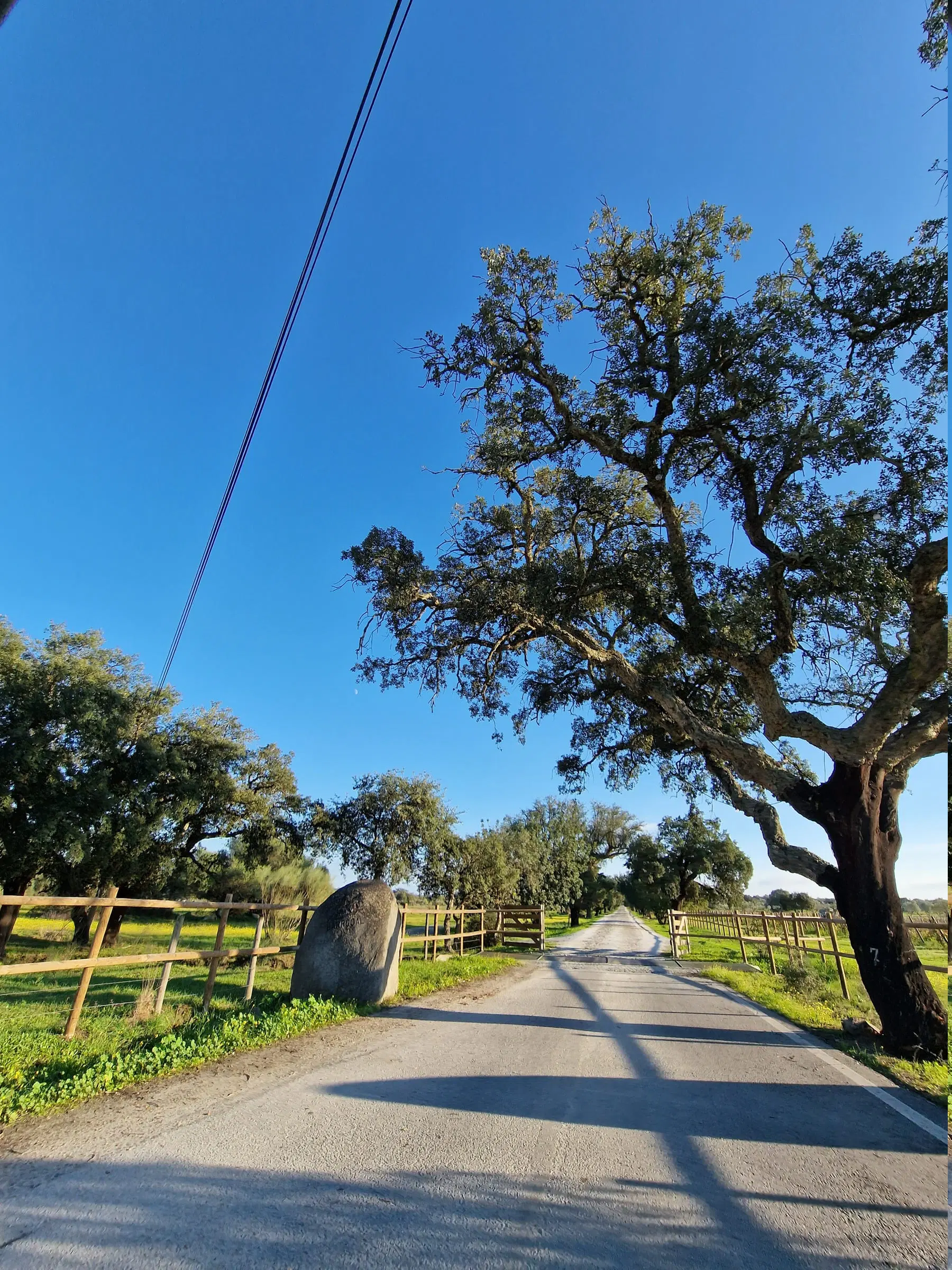
The reason is the montado. A farming system of spaced trees, pasture and livestock supports far more species than either open field or closed forest. What the montado is →
When to come
Winter and spring are the best seasons.
Winter brings the flocks of common cranes that spend the season on the peninsula. They're large, noisy birds — you hear them before you see them — and they feed in open fields near the Spanish border. It's the spectacle of the season.
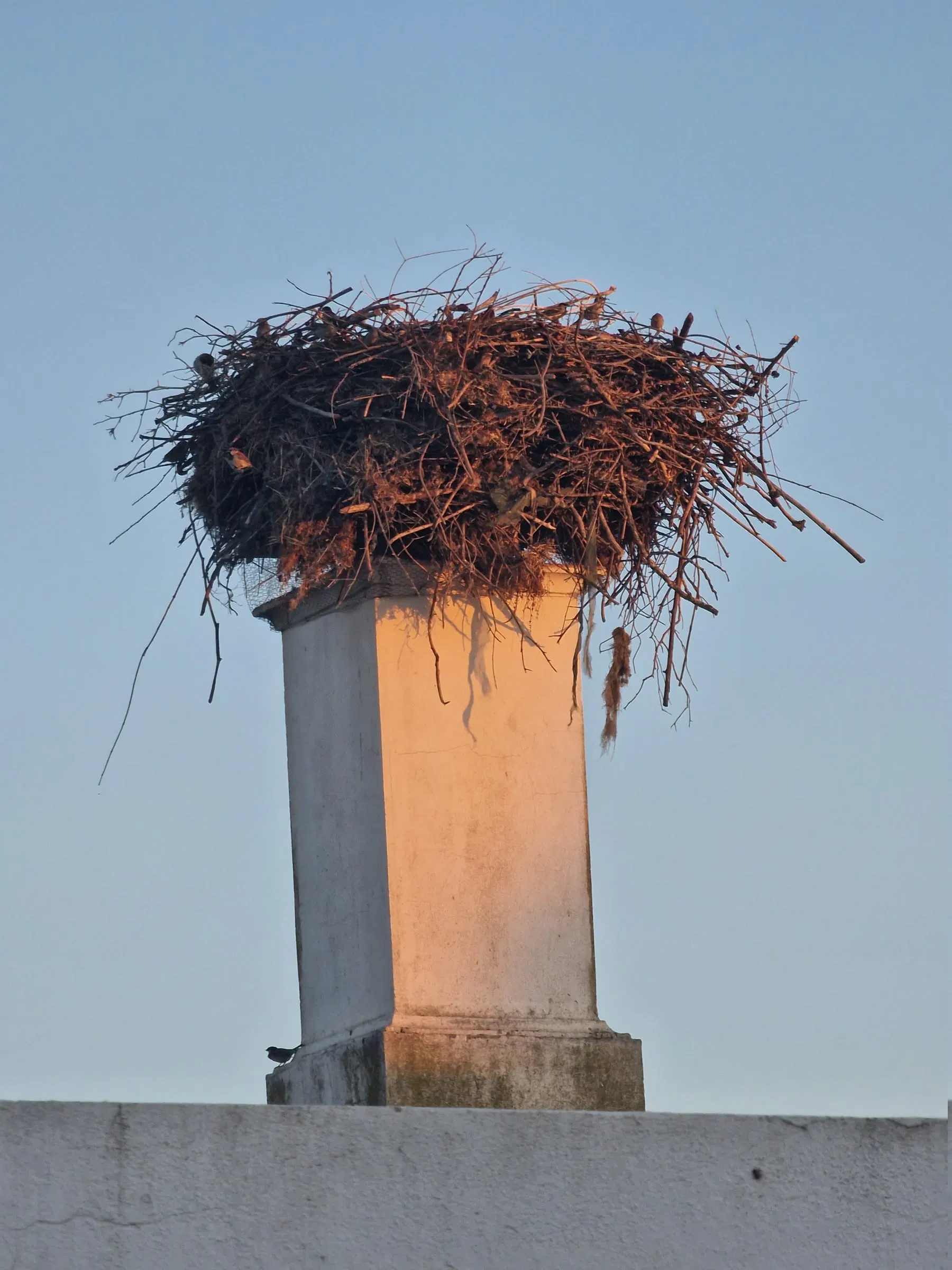
Spring adds migrants, passerines and nesting activity. The storks — which nest on the village's own chimneys — are on the nests.
Summer is the worst time: too much heat, too little activity, and the good hours are very early or very late.
Three routes out of Mourão
The Aves de Portugal portal describes three approaches from the village. These are road routes, driven with stops.
North, via Ferrarias. A municipal road to an area known for black-bellied sandgrouse.
East, via São Leonardo. Regional road 256-1 to the old border post; from there a dirt track runs through cultivated land towards a small dam, already on the Spanish side.
South-east, via Meada. Regional road 385 towards Granja. About nine kilometres past the bridge over the Alcarrache stream, a paved road gives access to the area where the winter crane flocks feed.
What to expect
Waterbirds — grey heron, collared pratincole, and along the reservoir shore ducks and spoonbills.
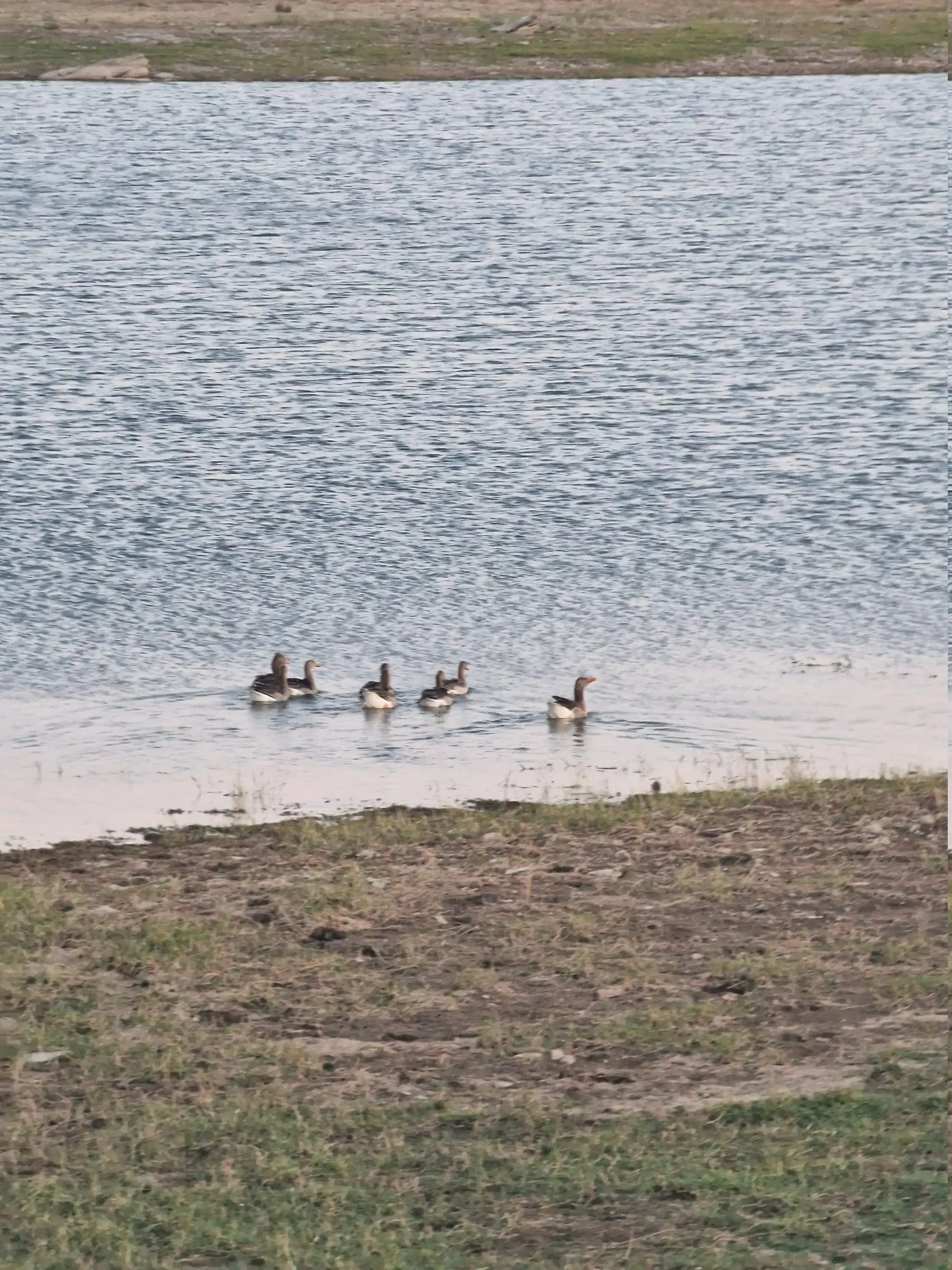
Large terrestrial birds — crane, great bustard, white stork, stone-curlew, lapwing, quail, cattle egret. This is the group that makes the Alentejo plain a serious destination.
Raptors — red kite, black kite, booted eagle, lesser kestrel.
Passerines — larks, swallows, shrikes, jays, starlings, sparrows, buntings.
How it's done
You leave early, you drive, you stop often. There are no waymarked walking routes: what there is are back roads with verges where you pull in and wait.
Two things help more than any equipment: going early, and staying still. The car works as a hide — the birds are used to cars, not to people walking in open country.
Why this matters if you're renting a house
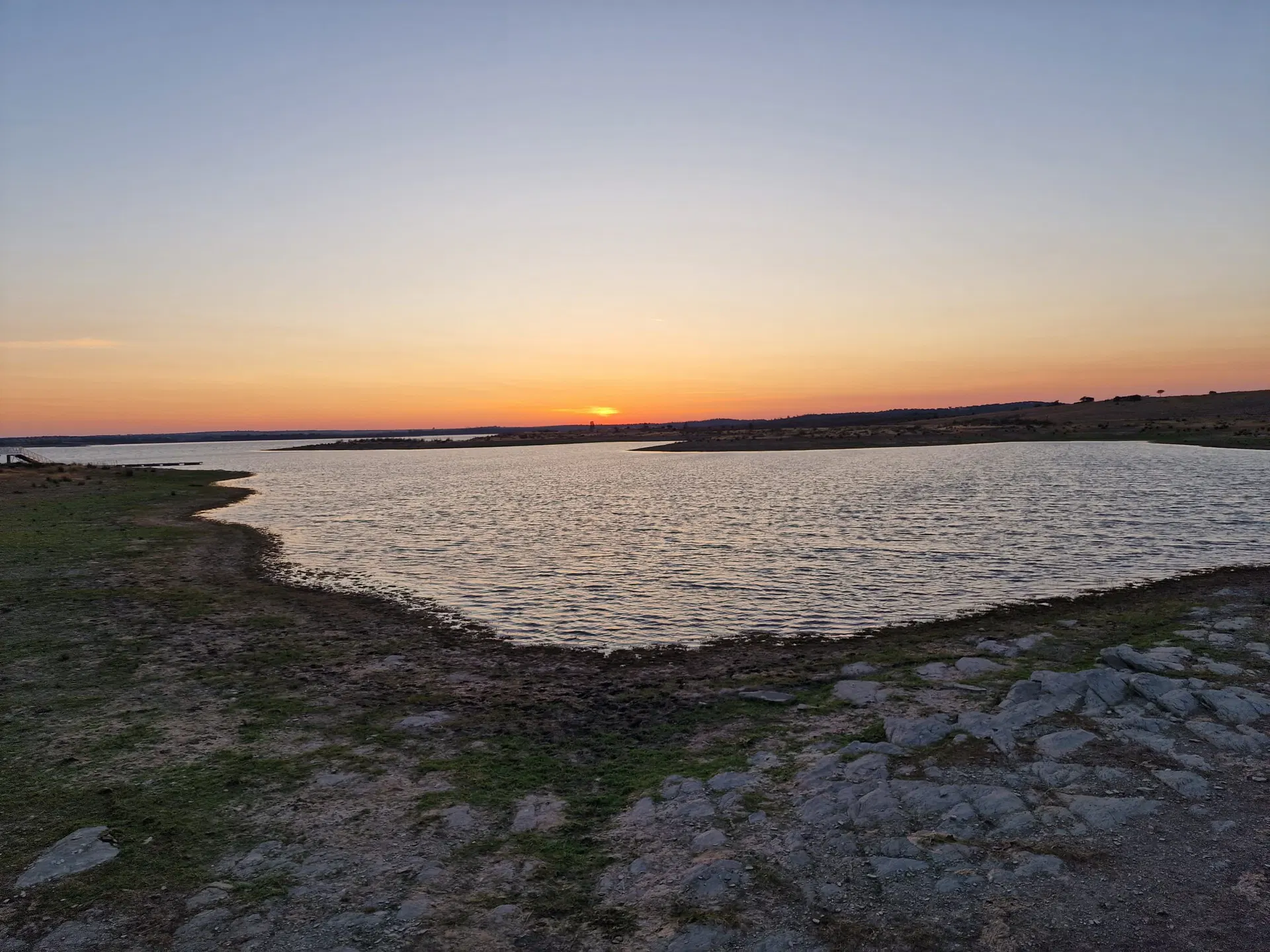
Because it solves winter. From November to March Alqueva is empty, the house is cheap and nothing competes for your attention — and that's exactly when the cranes are here.
People who come for this come off season, stay midweek and come back. Best time to visit →
Common questions
When is the best time for birdwatching at Alqueva?
Winter and spring. Winter brings the crane flocks, which are the main draw, and the landscape is green. Spring adds migrants and passerines. Summer is the worst time.
Which species can you see?
Common crane, great bustard, white stork, grey heron, partridge, stone-curlew, lapwing, quail, cattle egret, bee-eater and hoopoe, plus kites, booted eagles and kestrels. Among passerines: larks, swallows, shrikes, jays and starlings.
Do you need a guide?
Not for the road routes. There are companies running guided outings on the reservoir, worth it if you want serious identification. To see the winter cranes you just need the right place at the right hour.
Do I need binoculars?
Yes. Without them you can tell there are birds; with them you can tell which. Cranes are large and you hear them before you see them, but for everything else binoculars are essential.